
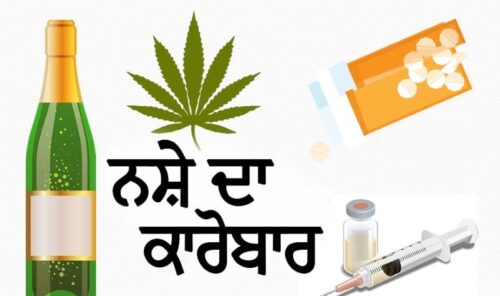
 Punjab, historically known for its fertile lands, vibrant culture, and industrious people, continues to struggle with a deepening crisis of illegal drug trafficking and abuse. Despite repeated government campaigns, high-profile police crackdowns, and large-scale seizures, reports from residents indicate that drug sales remain widespread and increasingly visible, especially in towns and villages. The state’s youth are the most vulnerable, with addiction affecting families, communities, and the overall socio-economic structure of Punjab.
Official data highlights the severity of the crisis. In 2024, Punjab — representing only 2.3% of India’s population — accounted for 44.5% of the country’s heroin seizures, totaling over 1,150 kilograms. Pharmaceutical opioids and synthetic drugs are increasingly being seized, with millions of pills confiscated annually, indicating a shift toward synthetic and prescription drugs. Law enforcement agencies have also reported innovative smuggling methods, including drones and cross-border trafficking, which make enforcement and surveillance more challenging.
Between 2023 and 2025, the Punjab Police registered tens of thousands of FIRs under narcotics laws and arrested thousands of traffickers, ranging from street-level peddlers to major network operators. Properties worth hundreds of crores of rupees were confiscated, along with millions in recovered drug money. Despite these efforts, drugs continue to circulate openly, revealing a gap between official claims of eradication and the reality on the ground.
The socio-economic impact of the drug crisis in Punjab is profound. Addiction has disrupted families, increased domestic conflicts, and contributed to school dropouts among youth. Communities face social stigma, and the state’s workforce suffers as a significant portion of young people become dependent on narcotics. Health systems are also strained due to rising overdoses, hepatitis, HIV, and mental health issues linked to substance abuse. The economic toll is compounded by costs associated with enforcement, rehabilitation, and the loss of productive human capital.
District-level analysis reveals that certain areas consistently emerge as hotspots. Jalandhar is frequently cited in official reports for high levels of drug seizures, including heroin and cash. Amritsar, bordering an international frontier, has seen repeated major heroin seizures and has experienced smuggling via drones. Ludhiana has the highest number of drug-related cases, with arrests of peddlers distributing pharmaceutical pills and capsules, reflecting the growing prevalence of synthetic drugs. Bathinda has recorded some of the maximum drug smuggling cases in the state, highlighting both trafficking activity and enforcement focus. Other districts may show moderate or low activity due to reporting gaps, but the overall problem is state-wide.
A district-wise approach to visualizing the crisis, such as through heat maps or infographics, can be highly effective. These would highlight high-risk areas with color-coded shading, include callouts for quantities of drugs seized, number of FIRs and arrests, and property or cash confiscations. Symbols could differentiate between types of drugs, while an inset timeline could show trends across multiple years. Such visualizations help policymakers, law enforcement, NGOs, and communities to allocate resources effectively, identify priority areas for intervention, and monitor progress over time.
It is important to note, however, that high seizure numbers do not necessarily indicate the highest consumption; they may reflect stronger enforcement in certain districts. Likewise, districts with low reported seizures may still face significant drug problems but have weaker reporting or enforcement. Trafficking patterns shift over time, and the types of drugs circulating — traditional narcotics versus synthetic or pharmaceutical opioids — vary, requiring tailored approaches.
Addressing Punjab’s drug crisis requires a multi-pronged and sustained strategy. Stronger law enforcement measures, intelligence-driven policing, and border surveillance are essential to intercept traffickers. Regulation of pharmaceutical drugs and synthetic narcotics is critical to prevent diversion into illegal markets. Rehabilitation programs, mental health support, and community engagement can help reduce demand and aid recovery. Education and awareness campaigns targeted at youth, combined with the creation of economic and social opportunities, are necessary to tackle root causes of addiction. Civil society, NGOs, and local communities must be involved to ensure interventions reflect on-the-ground realities.
In conclusion, Punjab’s drug crisis is a complex, multi-faceted problem that is not evenly distributed across the state. Hotspot districts like Jalandhar, Amritsar, Ludhiana, and Bathinda illustrate where trafficking and abuse are most intense, but the issue extends state-wide. Large seizures, arrests, and enforcement actions demonstrate the seriousness of the response, yet persistent drug circulation reveals that eradication is far from complete. Sustainable solutions demand coordinated efforts combining law enforcement, social reform, rehabilitation, public awareness, and community involvement. Only through such a comprehensive approach can Punjab hope to protect its youth, rebuild families, and create a safer, drug-free society for future generations.