
 “The arc of the moral universe is long, but it bends toward justice.” — Dr Martin Luther King Jr.
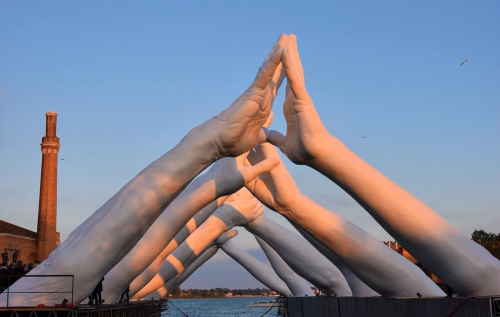
In an era marked by division, discord, and uncertainty, the call for unity has never been more urgent. As we stand at the crossroads of history, we face a fundamental choice: will we build walls that separate us, or bridges that connect us? Will we succumb to the forces of fragmentation, or will we rise together in the spirit of solidarity and shared humanity? The answer to these questions will define not only our present but the legacy we leave for generations to come.
Today’s world is fractured along countless lines: racial, religious, political, economic, and cultural. Social media amplifies our differences while diminishing our common ground. Political discourse has devolved into tribal warfare. Communities that once stood together now find themselves torn apart by ideological battles. The fabric of civil society, woven over centuries, threatens to unravel before our eyes. Yet history teaches us that humanity’s greatest achievements have never come from division, but from unity. From the civil rights movement to the fall of oppressive regimes, from technological breakthroughs to humanitarian triumphs, progress has always required people from diverse backgrounds to come together for a common purpose.
The story of immigrant communities in North America exemplifies the power of unity in action. When our ancestors left their homeland, they carried with them more than just their belongings—they brought dreams, values, and an unshakeable belief in a better future. They faced discrimination, economic hardship, and cultural isolation. Yet they persevered, not as isolated individuals, but as communities bound by shared purpose and mutual support. The Punjabi community’s journey in North America is a powerful testament to this truth. From the early pioneers who worked in lumber mills and farms to today’s professionals, entrepreneurs, and community leaders, we have built our success on the foundations of hard work, education, and, most importantly, unity. We have preserved our language, culture, and traditions not by isolating ourselves, but by creating institutions that celebrate our heritage while embracing our adopted homeland.
True unity cannot exist without justice. A society that tolerates inequality, discrimination, or oppression is not unified it is merely silent. Real unity requires the courage to confront injustice, the wisdom to address its root causes, and the compassion to heal its wounds. Justice demands that we speak for those who cannot speak for themselves. It requires that we stand against hatred in all its forms, whether directed at people because of their race, religion, nationality, gender, or any other characteristic. It means fighting for equal opportunity, fair treatment, and human dignity for every person, regardless of their station in life. This is not radical thinking it is the bedrock of civilised society. Every major religious tradition teaches these principles. Every democratic constitution enshrines them. Every human heart recognises its truth. The question is not whether we believe in justice, but whether we dare to fight for it.
In this challenging landscape, community organisations serve as beacons of hope and engines of change. Organisations like the North American Punjabi Association (NAPA) play a vital role in preserving cultural identity, promoting social cohesion, and advocating for the rights and interests of their communities. But our responsibility extends beyond our own community. True leadership means building coalitions across ethnic, religious, and cultural lines. It means standing in solidarity with other marginalized groups. It means recognizing that an injustice against one community is a threat to all communities. When we fight for justice together, we are stronger than the sum of our parts. Community organizations must serve as bridges connecting the old country with the new, the immigrant generation with those born here, and different communities with each other. We must be cultural ambassadors, educators, advocates, and, when necessary, voices of moral conscience.
Wisdom to understand that our differences are not weaknesses but sources of strength. A diverse society, like a diverse ecosystem, is more resilient and more creative than a homogeneous one. We must have the wisdom to learn from each other, to question our assumptions, and to seek truth over comfort. Compassion to see the humanity in everyone, even those with whom we disagree. Compassion means recognizing that behind every political position is a human being with hopes, fears, and struggles. It means extending grace to others as we hope to receive it ourselves. It means building understanding through dialogue rather than division through demonization. Courage to stand for our principles even when it is difficult or unpopular. Courage means speaking truth to power. It means defending the vulnerable even at personal cost. It means building the future we believe in rather than accepting the injustices of the present.
Imagine a society where diversity is celebrated as a strength, not feared as a threat. Where immigrants are welcomed as contributors, not scapegoated as problems. Where children of all backgrounds grow up believing they can achieve anything, regardless of the circumstances of their birth. Where justice is not a privilege of the powerful but a right of all people. This is not a utopian fantasy it is an achievable goal if we commit ourselves to the work required. It demands that we engage in our communities, vote with our consciences, speak out against injustice, and, most importantly, treat each other with the dignity and respect that every human being deserves.
As we look toward the future, I call upon every person reading these words to ask themselves: What kind of society do we want to build? What legacy will we leave for our children and grandchildren? The answer begins with each of us making a choice to be bridge builders rather than wall builders, to be voices of unity rather than agents of division, to be champions of justice rather than silent bystanders. Let us lead with integrity, serve with humility, and always remember that our position is a responsibility, not a privilege. Let us build organizations that empower rather than control, that include rather than exclude, that serve the community’s needs rather than personal ambitions. You are not just the future you are the present. Your energy, idealism, and vision are exactly what our world needs. Do not be discouraged by the challenges you inherit. Every generation faces its own trials, and every generation that has succeeded has done so by refusing to accept the limitations imposed by their predecessors. To every person who feels marginalized, invisible, or powerless: Your voice matters. Your story matters. Your dreams matter. You are not alone. Stand with us, speak with us, and together we will build a society worthy of our highest aspirations.
The work of building a just and humane society is never finished. It is the calling of every generation to advance the cause of human dignity, equality, and freedom. The challenges we face today are significant, but they are not insurmountable. History shows us that when people of goodwill unite around common values, there is no obstacle too great, no injustice too entrenched, and no dream too audacious.Let us move forward with wisdom to guide us, compassion to sustain us, and courage to drive us. Let us build bridges of understanding across the chasms of difference. Let us create communities of belonging in a world of isolation. Let us be the generation that chose unity over division, justice over expediency, and hope over despair.
The future is not something that happens to us it is something we create together. Let us begin that work today, with renewed commitment, unwavering determination, and an unshakeable belief in the power of human solidarity.Together, we can build a world where peace prevails over conflict, where justice triumphs over oppression, and where every person can live with dignity, hope, and the opportunity to fulfill their God-given potential. This is our mission. This is our moment. This is our responsibility.
Let us rise to meet it.
“The arc of the moral universe is long, but it bends toward justice.” — Dr. Martin Luther King Jr.