
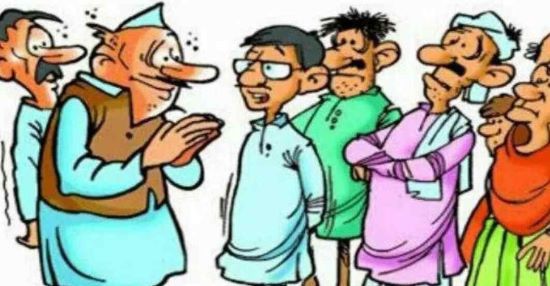
 Politics is ideally the arena of public service—a space where citizens can influence society, address inequalities, and represent the voices of marginalised individuals. In theory, politicians are expected to work for the welfare of the people. In reality, however, the motivations for entering politics are varied, complex, and often influenced by personal ambitions, family legacies, or societal pressures. While India has leaders who have genuinely devoted themselves to public service, the broader picture reveals a spectrum of intentions.
Many leaders enter politics with genuine aspirations to make a difference. Figures like Dr A.P.J. Abdul Kalam, the former President of India, dedicated their lives to education, science, and social welfare rather than political power. Similarly, Kiran Bedi, India’s first female IPS officer who later ventured into politics, has focused on governance reforms and social initiatives. Their work demonstrates that public service can be the central motivation in politics, even in a system filled with challenges and competing interests.
Other examples include grassroots leaders who rise from local governance to effect change in their communities. Leaders from village panchayats or local municipal bodies often enter politics motivated by the desire to improve basic services, infrastructure, and social conditions. Their stories, though less celebrated nationally, reflect the original ideal of politics as a tool for public good.
However, politics also attracts individuals motivated by power, influence, and access to resources. In India, dynastic politics is prevalent, where family legacy plays a significant role in shaping political careers. Leaders such as Rahul Gandhi, Jyotiraditya Scindia, and others inherited political networks, giving them an advantage in entering the field. In many cases, such leaders balance public service with personal, familial, or party ambitions.
Beyond dynastic influence, political office often brings social status, financial opportunities, and visibility. Electoral politics provides a platform to shape policies, control resources, and gain recognition—factors that can sometimes overshadow the motivation of service. These pragmatic incentives are not inherently negative, but they complicate the narrative that all politicians act purely for the public good.
The political system itself shapes motivations. India’s democracy, with institutions like the Election Commission, anti-corruption bodies, and judicial oversight, creates mechanisms for accountability. However, structural challenges such as coalition politics, vote-bank strategies, and regional power dynamics can pressure politicians to make decisions influenced by electoral gains rather than welfare priorities. Cultural factors also play a role. In Punjab, for example, political leadership is often associated with social prestige, local influence, and family networks. In other regions, caste, community, or religious affiliations heavily influence political mobilisation and strategy. These factors can attract leaders motivated as much by social position and recognition as by public service.
Public perception often mirrors the complexity of political motivations. Surveys conducted by the Centre for the Study of Developing Societies (CSDS) indicate that many Indian citizens are skeptical about politicians’ commitment to public welfare. Scandals such as the Vyapam scam in Madhya Pradesh, misappropriation of funds, or reports of disproportionate wealth accumulation feed the perception that politics is more self-serving than service-oriented.
At the same time, politicians who deliver tangible benefits can inspire trust. Initiatives like Arvind Kejriwal’s Mohalla Clinics in Delhi, which brought accessible healthcare to underprivileged communities, or Yogi Adityanath’s sanitation and infrastructure projects in Uttar Pradesh, highlight that service-driven politics can be effective, popular, and transformative. These examples show that citizens reward genuine efforts, reinforcing that public service is possible within India’s political framework.Politics in India represents a balance between idealism and pragmatism. Some politicians dedicate their lives to public service with minimal personal gain, while others navigate the system for personal or strategic objectives. Understanding this balance is crucial for citizens, who play an essential role in shaping political behavior by demanding transparency, accountability, and visible results. Leaders motivated by genuine service often face systemic obstacles, including bureaucratic inertia, party politics, and societal pressures. Yet, their impact demonstrates that ethical, service-oriented politics is feas