
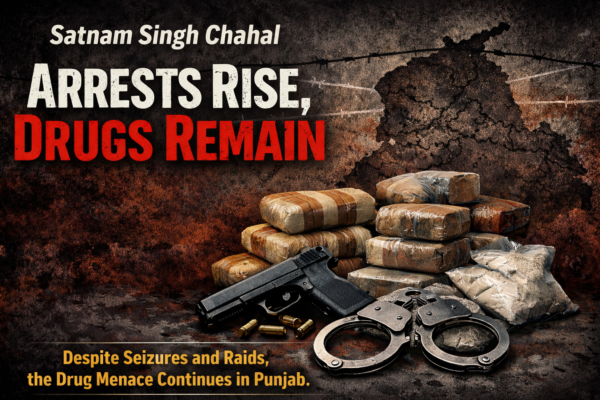
 Despite repeated claims of success by the Punjab Police regarding large numbers of arrests and significant recoveries of illegal drugs and arms, the harsh reality is that the menace of narcotics has not been eliminated from the state. Year after year, official data highlights thousands of arrests, seizures of heroin, synthetic drugs, poppy husk, and illicit weapons, yet the drug network continues to operate with alarming ease. This contradiction raises serious questions about the effectiveness, intent, and long-term strategy of the ongoing anti-drug campaign.
One of the major concerns is that most arrests are limited to small-time peddlers, addicts, and street-level carriers, while the main financiers, cross-border smugglers, and political or administrative protectors remain untouched. These low-level arrests create an illusion of action but fail to dismantle the organized drug syndicates that control supply routes, finances, and distribution networks. As long as the masterminds remain free, the drug trade simply regenerates, replacing arrested individuals within days.
The recovery of illegal arms alongside drugs further exposes the dangerous nexus between narcotics trafficking and organized crime. Weapons seized during raids suggest that drug networks are well-armed and prepared to use violence to protect their interests. Yet, despite such serious recoveries, there is little visible progress in breaking the chain between drug traffickers, gangsters, and international smugglers. This failure directly threatens public safety and undermines citizens’ trust in law enforcement institutions.
Another critical issue is the lack of focus on rehabilitation and prevention. While police action dominates headlines, addiction continues to destroy families, especially in rural areas and border districts. Without strong investment in de-addiction centers, counseling, employment opportunities, and awareness programs, the demand for drugs remains intact. Enforcement without social reform addresses symptoms but not the disease.
Political interference and selective enforcement also weaken the anti-drug drive. Allegations that influential individuals escape scrutiny while ordinary citizens face harsh action have damaged public confidence. When drug enforcement appears biased or cosmetic, it emboldens traffickers and discourages community cooperation, which is essential for meaningful intelligence-led policing.
In conclusion, the persistence of illegal drugs in Punjab despite massive arrests and recoveries highlights a deeper structural failure. Eliminating drugs requires more than numbers and press conferences; it demands political will, accountability, targeting of high-level operators, cross-border coordination, and a strong social rehabilitation framework. Until these elements are addressed honestly, drugs will continue to poison Punjab’s youth, regardless of how many arrests are made or seizures displayed.