
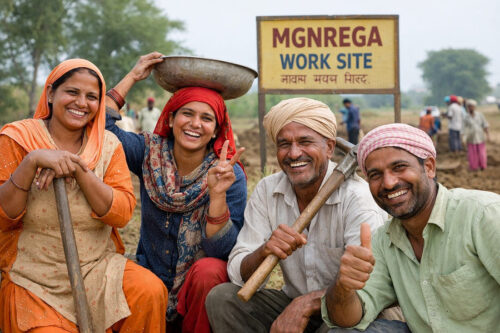
 India’s performance on major global indices related to hunger, freedom of speech, employment, and economic well-being presents a complex picture of growth accompanied by persistent social stress. While the country has risen rapidly in terms of economic size and international influence, its rankings on human development–oriented indicators remain relatively low. These indices matter not only at the national level but also for individual states like Punjab, which are deeply integrated into India’s agricultural economy, labor markets, and democratic discourse. National trends reflected in these rankings inevitably shape Punjab’s social, economic, and political realities.
India’s ranking on the Global Hunger Index remains a serious concern. Placed at around 102nd out of 123 countries in the latest assessments, India falls into the “serious hunger” category despite being one of the world’s largest food producers. This contradiction highlights structural problems such as malnutrition, unequal access to food, poor sanitation, and gaps in public health systems. For Punjab, often described as India’s food bowl, this ranking is particularly significant. The state contributes heavily to national food security, yet faces rising nutritional challenges of its own, including diet-related health issues, rural poverty pockets, and stress among farming households. The national hunger ranking thus underscores that food production alone does not guarantee nutritional well-being, either for India as a whole or for Punjab specifically.
Freedom of speech and press freedom rankings also reveal worrying trends. India’s position at approximately 151st out of 180 countries in the World Press Freedom Index suggests increasing constraints on independent journalism and public expression. The Human Freedom Index similarly places India low, reflecting pressures on civil liberties. For Punjab, a state with a long tradition of political activism, vocal media, and public debate, shrinking spaces for free expression have direct implications. Journalists, writers, and civil society voices in Punjab operate within the broader national environment, meaning that restrictions or legal pressures at the central level inevitably influence the freedom of expression at the state level.
Employment and unemployment indicators further complicate India’s development story. Although official figures show moderate unemployment rates, global and independent assessments point to serious issues of youth unemployment, underemployment, and job insecurity. These challenges are particularly visible in Punjab, where educated youth face limited opportunities in industry and services, leading to high rates of migration abroad. National employment trends reflected in global indices thus resonate strongly in Punjab, where the mismatch between education and local job creation has become a major social and political concern.
Economically, India stands out as a global heavyweight, ranking as the fourth largest economy by nominal GDP and the third largest by purchasing power parity. However, when measured by per capita income, India’s ranking drops to around 136th globally. This gap highlights inequality and uneven distribution of growth. Punjab, despite relatively better average incomes compared to some other states, has witnessed slowing growth, rising household debt, and increasing economic pressure on farmers and small businesses. National economic rankings therefore mask regional disparities that states like Punjab experience firsthand.
India’s low ranking on the Index of Economic Freedom, placed at around 128th globally, also has implications for Punjab’s economy. Regulatory hurdles, weak enforcement of contracts, and policy uncertainty affect investment and entrepreneurship at the state level. For Punjab, which urgently needs diversification beyond agriculture into manufacturing and services, these institutional weaknesses limit job creation and sustainable growth. National policy environments reflected in such indices directly shape the economic options available to states.
Human development indicators such as the Human Development Index, where India ranks around 134th, further illustrate the gap between growth and welfare. Issues related to healthcare quality, education outcomes, gender equality, and environmental sustainability persist across the country. In Punjab, challenges such as public health burdens, drug abuse, and declining workforce participation among women echo national human development concerns, reinforcing the interconnectedness between national rankings and state-level realities.
In conclusion, India’s global rankings on hunger, freedom, employment, and economic indicators are not abstract international judgments but reflections of real conditions that affect every state, including Punjab. Punjab cannot remain insulated from national trends in nutrition, democratic freedoms, labor markets, or economic governance. For India’s rise to be meaningful and sustainable, improvements in these indices must translate into better outcomes on the ground—ensuring that growth is inclusive, freedoms are protected, and opportunities are expanded for all regions and communities.