
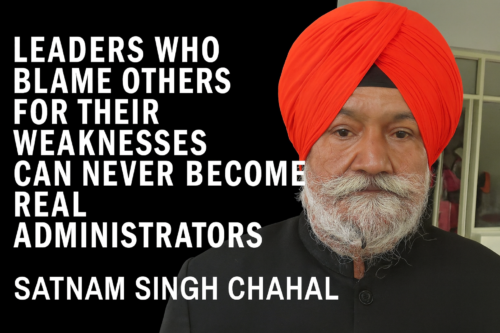
 In any institution, government, corporate, or community leadership is tested not by how loudly someone speaks, but by how responsibly they act. A true administrator is defined by accountability, maturity, and the courage to accept shortcomings. Those who constantly blame others or push their own failures onto subordinates expose only their own insecurity and incompetence. Blame-shifting may temporarily divert attention, but it never produces real progress or respect.
When leaders refuse to acknowledge weaknesses, they create a culture of fear rather than trust. Subordinates stop giving honest feedback, innovative thinking declines, and the system becomes paralysed. In such an environment, mistakes multiply because no one feels safe to take initiative. Real administrators do the opposite; they create a climate where problems are discussed honestly, lessons are learned, and solutions are developed collectively.
Strong leadership requires the ability to self-reflect. Administrators who accept responsibility earn the confidence of their teams and the public. They do not hide behind excuses or scapegoats; instead, they identify gaps and work toward improvement. This approach not only builds efficiency but also strengthens morale. Ultimately, leadership is not about avoiding blame it is about owning decisions.
History shows that successful institutions are built by leaders who stand firmly with their teams. Weak leaders blame; strong leaders build. A person who cannot take responsibility can never truly guide others. Only those who carry the burden of accountability with honesty and integrity rise to become real administrators.