
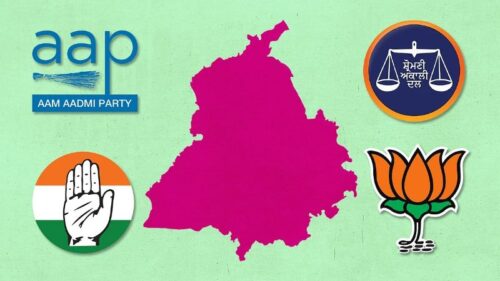
 If someone accidentally walked into the proceedings of the Punjab Legislative Assembly without knowing what it was, they might easily assume they had entered a live comedy show rather than the highest democratic institution of the state. The Assembly, meant to be a temple of democracy where serious debates shape the future of Punjab, has increasingly begun to resemble a noisy stage where Members of the Legislative Assembly compete not in policy arguments but in the art of sarcasm, mockery, and theatrical insults.
One would imagine that elected representatives arrive in the Assembly armed with data, research, and constructive ideas. Instead, many seem to arrive with sharpened tongues and a ready supply of jokes about their political rivals. Debates that should focus on farmers’ distress, unemployment, drug abuse, and the state’s alarming debt often transform into verbal wrestling matches where the main objective appears to be who can deliver the most sarcastic punchline.
The moment one MLA rises to speak, another leaps up—not with a counterargument but with a witty jab. Soon the entire hall erupts into laughter, shouting, and clever one-liners. Important bills and policies patiently wait in the corner like neglected guests at a wedding while the honorable members engage in what looks like a competition for the “Best Comedian of the Session” award.
In theory, the Assembly is where the government is held accountable and where the opposition scrutinizes policies. In practice, it sometimes appears that both sides have silently agreed on a different agenda: entertaining the gallery. The treasury benches mock the opposition, the opposition mocks the treasury benches, and somewhere in the middle the taxpayers of Punjab wonder if they accidentally funded a stand-up comedy festival.
Ironically, every MLA entered politics claiming to be the voice of the people. But when the microphone comes on in the Assembly, the voice often transforms into satire directed not at problems but at fellow members. Instead of discussing solutions to Punjab’s financial crisis or deteriorating law and order, the debates frequently spiral into humorous but pointless exchanges about who said what on social media or who mispronounced which word.
If laughter alone could solve problems, Punjab would already be the most prosperous state in India. Unfortunately, the farmers facing mounting debts, the youth struggling for employment, and the diaspora watching from abroad may not find the Assembly’s comedy routine particularly amusing.
Democracy thrives on debate, disagreement, and accountability—but not on endless mockery that prevents meaningful discussion. When elected representatives spend more time ridiculing each other than addressing real issues, governance becomes the biggest casualty.
Perhaps one day the Assembly will return to its intended purpose: a serious forum for policymaking and accountability. Until then, the citizens of Punjab might as well keep popcorn ready, because every session of the Assembly increasingly promises a full-length political comedy show—only the ticket price is paid by the people themselves