
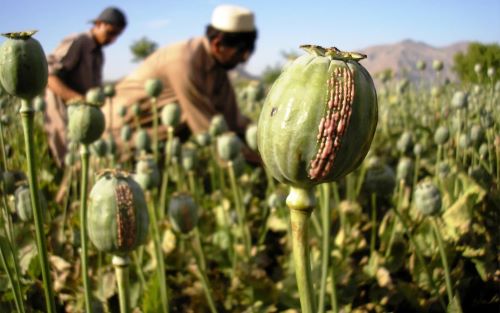
 The debate over whether the government should allow legal opium cultivation is not new, but it has gained urgency in regions struggling with drug abuse, illegal trafficking, and farmer distress. In India, where the state already regulates opium production in select areas under strict supervision, the question is not entirely hypothetical—it is about expanding, reforming, or rethinking an existing framework. The argument that “if the government truly wants to act, it should legalize opium cultivation” reflects frustration with current policies that have failed to curb narcotics abuse while also ignoring potential economic benefits.
Historically, opium cultivation in India has been tightly controlled under the supervision of the Central Bureau of Narcotics. Licensed farmers in states like Madhya Pradesh, Rajasthan, and Uttar Pradesh are permitted to grow opium poppy for medicinal and scientific purposes. This system ensures that raw opium is processed into essential medicines such as morphine and codeine, which are critical for pain management in healthcare. However, the limited geographical scope and strict licensing have also created a parallel black market, where illegal cultivation and trafficking flourish due to high demand and restricted legal supply.
Supporters of legalization argue that expanding legal cultivation could weaken illegal drug networks. By bringing production into a regulated system, the government can monitor quality, control distribution, and reduce the influence of smugglers who currently exploit both farmers and users. In regions like Punjab, which has been battling a severe drug crisis, such a move is often seen as a way to shift the narrative from criminalization to regulation. Proponents believe that when farmers are given a legal and profitable alternative, they are less likely to fall into illegal activities or be coerced by drug mafias.
Another major argument in favor of legalization is economic. Agriculture in many parts of India is under stress due to declining profitability, rising input costs, and climate challenges. Legal opium cultivation, if expanded responsibly, could provide farmers with a high-value cash crop. Countries like Turkey have successfully implemented controlled opium farming systems that contribute to both their economy and global pharmaceutical supply. India, with its long history and expertise, could potentially become a larger player in the legal opioid market if policies are modernized.
However, the issue is not without serious risks. Critics warn that expanding opium cultivation could inadvertently increase domestic availability and misuse. India is already grappling with substance abuse, and any policy that involves narcotics must be approached with extreme caution. There are concerns about leakages from the legal supply chain into illegal markets, a problem that even current systems occasionally face. Without robust enforcement, transparency, and accountability, legalization could worsen the very crisis it aims to solve.
There is also a moral and social dimension to consider. Drug addiction has devastated countless families, particularly in states like Punjab. For many, the idea of promoting opium cultivation—even under legal frameworks appears contradictory to the goal of building a drug-free society. Policymakers must therefore balance economic and regulatory benefits with the social cost of addiction and public health concerns.
Globally, the conversation around narcotics is evolving. Some countries are shifting from punitive approaches to harm-reduction strategies, focusing on treatment, rehabilitation, and controlled access. If India considers expanding opium cultivation, it must do so as part of a broader, integrated policy that includes strict regulation, farmer education, addiction treatment programs, and strong law enforcement against illegal trade.
In conclusion, the call to legalize opium cultivation is rooted in a desire for practical solutions to complex problems. It highlights the limitations of current policies and opens the door for a more nuanced discussion. However, legalization is not a silver bullet. It requires careful planning, institutional strength, and a clear commitment to public welfare. If the government chooses this path, it must ensure that regulation, not revenue, remains the guiding principle—and that the fight against drug abuse remains uncompromised.
Share via: