
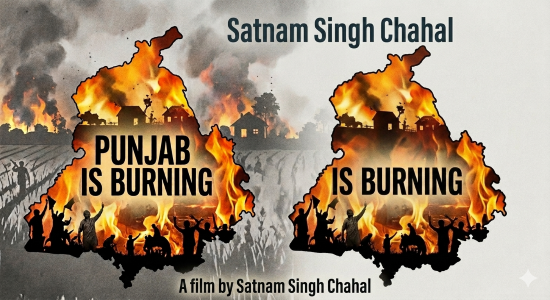
 Punjab, a land known for its resilience, agricultural strength, and vibrant culture, today finds itself caught in a cycle of political confrontation that is proving costly for its people. The ongoing tussle between the ruling leadership, led by figures like Bhagwant Mann, and selective opposition leaders has created an environment where governance often takes a backseat to ego battles. What should have been healthy democratic debate has instead turned into a prolonged power struggle, with ordinary citizens bearing the consequences across every sphere of life.
At the heart of the issue lies a troubling pattern: selective targeting, selective outrage, and selective silence. The ruling party frequently accuses opposition leaders of obstructionism, while the opposition counters with allegations of authoritarianism and vendetta politics. However, beneath these accusations lies a deeper problem decision-making driven not by public welfare but by the need to assert dominance. Policies are often introduced or opposed not on merit, but on who proposed them. As a result, governance becomes reactive rather than proactive, leaving critical issues unresolved.
The impact of this political ego clash is visible in Punjab’s economic condition. Industrial growth has slowed, investors remain cautious, and unemployment continues to trouble the youth. Instead of presenting a united front to attract investment and create opportunities, political leaders remain engaged in blame games. Each side tries to discredit the other, while economic reforms and long-term planning suffer delays. For a state that once led India’s Green Revolution, this stagnation is both ironic and alarming.
The education and healthcare sectors are equally affected. Frequent policy reversals, politically motivated announcements, and lack of continuity have disrupted progress. Schools and colleges struggle with inconsistent reforms, while healthcare institutions face administrative uncertainties. When leadership is more focused on winning arguments than solving problems, institutions become collateral damage. The people of Punjab, especially the poor and middle class, are left navigating a system that feels unstable and unpredictable.
Law and order, too, has not escaped the fallout of this ego-driven politics. Political interference, public spats, and attempts to control narratives have weakened institutional credibility. Instead of presenting a united approach to tackle crime, drug abuse, and social challenges, leaders often use these issues as tools to attack one another. The tragic irony is that while politicians argue over who is responsible, the problems continue to grow unchecked.
Social harmony in Punjab has also taken a hit. Political polarization seeps into society, dividing communities along party lines. Public discourse becomes toxic, with supporters of different parties engaging in hostility rather than constructive dialogue. The spirit of Punjab rooted in unity and collective strength gets overshadowed by manufactured divisions. This erosion of social cohesion is perhaps one of the most dangerous consequences of ego-driven politics.
The root cause of all this remains painfully simple: ego. The unwillingness to listen, to collaborate, or to acknowledge the merit in an opponent’s idea has turned governance into a battlefield. In a healthy democracy, disagreement is essential but it must lead to better solutions, not paralysis. When ego replaces empathy, and rivalry replaces responsibility, it is the common citizen who suffers the most.
Punjab does not lack capable leaders or resources. What it lacks, at this moment, is a collective political will to rise above personal and party egos. The state’s progress depends on leaders who can prioritize people over power, cooperation over conflict, and solutions over scoring political points. Until that shift happens, the cycle of suffering will continue.
In the end, the question is not who wins the political battle but who stands up for Punjab. Because while leaders fight for supremacy, it is the people who are silently paying the price