
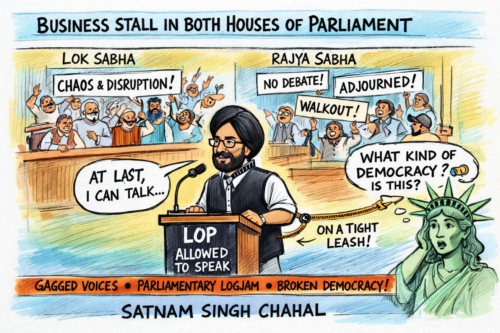
 In recent days, the functioning of both Houses of the Indian Parliament Lok Sabha and Rajya Sabha has come to a grinding halt. What should have been days of structured debate, legislative scrutiny, and decisive governance instead turned into repeated adjournments, walkouts, slogan-shouting, and chaos. The central issue triggering the paralysis is the demand that the Leader of the Opposition (LOP) be allowed to speak freely without procedural or political obstruction.
The constitutional role of the LOP is not symbolic. It is an essential pillar of a functioning parliamentary democracy. The Opposition’s voice ensures accountability, debate, and balance in national decision-making. Yet, when the House refuses or hesitates to let the LOP speak, it raises a deep and troubling question: What kind of democracy is this?
A Parliament Without Dialogue
The floor of both Houses witnessed scenes India has unfortunately grown familiar with rows of MPs shouting counter-slogans, placards being waved, and the presiding officers forced to adjourn proceedings minutes after they begin. Critical legislation, national issues awaiting debate, and questions meant to keep the government answerable have all been overshadowed by political confrontation.
The Lok Sabha saw repeated disruptions with members from both sides refusing to yield space. The Rajya Sabha fared no better, with sections of MPs staging walkouts or demanding immediate discussion on issues not listed in the day’s agenda. With both Houses stalled, parliamentary business suffered greatly, leaving the nation watching a constitutional institution struggle to perform its most basic duty.
The LOP’s Voice: A Matter of Democratic Integrity
At the heart of this crisis is the contention over allowing the LOP to speak. In any authentic parliamentary democracy, the Opposition leader must be heard with respect. Whether the government agrees or disagrees is irrelevant what matters is that the voice of dissent, critique, or alternative perspective is not silenced.When the LOP finally gets a chance to speak but only under tight constraints, interruptions, or political pressure it reflects a deeper institutional weakening. Democracy thrives on debate, not dominance; on dialogue, not censorship.
A Parliament Reduced to a Marketplace?
Many observers argue that the current state of chaos makes Parliament resemble a marketplace of political deals rather than a forum of national deliberation. Instead of argument and counter-argument, the country witnesses accusations, defensive posturing, and strategic disruption. The nation expects leadership and maturity, but often receives theatre and confrontation instead.
The Bigger Question
The recurring logjam in both Houses forces the country to ask:
Are we nurturing democratic values or weakening them?
A Parliament that cannot conduct business, cannot debate freely, and cannot allow its Opposition to speak is not functioning in the spirit envisioned by the Constitution.
For democracy to remain strong, Parliament must restore dignity, dialogue, and discipline. Only then will the nation’s highest legislative institution regain the trust of the people.