
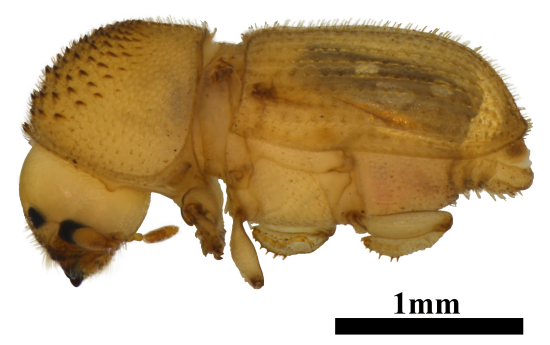
 ROMULUS, Mich. – U.S. Customs and Border Protection agriculture specialists made a first-in-nation interception of a potentially destructive bark beetle species in bark from the Ivory Coast last February.CBP agriculture specialists made a first-in-nation interception of a potentially destructive bark beetle species in bark from the Ivory Coast in February.
The approximately 3-millimeter beetle was found within partially dry bark brought for medicinal purposes during a routine inspection of a passenger at Detroit Metropolitan Airport in transit to Texas.
Local CBP officials identified this as the Afrotropical genus Ctonoxylon, while local U.S. Department of Agriculture officials were able to further identify it as Ctonoxylon spinifer Eggers, which was confirmed on Oct. 16. According to USDA database records, this species has never been intercepted at a U.S. port of entry.
The beetle and prohibited bark were seized by CBP for further analysis, and the passenger was released without further incident.
“This first-time bark beetle interception is significant because many species are tree-destroying pests,” said Port Director Fadia Pastilong. “This type of discovery highlights the exceptional work of our CBP agriculture specialists.”
Unlike many bark beetle species, which tunnel beneath bark and excavate galleries for their larvae, Ctonoxylon tunnel and breed within bark layers. While research on this type of bark beetle is limited, several of the known species are reported to feed on fig and olive trees, therefore there is potential for this pest to cause significant agricultural and economic damage in regions that grow them, such as Texas.
“Big threats can come in small packages, and our agriculture specialists work diligently to protect our agriculture and natural resources against dangers of all shapes and sizes,” said Director of Field Operations Marty C. Raybon