
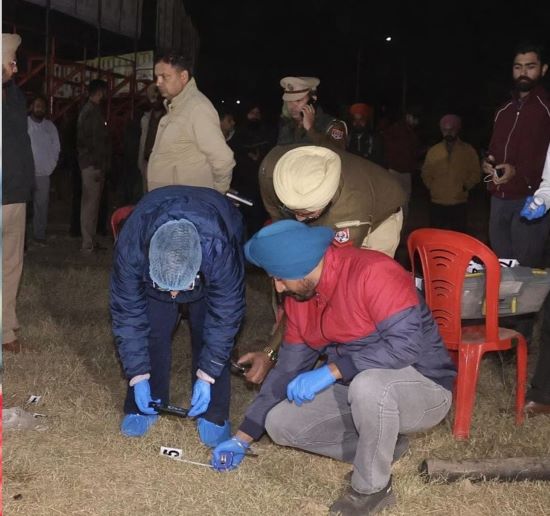
 The deadly attack on kabaddi players has exposed a disturbing intersection between sport, crime, and declining public safety. Kabaddi, traditionally regarded as a symbol of strength, discipline, and rural pride, has increasingly become vulnerable to violence, particularly in parts of North India. Recent fatal incidents have shaken players, spectators, and sporting communities, raising serious concerns about security at public sporting events.
One of the most shocking incidents occurred in Mohali, Punjab, where a well-known kabaddi player and tournament organiser was shot dead during a live kabaddi event. The attack took place in front of hundreds of spectators who had gathered to watch a competitive match. According to eyewitnesses, the attackers approached the player casually, pretending to interact with him, and then suddenly opened fire at close range. Panic spread instantly as gunshots echoed through the ground, turning a festive sporting atmosphere into chaos within seconds.
The victim was rushed to a nearby hospital but succumbed to his injuries, highlighting the brutality and precision of the attack. What made the incident even more alarming was the ease with which armed assailants entered a crowded venue without resistance. The attackers reportedly fired additional shots in the air to clear their escape route, demonstrating complete disregard for public safety and law enforcement presence.
Investigations later suggested that the killing was not random but linked to gang rivalries and criminal control over kabaddi tournaments. In Punjab and neighboring regions, kabaddi events often involve significant prize money, betting, sponsorships, and local influence. Criminal gangs have increasingly attempted to dominate these tournaments, using intimidation and violence to assert control. In some cases, players themselves become targets due to personal rivalries, past disputes, or alleged associations.
This incident is not isolated. Over the past few years, several kabaddi players have been attacked or killed in similar fashion. In some cases, players were shot dead near their homes or during practice sessions, while others were attacked at or near match venues. The killing of international kabaddi player Sandeep Nangal Ambian in 2022 during a match had already signaled how dangerous the environment was becoming. Since then, the frequency of such violent incidents has only increased.
The impact of these attacks extends far beyond the victims and their families. Fear has begun to overshadow enthusiasm for kabaddi matches, with players and spectators questioning their safety at public events. Young athletes, especially from rural backgrounds, now face pressure from families who worry that pursuing kabaddi could expose them to serious danger. This threatens the future of a sport that has historically thrived on grassroots participation.
These attacks also raise serious questions about law and order and event security. The presence of weapons at sporting venues, the lack of proper policing, and delayed action against known criminals point to systemic failures. Critics argue that without strict enforcement, visible security arrangements, and accountability, sports grounds risk becoming soft targets for criminal violence.
In conclusion, the deadly attacks on kabaddi players represent a tragic erosion of safety in a sport that once symbolized unity and physical excellence. Protecting athletes must become a priority through stronger security measures, decisive action against criminal networks, and collective responsibility from authorities, organisers, and sporting bodies. Without urgent intervention, the fear created by such violence could permanently damage the spirit and future of kabaddi.