
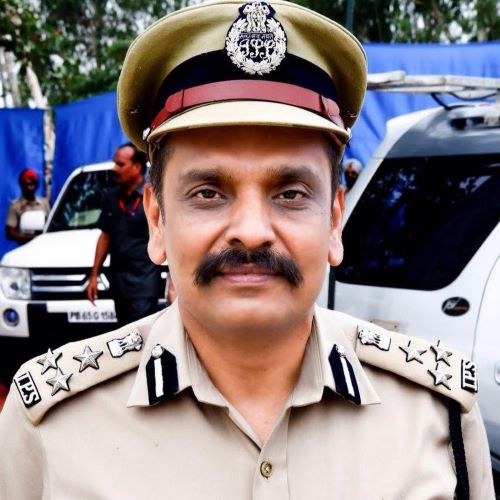
 Kunwar Vijay Pratap Singh is a prominent political figure in Punjab, known for his transition from a distinguished police officer to an influential Member of the Legislative Assembly. His career has been marked by a strong reputation for integrity, fearlessness, and a willingness to confront powerful interests, making him a widely recognized and often debated personality in the state’s public life.
He began his professional journey by joining the Indian Police Service, where he served with distinction for many years. During his tenure in the police force, Singh handled several sensitive and high-profile cases, earning a reputation as a strict and upright officer. His work in maintaining law and order, along with tackling organized crime, brought him both public respect and institutional recognition.
One of the most defining phases of his police career came when he was involved in the investigation of the Behbal Kalan firing incident. As part of the Special Investigation Team, Singh played a key role in probing the controversial case. His outspoken stance and detailed findings brought him into the spotlight, with many praising his courage while others viewed his actions as politically sensitive.
After taking voluntary retirement from service, Kunwar Vijay Pratap Singh entered politics by joining the Aam Aadmi Party. His move into the political arena was seen as an extension of his commitment to public service, allowing him to address systemic issues beyond the scope of policing.
In the 2022 Punjab Assembly elections, he was elected as an MLA, marking the beginning of his legislative career. As a politician, Singh has continued to maintain his outspoken and independent approach. He frequently raises issues related to governance, law enforcement, and the ongoing drug crisis in Punjab, often sparking debate within political and public circles.
Throughout his journey, Kunwar Vijay Pratap Singh has focused on key issues such as police reforms, accountability, justice for victims, and combating drug networks. His background in law enforcement has deeply influenced his political priorities, giving him a practical understanding of the challenges facing Punjab.
Today, he remains a significant and influential figure in Punjab politics. His journey from a senior police officer to a legislator reflects a broader commitment to justice and public service, and his role continues to shape discussions around governance and accountability in the state.
In the border districts of Jammu & Kashmir, Sikh-majority villages have repeatedly found themselves caught in the crossfire of cross‑border aggression. Mortar shells and artillery fire from across the LoC have struck homes, schools, and even Gurdwaras spaces that serve not only as places of worship but as centers of community life, equality, and refuge. When a Gurdwara is damaged, the wound is not just physical; it is emotional, cultural, and spiritual.
Families living in these regions often describe a life of uncertainty children growing up with the sound of shelling, elders fearing displacement, and entire communities forced to abandon their homes during escalations. The psychological toll is immense, and the repeated targeting of civilian areas has left many Sikh families feeling vulnerable and unheard.
Beyond the border belt, Sikhs in India have also faced sporadic incidents of vandalism, desecration of religious property, and communal tensions. While these events differ in scale and motive, they collectively highlight a deeper issue: the need for stronger protections for minority communities and their places of worship. A nation as diverse as India must ensure that every citizen—regardless of faith—feels safe, respected, and protected.
Yet, through every challenge, the Sikh community has responded with remarkable resilience. Damaged Gurdwaras are rebuilt through collective effort. Families affected by violence receive support from Sikh organizations and volunteers. Community leaders continue to advocate for peace, justice, and unity. This spirit of seva (selfless service) and chardi kala (eternal optimism) remains the backbone of Sikh identity.
But resilience alone cannot be the answer. It is the responsibility of the nation to ensure that Sikhs like all communities—can live and worship without fear. Strengthening border protections, improving early‑warning systems, ensuring swift justice in cases of vandalism or violence, and promoting awareness about Sikh identity are essential steps toward building a safer, more inclusive India.
India’s strength lies in its diversity. Protecting Sikh lives and institutions is not only a matter of community safety it is a matter of national integrity and moral responsibility.