
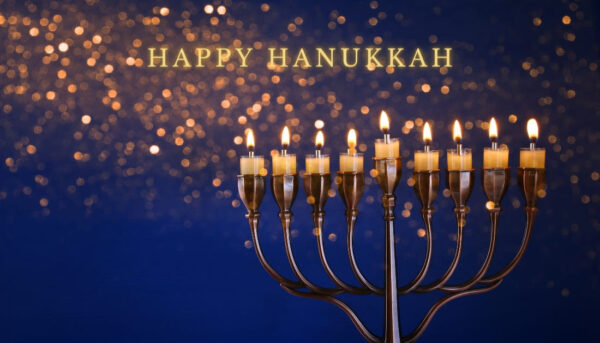
 Hanukkah, also known as Chanukah, is a revered Jewish festival celebrated annually to honour the historic rededication of the Second Temple in Jerusalem. The name “Hanukkah” itself translates to “dedication” in Hebrew. This year, the festival begins on the evening of 14 December 2025, and concludes on the evening of 22 December 2025. In the United States, many calendars list Monday, 15 December 2025, as “Hanukkah”, reflecting the first full day following the opening night.
For our Indian audience and the diaspora, Hanukkah may not be a widely recognised festival, yet it holds profound cultural and historical significance for the followers of Judaism. Embracing our deep-rooted respect and veneration for diverse religions and beliefs, it is indeed timely and appropriate to acquaint ourselves with this meaningful Jewish celebration as it approaches.
Why is Hanukkah Celebrated?
The festival commemorates the victory of the Maccabees over the Syrian-Greek army and the subsequent miracle of rededicating the Holy Temple in Jerusalem. The most significant miracle remembered is that of the oil that lasted eight days when it should have lasted only one. This story symbolizes resilience and the triumph of light over darkness, a theme resonant in many cultures.
The Temple that was rededicated during the events commemorated by Hanukkah, known as the Second Temple, is no longer standing. The Second Temple was an important Jewish holy site in Jerusalem, initially constructed around 516 BCE and subsequently renovated and expanded by Herod the Great around the 1st century BCE.
However, the Second Temple was destroyed by the Roman Empire in 70 CE during the Siege of Jerusalem. This event was a significant and tragic moment in Jewish history, marking the beginning of a long period of Jewish exile from Jerusalem.
Today, the Western Wall, also known as the Kotel, is all that remains of the original structure of the Second Temple. It is an important site of prayer and pilgrimage for Jews worldwide, considered to be the closest accessible point to what was the Holy of Holies in the Temple, the most sacred site in Jewish tradition. The area where the Temple once stood is now home to the Dome of the Rock and the Al-Aqsa Mosque, making it a site of religious significance for Muslims as well. This complex, known as the Temple Mount to Jews and Haram al-Sharif to Muslims, is a focal point of religious and political tensions in the region.
The Ritual of Lighting Hanukkah Candles: Illuminating Traditions
Hanukkah, the Jewish Festival of Lights, is celebrated with a beautiful and symbolic candle-lighting ritual. Central to this tradition is the menorah, or hanukkiah, a special candelabrum with nine branches. Each of the eight nights of Hanukkah, a candle is lit to commemorate the ancient miracle of the Temple’s oil, which miraculously burned for eight days despite having enough oil for just one. Over the course of the eight nights of Hanukkah, 44 candles will be utilized¹.
The menorah holds eight candles, each representing a night of the miracle, and a ninth candle, the shamash, used to light the others. The ritual begins by placing the shamash, and then each night, a new candle is added from right to left. However, the lighting sequence is from left to right, starting with the newest candle. This methodical process is not merely a ritual; it’s a rekindling of the past, a reminder of resilience and hope.
As the candles burn, their glow is a visual representation of faith and perseverance, reflecting the enduring spirit of the Jewish people. Families gather to watch the flames flicker, often after reciting blessings, singing traditional songs, and sharing stories. The growing light from the menorah throughout Hanukkah symbolizes the increase of joy and spirituality, reinforcing the message of light prevailing over darkness. The lighting usually occurs at nightfall in the presence of family and friends, accompanied by prayers and songs. This candle-lighting ceremony is more than a custom; it’s a deeply meaningful expression of cultural identity and collective memory, resonating with Jews around the world.
How to Extend Hanukkah Greetings
To wish your Jewish friends, you can say “Happy Hanukkah” or “Chag Sameach” (which means “Joyous Festival” in Hebrew).
When is Hanukkah and why does it last 8 days? |
Feasts, Foods, and Fasting Traditions in Hanukkah and Hindu Festivals
Hanukkah, distinct in its celebration with foods fried in oil, symbolizes the miracle of the oil that burned for eight days. Popular Hanukkah dishes like latkes (potato pancakes) and sufganiyot (jelly-filled donuts) find a parallel in the rich, diverse array of fried foods in Indian cuisine. In contrast to Hanukkah’s emphasis on feasting, Hindu festivals often incorporate fasting, particularly evident during the Navratras leading up to Dussehra. During these nine auspicious days, many Hindus observe rigorous fasts, consuming only special meals that exclude grains, onions, garlic, and commonly, abstain from alcohol. This period of fasting, reflection, and then feasting during Dussehra highlights a spiritual cleansing and preparation for the victory of good over evil, mirroring the themes of resilience and triumph in Hanukkah.
Appropriate Gifts for Hanukkah
Gift-giving is a common tradition during Hanukkah. Ideal gifts include items related to the festival like menorahs, candles, and books about Jewish culture. Monetary gifts in multiples of 18 (which has a special significance in Jewish tradition) are also appreciated².
Resonance of Hope: Hanukkah and Diwali
The celebration of Hanukkah in Jewish tradition and Diwali in Hindu culture, though distinct in their religious narratives, share a profound thematic connection. Both festivals symbolize the triumph of good over evil and the prevailing of light over darkness. Hanukkah commemorates the rededication of the Second Temple and the miracle of the oil lamp, while Diwali celebrates the return of Lord Rama to his birthplace, Ayodhya after his exile, marked by rows of lamps lit by the people of Ayodhya in joyous celebration.
Significance of Sacred Sites: A Comparative Perspective
Ram Janam Bhoomi, Ayodhya – Timings, History, Pooja & Aarti schedule,
Model of Ram Janmabhoomi Temple at Ayodhya. Expected to be consecrated in January, 2024.
Ram Janambhoomi Temple, Ayodhya
India witnessed a historic moment last year with the consecration of the Ram Janmabhoomi Tirathsthal Temple in Ayodhya on January 22, 2024. The pran pratishtha ceremony, led by Prime Minister Narendra Modi, marked the culmination of a decades-long journey, symbolizing India’s rich heritage and the temple’s significance as a beacon of faith and unity.
The Second Temple, Jerusalem
The Second Temple in Jerusalem, a marvel of ancient architecture, stood as a centerpiece of Jewish spiritual life until its destruction. According to the Roman historian Josephus, this grand structure spanned an impressive 450 acres and reached a height of approximately 45 meters. It featured 10 entrances, multiple courtyards, ritual baths, and designated areas for sacrificial animals. The heart of the Temple was the Holy of Holies (Kodesh HaKodashim), or the Inner Sanctum, a sacred space that housed significant religious artifacts such as the golden Menorah and the altar for incense.

This Temple, though long gone, continues to hold immense significance for the Jewish community. Despite the establishment of Israel in 1948 and the formation of a Jewish state, there remains a deep yearning among Jews for unhindered access to their holiest sites, many of which are currently shared with or occupied by places of worship of other faiths. This longing resonates strongly with the Hindu community, particularly in the context of sacred spaces like the Ram Janambhoomi site in Ayodhya. Both communities’ shared desire for connection with their spiritual heritage reflects a universal human quest for spiritual and cultural fulfillment, highlighting the profound importance of sacred spaces in maintaining cultural and religious identity.
India: A Haven for Jews
As discussed in a previous article³, India has been a safe haven for Jews since the pre-Christian era. The Jewish community has coexisted peacefully in India, contributing to its rich cultural tapestry.
Concluding Thoughts
As we reflect on Hanukkah and its significance, it is important to recognise its enduring message of resilience, hope, and the triumph of light over darkness. This festival, transcending cultural and religious boundaries, serves as a reminder of shared human values and of the enduring spirit of perseverance in the face of adversity.
In the context of this year’s still-fragile Israel–Hamas ceasefire, Hanukkah’s message of hope and light gains even greater relevance. It is a time to hope for—and work towards—peace, understanding, and harmony, not only in the region but across the world. Conflicts, wherever they occur, ultimately touch all of humanity, and the pursuit of peace remains a universal goal.
It is also hard to ignore how quickly tensions can be reignited: the recent fatal attack in Syria that killed U.S. soldiers is a sobering reminder of how volatile the wider theatre remains. We hope and pray that such incidents do not lead to further retaliation and escalation, but instead strengthen the resolve of all stakeholders to protect life and stabilise the region.
As we celebrate Hanukkah, let it also be a time to pray for—and actively seek—peace, harmony, and brotherhood across the world. May the festival of lights inspire us towards a future where understanding, respect, and peace prevail in every corner of the globe.