
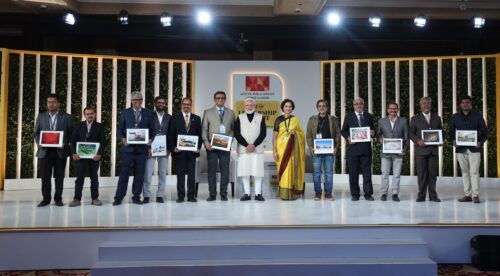
 Speaking at the Hindustan Times Leadership Summit last evening, on the anniversary of Dr B.R. Ambedkar’s Mahaparinirvan Diwas, Prime Minister Narendra Modi urged the nation to treat the coming decade as a definite time-frame to rid ourselves of every trace of a “colonial mindset”. He tied this call directly to Thomas Babington Macaulay, whose famous 1835 Minute on Education is often portrayed as the seed from which our supposed mental slavery sprouted. By 2035, the Prime Minister reminded us, Macaulay’s policy will be two hundred years old; by then, he implied, our minds should finally stand decolonised.
It is an arresting image, and a politically useful one: a single Englishman held responsible for colonising the Indian mind. But it is also a profoundly incomplete story. If we are serious about the roots of mental slavery in India, we have to look much deeper and, more uncomfortably, much closer to home. The mental architecture of graded inequality was not designed in London in the nineteenth century; it was sanctified here, over centuries, by our own hierarchies and our own texts – none more controversial than the Manusmriti.
II. Macaulay versus Manusmriti: Who Wrote Our Mental Chains?
Macaulay certainly did something momentous. He redirected state patronage away from traditional Sanskrit and Persian learning towards English, aiming to create a class of anglicised intermediaries who, in his own words, would be “Indian in blood and colour, but English in tastes, in opinions, in morals and in intellect.” That project did help produce an elite that often saw itself through European eyes and judged itself by Western standards. Modern India still bears the marks of that transition.
Yet we should be honest: Macaulay did not invent the idea that some people are born to rule and others to serve, that intelligence and dignity are the monopoly of a few. That mindset pre-dates him by many centuries. Manusmriti is one of the key texts that codified a world in which knowledge, status and rights were distributed on the basis of birth. It placed Brahmins at the priestly pinnacle, assigned military and political power to Kshatriyas, economic functions to Vaishyas, and relegated Shudras and those below them to service and subservience. It prescribed differential punishments for the same offence depending on caste, confined women to permanent dependence, and turned inequality into a religious duty.
Dr Ambedkar understood this clearly. When he and his fellow activists publicly burnt copies of Manusmriti in 1927, they were not protesting against the British Crown but against a homegrown regime of spiritual and social enslavement. In his writings he blamed Manusmriti for giving theological respectability to caste oppression and turning humiliation into destiny. If we are now embarking on a national campaign against “mental slavery”, is it intellectually honest to sermonise endlessly against Macaulay while treating Manusmriti as a revered marker of civilisational pride?
III. English: Colonial Relic or Global Instrument?
The Prime Minister’s rhetoric tends to fuse three things: Macaulay, the English language, and a generic “colonial mindset”. It is worth disentangling them. English today is the principal language of international communication in diplomacy, science, trade, aviation and technology. It is the operating system of globalisation. One can debate whether that is desirable, but it is undeniably real. To treat English itself as a chain around our necks is to confuse a tool with an ideology.
Independent India has had seventy-eight years to transform its education system. If Macaulay is the root of our mental slavery, why did we not uproot his legacy in 1947, 1950, 1965, or 1991— or, even in 2014? Why did our own leaders, across parties and ideologies, choose to retain and even expand English-medium education? The answer is awkward for both the right and the left: English became a ladder of mobility, especially for those historically locked out of Sanskritic learning. Many Dalit thinkers have openly praised the access that English and modern education provided against the gatekeeping of traditional hierarchies. For a child of a landless labourer, an English-medium government school or college can be less a symbol of slavery and more a passport out of inherited bondage.
IV. Are IITs and IIMs Colonial Vestiges or Modern India’s Creations?
Consider our premier institutions: the IITs and the IIMs. They were not bestowed upon us by Lord Curzon or the Viceroy’s Council; they were consciously created by the Republic of India in the decades after independence. Our youth, eager to pursue costly higher education abroad, discover that their TOEFL and IELTS scores are not merely statistics to flaunt on social media but an essential qualifying condition, irrespective of their academic excellence elsewhere. These institutes teach in English not because they dream of Macaulay, but because the language of cutting-edge science, engineering and management remains predominantly English. Do they reproduce certain social inequalities? Yes, in many ways they do. Are they therefore vestiges of colonialism? Hardly. They are world-class Indian institutions that must be opened up and democratised further, not caricatured as outposts of an alien empire.
V. Dr Ambedkar, the Constitution and the Language Question
The same confusion is visible in our debate on official language. The Constitution, drafted under Dr B. R. Ambedkar’s chairmanship, declares Hindi in the Devanagari script to be the official language of the Union. It also recognises the need to continue using English for official purposes, initially for fifteen years, and then allows Parliament to extend that arrangement indefinitely. It was not weakness of will but the reality of India’s vast linguistic diversity that led subsequent governments – under intense pressure from non-Hindi-speaking states – to retain English alongside Hindi. This was not mental slavery; it was federal pragmatism, an attempt to prevent the domination of one Indian language over many others.
To suggest that Dr Ambedkar and the other framers were victims of a colonial mindset is to miss the larger picture. This is the same founding generation that abolished untouchability, outlawed discrimination on grounds of caste, sex, religion and place of birth, and guaranteed equality before the law. They wrote a Constitution that, in spirit, is the polar opposite of Manusmriti: universal citizenship instead of graded inequality, rights and dignity instead of sacred hierarchy. They used English as a neutral bridge-language among representatives from regions where no single Indian language could claim automatic supremacy without provoking resentment.
If the political leadership since 2014 truly believed that English is a shackle on the national mind, it has had ample time and parliamentary strength to attempt a phased constitutional and legislative overhaul. It has chosen not to do so, perhaps recognising the explosive consequences of trying to impose a Hindi-only regime on a multilingual republic. Instead, the safer route is chosen: to demonise Macaulay rhetorically, while quietly relying on English in foreign policy, trade negotiations, higher education, and even political messaging.
VI. NEP 2020 and the Rhetoric of Decolonisation
The National Education Policy 2020 is often presented as a revolutionary break from Macaulay. It certainly talks the language of decolonisation: emphasising teaching in the mother tongue or regional language at least till Grade 5 or 8, promoting Indian knowledge systems, and promising a shift from rote learning to critical thinking. If implemented in spirit, some of these changes could enrich education and empower students in their own languages. Yet the NEP does not banish English; it merely seeks to rebalance the ecosystem, keeping English as an important option while trying to strengthen Indian languages in the classroom. Once again, we see negotiation, not rupture.
The real test of decolonisation lies elsewhere. Are children from Dalit, Adivasi, minority and rural backgrounds gaining meaningful access to quality schools and universities? Are our curricula training students to question authority – colonial, feudal, patriarchal and theological – or are they turning classrooms into echo chambers of cultural nationalism? Are we using “Indian knowledge systems” as a gateway to rigorous scholarship, or as a cosmetic label for ideological content?
VII. Scientific Temper, Not Cultural Witch-Hunts
Our Constitution provides a very different vocabulary for national self-renewal. Among the fundamental duties it expects from citizens is one that is especially relevant here: the duty to develop scientific temper, humanism, and the spirit of inquiry and reform. Alongside this, it asks us to promote harmony across religious, linguistic and regional divides, and to value and preserve the rich heritage of our composite culture. Read together, these duties are a clear directive: question inherited dogmas, reform what is unjust, and protect pluralism. They do not instruct us to hunt for enemies in particular languages, universities, disciplines or faiths, branding them as embodiments of “mental slavery”.
A cultural organisation such as the RSS is entitled to its own civilisational story, to speak of golden ages and sacred texts, to lament Macaulay and celebrate Manusmriti if it chooses. A Prime Minister, however, speaks not just for one cultural stream but for a sovereign, socialist, secular, democratic republic. His primary frame of reference must be the Constitution, not any scriptural text. When the head of government repeatedly rails against Macaulay, the colonial mindset and “mental slavery” but remains conspicuously silent on the ongoing effects of caste hierarchy, gender inequality, perceived discrimination against religious and linguistic minorities, and majoritarianism, he risks weaponising history instead of healing it.
VIII. How Far Back Do We Go in “Correcting” History?
There is also the question of where we intend to stop this campaign of “correction”. If British-era history is suspect because it reflects a colonial gaze, what about the centuries of Persianate or Afghan rule before that? Do we now relitigate every phase of interaction – Arab traders in Kerala, Turkic conquests in the North, Mughal rule, the Maratha expansion, Sikh misls, European trading companies – in search of a perfectly untainted past? Push this logic far enough and even the idea of Aryan and Dravidian encounters becomes an arena for cultural prosecution rather than scholarly inquiry. History becomes trial; historians become accused; textbooks become charge-sheets. That way lies not liberation but paranoia.
IX. Real Decolonisation and the Shadow of Manusmriti
The paradox is brutal. In the name of liberating ourselves from Macaulay, we may end up rehabilitating the very ethos that Manusmriti symbolises: hierarchy, unquestioned obedience, contempt for the equal dignity of all citizens. Real decolonisation would do the opposite. It would mean pursuing, in the spirit of Dr Ambedkar’s Annihilation of Caste, the dismantling of the “graded inequality” he described, defending universities and scientific institutions from political witch-hunts, broadening access to high-quality education in all languages including English, and teaching history so that young Indians learn to interrogate power rather than worship it under different names.
Ultimately, the question is not whether we can erase Macaulay. We cannot. Nor can we pretend that Manusmriti never existed or had no influence. We can neither undo history nor rewrite it from scratch. We can, however, distort it – and that, increasingly, is what our politics is tempted to do.
X. Tagore’s Test: Is the Mind Without Fear?
Perhaps the most fitting way to measure whether we have truly shed mental slavery is not to denounce a nineteenth-century British official but to revisit an Indian voice from the early twentieth century. Rabindranath Tagore, our first Nobel laureate in literature, wrote in both Bengali and English. In one of his most cherished prayers for the nation, he imagined a place “where the mind is without fear and the head is held high”, where knowledge is free and the clear stream of reason has not lost its way.
More than seven decades into our Republic, we must ask ourselves honestly: have we reached that place? Or are we still enmeshed in self-created shackles – some inherited from the Raj, many forged by centuries-old bonds of caste, patriarchy and prejudice – even as we proclaim our freedom from Macaulay while shrinking from a confrontation with Manusmriti? Each citizen will have to answer that question for themselves. The Prime Minister cannot answer it for you.