
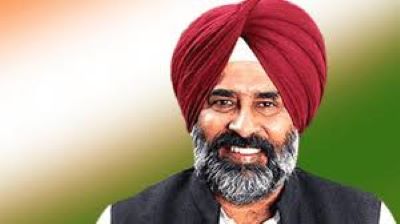
Former Technical Education Minister and MLA Paragat Singh has consistently argued that the neglect of government institutions has been a boon for the private education sector. He described the Punjab and Haryana High Court’s censure of the Punjab Government over teacher shortages and poor school infrastructure as “a national embarrassment and the clearest proof of Government failure,” adding that the AAP government must understand that “the future of Punjab’s children cannot be shaped through advertisements it requires teachers, classrooms, and accountability.” He also dismissed the AAP government’s claims of an “education revolution” as hollow, noting that Education Minister Harjot Bains himself admitted during school inspections that many teachers were unable to teach effectively, asking pointedly: “If teachers are not adequately trained, what kind of education revolution has the government been claiming for four years?”( The Tribune)
A Broader Political Critique
Pargat Singh’s criticism extends beyond education. He alleged that the Punjab Government had painted government schools in the colours of its party flag, thereby politicising educational institutions. (The Tribune) In the Punjab Vidhan Sabha, he also called on the state government to reject the New Education Policy, arguing it was an attempt to reshape the mindset of coming generations and posed a threat to the state’s rights over education.
https://x.com/i/status/2033016618507174045
The Larger Crisis in Punjab’s Higher Education
Pargat Singh’s concerns reflect a well-documented structural problem. For decades, government colleges in Punjab have relied heavily on guest/contractual faculty rather than permanent recruits, leaving thousands of teaching posts vacant. When private colleges offer better-staffed campuses and more stable faculty, the comparison is damaging to public institutions. His argument is straightforward: you cannot expect government colleges to compete with private ones when they have been denied basic inputs, qualified, permanent faculty for 25 years
Pargat Singh on Punjab’s Crumbling Public Education & Health Institutions
Pargat Singh, a Padma Shri awardee, former captain of the Indian men’s hockey team, and Congress MLA from Jalandhar Cantt, has been one of the most vocal critics of the systematic weakening of Punjab’s public education and health institutions. Having served as Punjab’s Education Minister under the Congress government from 2017 to 2022, he speaks from direct experience when he argues that decades of political neglect have quietly handed the advantage to private institutions. At the heart of his argument is a damning fact about faculty recruitment. Speaking at a demonstration alongside 1,158 assistant professors at PAP Chowk, Pargat Singh stated that it was under his tenure as Education Minister that a transparent, merit-based recruitment was held after 25 years. The Tribune For a quarter century before that, government colleges in Punjab were left to function with contractual and guest faculty rather than permanent recruits — a neglect that hollowed out the academic foundation of public higher education.
Even when recruitment was finally initiated, it was not allowed to reach completion. The Punjab and Haryana High Court stayed the recruitment process amid allegations of paper leakage during exams conducted by Punjabi University and Guru Nanak Dev University, and opposition leaders demanded the entire process be scrapped. Pargat Singh took moral responsibility for any procedural shortcomings but drew a firm line between administrative lapses and political will, arguing that the 1,158 recruited professors were being denied their rightful appointments due to the AAP government’s negligence, not any failure on their part. His frustration with the AAP government’s handling of education runs deep. He dismissed the government’s claims of an “education revolution” as hollow, noting that Education Minister Harjot Bains himself admitted during school inspections that many teachers were unable to teach effectively asking pointedly what kind of education revolution had been claimed for four years if teachers were not adequately trained. The Tribune He also pointed out that the Punjab Government had painted government schools in the colours of its party flag, thereby politicising educational institutions The Tribune rather than investing in them.
He described the Punjab and Haryana High Court’s censure of the Punjab Government over teacher shortages and poor school infrastructure as a national embarrassment and the clearest proof of government failure, adding that the future of Punjab’s children cannot be shaped through advertisements but requires teachers, classrooms, and accountability. On the policy front, he also called on the state government to reject the New Education Policy, arguing it was an attempt to reshape the mindset of coming generations and posed a threat to states’ rights over education.( Babushahi) The conclusion Pargat Singh draws is simple and hard to argue with: when government colleges are denied permanent faculty for 25 years, when recruitment drives are stalled mid-process, and when public schools lack basic infrastructure, these institutions cannot realistically compete with the private sector. The decline of public education and health services, he argues, has not been accidental it has been the product of sustained neglect, and private institutions have been the quiet beneficiaries.