
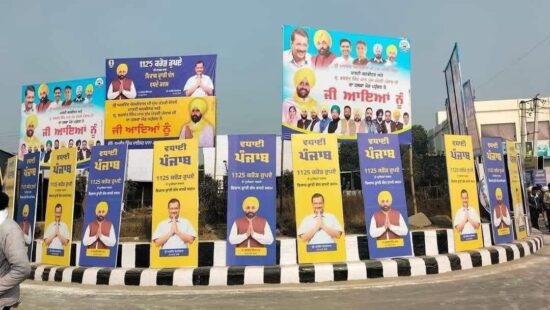
 Punjab Government’s Costly Advertisements Expose a Cruel Paradox-Satnam Singh Chahal
In recent months, Punjab has witnessed a disturbing political irony grand advertisements splashed across newspapers, television, social media feeds, and outdoor hoardings, while the same government repeatedly complains of empty coffers when it comes to public welfare. The ruling establishment continues to spend several crore rupees on self-promotion, even as schools plead for funds, hospitals struggle for medicines, infrastructure projects stall, and public services decay under bureaucratic excuses of financial scarcity.
This contrast is not merely a governance flaw it is a brutal message to the people: optics matter more than outcomes, applause matters more than assistance.
For a state battling unemployment, drug addiction, farm distress, rural poverty, crumbling education standards, and collapsing municipal infrastructure, financial priorities should be sacred. Every rupee ought to strengthen grassroots systems, not manufacture political glory. Yet, while development budgets are slashed, advertisement budgets seem protected like a sacred cow.
The political logic is simple governments want to rule the narrative, especially when the ground reality is uncomfortable. So, glossy claims of “Badlaav” (change), “Kranti” (revolution), and “historic reforms” dominate screens, even though the real Punjab continues to grapple with broken roads, delayed pensions, unpaid electricity subsidies, and abandoned healthcare projects.
Walk into Punjab’s villages, and the joke writes itself: there are more hoardings of leaders than working streetlights. Small traders pay heavy taxes, but the state spends freely on PR; farmers face mounting debts, but the treasury opens wide for publicity campaigns; youth cry for employment opportunities, but crores vanish into media agencies.
Even welfare decisions like empowering panchayats, supporting cooperative farming, modernising schools, or repairing irrigation canals rarely approve in time due to “budgetary limitations.” Pensioners wait months for their meagre dues. Municipal corporations drown in liabilities. But the marketing machinery never lacks oxygen.
Eventually, this advertising obsession becomes more than financial wastage it becomes a psychological insult. When a government continuously advertises success instead of delivering success, it signals insecurity. When the state invests in broadcasting development rather than building development, it signals decay.
Punjab deserves a government that speaks less and works more a government that invests in classrooms rather than camera angles, in hospitals rather than hashtags, in irrigation canals rather than influencers.
Because governance is not a commercial event. A state is not a brand. And people are not consumers who must be convinced through paid propaganda. They are citizens whose taxes must translate into better facilities, prosperous futures, and dignified lives.
Until that principle is honored, every new advertisement will feel like an insult paid for by the very people who are denied welfare. A propaganda government may win headlines but it cannot heal Punjab.