
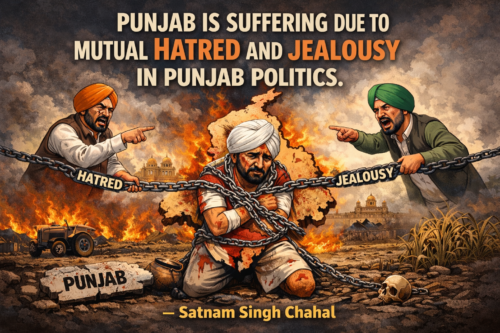
 Ruling parties make big promises during elections, but then renege on them once in power. This pattern of broken commitments has eroded public trust and left important issues unresolved. What makes the situation even more worrisome is the unprecedented level of animosity between political parties, which has paralysed collective action on Punjab’s pressing problems. Culture of Empty Promises Punjab’s political parties have mastered the art of making promises during election campaigns. From job guarantees to agricultural reforms, from corruption-free governance to infrastructure development the manifestos are impressive.
However, the gap between promises and performance has become a chasm that threatens the very foundation of democratic accountability. Every ruling party has promised millions of government jobs, yet unemployment rates continue to rise, especially among the educated youth. Loan waivers are announced with great fanfare, but implementation remains incomplete, leaving farmers in a perpetual cycle of debt. Several governments have promised to end the drug problem in months, yet the problem has persisted for generations. Promises to attract investment and revive ailing industrial units remain mostly on paper, while factories continue to close. Promises of free or subsidized electricity for various sectors often come with hidden conditions or incomplete implementation.
The poison of mutual hatred What sets Punjab’s current political climate apart from its historical tradition is the unprecedented level of personal animosity and vendetta politics. Instead of competing on policy and performance, political parties have descended into a toxic atmosphere of personal attacks, vendetta politics, social media warfare, and legislative paralysis. Political discourse has shifted from issues to character assassination, making constructive dialogue impossible. Each new government focuses on undoing the work of the previous administration rather than building on it. Online platforms have become battlegrounds for spreading misinformation and deepening divisions. Legislative sessions have become theaters of disruption rather than forums for problem-solving. This toxic atmosphere has completely destroyed the collaborative spirit that once characterized Punjab’s political culture. Absence of collective leadership Perhaps the most damaging consequence of this political toxicity is the failure to convene all-party meetings on important issues of the state.
Problems that require collective wisdom and bipartisan action—such as river water disputes, drug trafficking networks, agricultural stability, border security concerns, economic development strategies, health care infrastructure, and the quality of education—remain unresolved because political parties refuse to sit together and build consensus. A winner-take-all mentality has replaced the collaborative spirit that once made Punjab a model of progressive governance. The real victims: the people of Punjab As political parties engage in their power games, ordinary Punjabis suffer the consequences. Lacking opportunities, educated youth are fleeing to other states and countries in search of better prospects. Farming families are struggling with debt, uncertain markets, and inadequate support; farmer suicides have become an alarmingly regular occurrence. Public infrastructure, health care, and education suffer from neglect and mismanagement, affecting millions of families.
Punjab, once India’s most prosperous state, has lagged behind in many development indicators, losing its leadership and prestige. Punjab’s social fabric is crumbling under the weight of these political failures. Families are breaking up as the youth migrate abroad. The elderly are left without the support systems they once relied on. Communities that once thrived on collective prosperity now struggle with unemployment, addiction and despair. Punjab’s promise as a land of opportunity has become a cruel joke for millions who see no future in their homeland. The way forward: Regaining political integrity For Punjab to move forward, several fundamental changes are necessary.
Citizens must demand performance audits of election promises and hold parties accountable through democratic means, including informed voting and active citizen participation. Political parties should prioritize the interests of Punjab above partisan gains and hold regular all-party consultations on important issues, putting aside personal animosities for the greater good of the state. Strengthening independent institutions can reduce the scope for vendetta politics and ensure continuity in governance, regardless of which party is in power. Active civic engagement and informed voting can break the cycle of broken promises, forcing politicians to take their commitments seriously. Responsible journalism that focuses on issues rather than sensationalism can help restore constructive political discourse and keep the focus on what truly matters to the people of Punjab.