
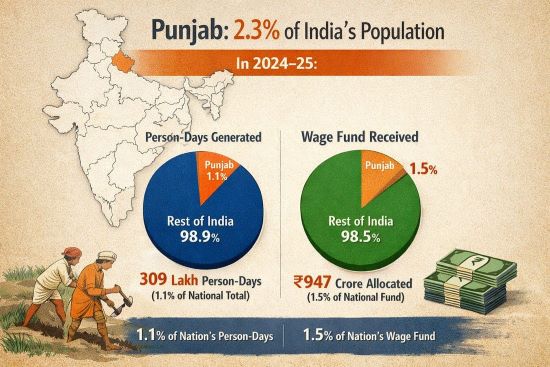
 Our Hindustan Times op-ed, “Punjab, VB–G RAM G, and the Limits of a ‘Special Session’,” published today (December, 28) looks past the predictable theatre of resolutions and speeches to ask a harder, more practical question: what can a state government actually do once Parliament has changed the national framework of rural employment protection? A Vidhan Sabha resolution cannot repeal a central statute. But it need not be meaningless—if it is used to announce a strategy that protects workers in real time.
The article advances five concrete measures Punjab can pursue.
First, a federal legal response: if the redesigned framework shifts financial and administrative burdens to states in a way that weakens enforceability, Punjab should consider a tightly drafted Centre–State challenge—preferably with other states—to seek judicial clarity on funding responsibility, transparency of allocations and worker protections.
Second, state legislation within Punjab’s own domains: while Punjab cannot override a central Act, it can enact a complementary “top-up” framework anchored in state subjects—minor irrigation, water conservation, village commons, rural sanitation, panchayat infrastructure and community assets—funding additional employment days, maintaining a ready shelf of works, and strengthening grievance redress and social audit.

Third, a wage strategy rather than annual letters: the notified wage gap is stark—Haryana ₹400/day versus Punjab ₹346/day (2025–26). The state can pilot a targeted, time-bound wage top-up for vulnerable households, lean seasons or priority works, instead of allowing the disparity to depress demand.
Fourth, prevent rationing-by-treasury: if fiscal exposure rises, Punjab must avoid “managing” demand by delaying sanctions and payments. A modest, ring-fenced stabilisation buffer linked to demand signals can keep employment real rather than notional.
Fifth, fix delivery: measurable timelines for work allotment, muster closure, wage processing and grievance disposal—published publicly—plus safeguards so technology does not become a new gatekeeping mechanism