
 Lawmakers in the National Assembly of Quebec, who speak so often of their province’s “distinct society” and hard-won freedoms, seem strangely oblivious to another strand of their own history. In 2019, they passed Bill 21, An Act Respecting the Laicity of the State, which forbids many public servants in positions of authority—teachers, police officers, prosecutors, judges—from wearing visible religious symbols while at work. Turbans, hijabs, kippahs and prominent crosses are all swept into this net, on the theory that the state must appear religiously blank whenever it exercises power.
The law was pushed through with the help of the “notwithstanding clause”, pre-emptively shielding it from key Charter rights, and it remains in force even as Canada’s Supreme Court prepares to hear a final challenge to its legality. The official story is one of lofty principle. Quebec, we are told, is merely insisting on state neutrality, drawing a bright line between public power and private belief.
Yet the real-world effect of Bill 21 is brutally specific: a visibly Sikh man who wears a turban, or a Muslim woman who covers her hair, can be told that if they want to teach children, become prosecutors, sit on the bench or patrol the streets in uniform, they must first strip off the most recognisable sign of their faith. This is not a hypothetical cruelty. Careers have been blocked, offers withdrawn, and at least one Sikh and several Muslim educators have left Quebec altogether, uprooting their lives simply to live in a province where what they wear on their heads does not cost them their jobs.
A Turban in the Trenches
Step back a century and the picture is almost absurdly inverted. In the first half of the twentieth century, Sikh soldiers marched into the killing fields of two World Wars with turbans on their heads instead of steel helmets, fighting and dying for the British Crown and the Allied cause long before India ever saw independence.
Historians estimate that over 100,000 Sikhs served in the First World War alone, part of the vast British Indian Army that held the line at Ypres, Gallipoli, Flanders and the Western Front. They fought again in the deserts of North Africa, the mountains of Italy and the jungles of Burma in the Second World War.
These men crossed continents to defend freedoms they themselves did not fully enjoy—colonial subjects, not citizens, taking orders from distant white officers. Yet they clung to the dastar even when those officers fretted about shrapnel and bullet wounds, quietly proving in trench after trench that courage does not depend on bare heads and standard-issue kit.
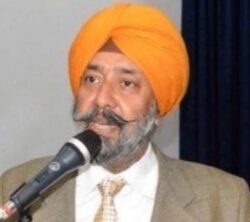
Military authorities, faced with the evidence in blood and bone, allowed Sikh units to keep their turbans in combat, recognising that for them it was not an optional adornment but a non-negotiable article of faith. The turban was not an obstacle to discipline or effectiveness; it was part of what made Sikh battalions so reliable—an outward sign of inward resolve that helped steady them when others broke.
From the Trenches to Quebec’s Classrooms
That same turban now finds itself recast as a problem in Quebec’s classrooms, courtrooms and police stations. Elsewhere in Canada, turban-wearing Sikhs serve in the Canadian Armed Forces and the Royal Canadian Mounted Police without incident, their articles of faith fully compatible with public duty and public trust.
In Quebec, however, the message is very different: the turban that was good enough for the trenches of Europe is apparently too problematic for a Year 4 maths class in Montreal or a police beat in Quebec City. The province stands almost alone in North America in insisting that the price of serving the public in certain roles is the erasure of visible faith—even when that faith once bled for the very Western order Quebec now inhabits.
The hurt, then, is not only legal but historical. It is difficult for Sikhs not to read Bill 21 as a refined form of ingratitude: a province that benefited from Sikh sacrifice in the two World Wars now telling the descendants of those soldiers that their most visible article of faith is unwelcome in positions of public authority.
“Neutrality” That Isn’t Neutral
Supporters of Bill 21 protest that the law is even-handed, that crosses, kippahs, hijabs and turbans all fall equally under its reach. But a “neutrality” that asks one person to tuck away a tiny pendant while asking another to remove the very symbol that defines who they are is not neutral in any meaningful sense. It is calibrated pressure masquerading as universality.
In practice, those hit hardest are precisely the minorities whose beliefs are visibly embodied and non-negotiable: Sikh men with turban (dastar or pagri), Muslim women with hijab, some Jewish men with kippah. The culturally dominant can often blend into the supposed secular norm without changing a single conviction. The law thus encodes a hierarchy of comfort—majority identities are effortless; minorities must pay an entry fee.
It is also a strangely blunt instrument. A public official’s name often gives away more about their perceived religious or cultural background than a piece of cloth on the head or the style in which it is tied. If the objective is to make public officials unidentifiable on grounds of their faith, the turban test fails spectacularly before it has even begun.
Quebec’s leaders argue that this is the necessary price of a truly secular state, pointing to their own history of liberation from an overbearing Catholic Church. But there is a profound category error here. A struggle against a once-dominant church is now being misapplied to constrain tiny minorities whose faith never ruled Quebec in the first place.
A Debt Quebec Still Owes
Quebec did not fight those wars alone. Its sons marched and died alongside turbaned soldiers from far-off Punjab, men who sang shabads under their breath in flooded trenches and carried the Sri Guru Granth Sahib into battle zones as an anchor of courage. To forget this is to forget that the freedoms Quebec now claims to protect through “laicity” were secured, in part, by people who looked nothing like its majority today.
Today, the descendants of those Sikh soldiers live, work and pay taxes in Quebec and across Canada. They run small businesses, drive lorries and taxis, staff hospitals, design software, conduct research and, where the law permits, serve in uniform. Many cherish Quebec’s language and culture and want nothing more than to contribute fully to its public life.
When such a community is told that it may be present in the economy but not visible in the classroom or the courtroom, it is hard not to hear the echo of an older colonial arrogance: we will take your labour and your lives, but not your identity. A province that once relied, indirectly but materially, on Sikh bravery in the defence of the Allied cause should be capable of a more generous, historically literate secularism.
Federal Government’s Carefully Calibrated Distance
If Quebec’s stance on Bill 21 is unapologetically blunt, Ottawa’s is almost the opposite: carefully calibrated, legalistic and, to many minorities, disappointingly evasive. The federal government has chosen to intervene in the Supreme Court challenge not to say plainly that Bill 21 is discriminatory and must fall, but to argue instead about the boundaries of the “notwithstanding clause”. In effect, it is asking the Court to curb how freely provinces can shield their laws from Charter review, while studiously refusing to take an explicit position on the constitutionality of this particular law. For those forced out of their chosen professions by Bill 21, this sounds less like a defence of their fundamental rights and more like a sophisticated jurisdictional seminar. A government, nay a country, that claims to stand for diversity and inclusion across Canada is unwilling to say, in so many words, that a law which bars a Sikh in a turban or a Muslim woman in a hijab from teaching children or serving as a prosecutor is simply wrong in principle. The result is, in our view, a strangely bloodless posture: morally indignant about process, curiously muted about substance.
Silence Closer to Home
Nor is the story of neglect confined to Quebec City. The passage of Bill 21 in 2019, its reaffirmation in subsequent political campaigns and its evolution into a broader “secularism 2.0” project—including proposals to curb public prayer and religious accommodation—have attracted only sporadic and muted responses from New Delhi, Chandigarh or Amritsar.
There have been statements, letters and occasional resolutions, but no sustained, high-level campaign—through Parliament, diplomacy or multilateral human-rights forums—to insist that a community whose soldiers bled for the Allied cause should not be barred from teaching a class or walking a beat with their dastar or pagri intact. Sikh institutions, too, have often appeared reactive rather than strategic, issuing protests when headlines flare but failing to coordinate long-term legal, diplomatic and public-opinion efforts with Sikh organisations in Canada who are on the front line of this fight.
This is not a demand for shouting matches with Ottawa or Quebec City, or for performative outrage that plays well in Punjab but does nothing for a young Sikh teacher in Montreal. It is a call for principled, persistent engagement: supporting ongoing constitutional challenges in Canadian courts; intervening through respectful diplomatic channels; raising the issue in Commonwealth, UN and human-rights bodies; and sending a clear, calm message from India’s political and Sikh religious leadership that the dignity of the Sikh turban is not negotiable anywhere in the world.
A Gentler, Firmer Path Forward
To call Bill 21 “ungrateful” is not to deny Quebec’s own difficult history—the long shadow of clerical power, the understandable desire to ensure that no church again dominates public life. It is to ask why a legitimate struggle against one historic form of domination is now being deployed against communities that never dominated Quebec at all.
A province that once marched alongside turbaned soldiers, and today benefits from Sikh labour, enterprise, taxes and civic participation, owes at least this much: that no Sikh be forced to choose between a public vocation and the dastar that embodies spiritual obligation, dignity and discipline.
In a more generous reading of secularism, the state does not police which symbols are too visible; it trusts citizens to distinguish between personal conviction and institutional power, and understands that neutrality lies in equal treatment, not in forced sameness. With the Supreme Court of Canada now set to hear the challenge to Bill 21, in hearings tentatively scheduled from 16 to 27 March 2026, one can only hope that the country’s apex court shows more sense than the hypocritical Quebec National Assembly and the equivocating federal government. It should recognise that the turban they want removed from the classroom is the same turban that never wavered in the trenches