
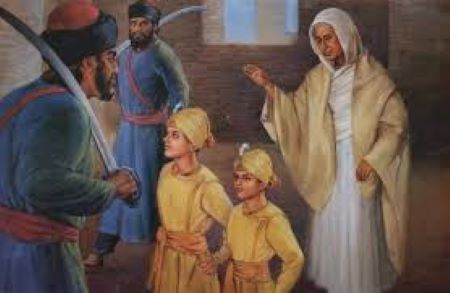
 The history of Sikhism is inseparably linked with sacrifice, resistance against tyranny, and unwavering faith in righteousness. Among the most heart-rending and inspiring chapters of this history is the martyrdom of the Sahibzade,the four sons of Sri Guru Gobind Singh Ji. Keeping in mind the deep religious sentiments of the Sikhs, it is historically and spiritually appropriate that the day dedicated to their supreme sacrifice be observed and remembered as “Sahibzade Martyrdom Day.” This name not only reflects historical truth but also preserves the sanctity, reverence, and collective memory associated with their martyrdom.
The Sahibzade Baba Ajit Singh Ji, Baba Jujhar Singh Ji, Baba Zorawar Singh Ji, and Baba Fateh Singh Ji were not merely young princes or royal heirs; they were born into a spiritual lineage that demanded the highest moral courage. As the sons of the Tenth Sikh Guru, they were raised with the ideals of Dharam Yudh (righteous struggle), equality, justice, and fearlessness. Their lives and deaths were shaped by the Guru’s mission to defend human dignity against oppression, irrespective of religion or caste.
The martyrdom of the elder Sahibzade, Baba Ajit Singh Ji and Baba Jujhar Singh Ji, took place during the historic Battle of Chamkaur in 1705. Facing overwhelming Mughal forces, Guru Gobind Singh Ji and a small group of Sikhs chose resistance over surrender. One by one, the elder Sahibzade sought their father’s permission to enter the battlefield. Their sacrifice was not impulsive heroism but a conscious offering rooted in Sikh doctrine—that standing against injustice is a sacred duty. Their martyrdom symbolizes youthful valor guided by spiritual discipline, a rare combination that continues to inspire generations.
Even more heartrending is the martyrdom of the younger Sahibzade, Baba Zorawar Singh Ji and Baba Fateh Singh Ji, who were barely children. After being separated from their family, they were captured and presented before the Mughal authorities at Sirhind. Despite their tender age, they were subjected to immense pressure, temptation, and threats to abandon their faith. Their refusal to renounce Sikhism stands as one of the most extraordinary examples of spiritual steadfastness in world history. They were ultimately bricked alive, a cruelty that still sends shivers through the collective Sikh consciousness.
For Sikhs, these events are not merely historical incidents; they are sacred memories intertwined with Shaheedi (martyrdom), which holds a central place in Sikh theology. Martyrdom in Sikhism is not passive suffering but an active affirmation of truth (Sat), justice (Nyay), and divine will (Hukam). The Sahibzade exemplified this principle in its purest form. Therefore, naming the day in their honor as “Sahibzade Martyrdom Day” directly aligns with Sikh religious philosophy and tradition.
The term “Sahibzade” itself carries immense respect and spiritual weight. It is deeply embedded in Sikh literature, ardaas (daily prayer), kirtan, and historical narratives. Any commemoration that sidelines this sacred term risks diluting the emotional and theological connection Sikhs have maintained for over three centuries. Observing the day explicitly as Sahibzade Martyrdom Day ensures that the focus remains on their sacrifice rather than on generic or politically framed interpretations of history.
Moreover, Sikh history has largely been preserved through collective remembrance Gurpurabs, Shaheedi Diwas, and community observances that reinforce identity and values. The martyrdom of the Sahibzade is traditionally remembered during the period of Shaheedi Sabha and through recitation of historical ballads (vars). Formal recognition of the day as Sahibzade Martyrdom Day strengthens continuity between lived tradition and official commemoration, preventing historical distortion or emotional disconnect.
In a broader sense, the Sahibzade’s sacrifice transcends religious boundaries. Their martyrdom represents universal values: resistance to tyranny, protection of conscience, and the courage to uphold belief even in the face of death. However, universal relevance should not come at the cost of religious specificity. Respecting Sikh sentiments means acknowledging that this chapter of history belongs foremost to the Sikh Panth, whose spiritual framework gives it meaning.
Therefore, from a historical, religious, and emotional standpoint, commemorating the sacrifice of Guru Gobind Singh Ji’s sons as Sahibzade Martyrdom Day is not merely a matter of naming—it is an act of honoring truth, preserving sacred memory, and respecting the faith of millions of Sikhs worldwide. Such recognition ensures that future generations remember the Sahibzade not only as historical figures but as eternal symbols of faith, courage, and martyrdom rooted in Sikh tradition.