
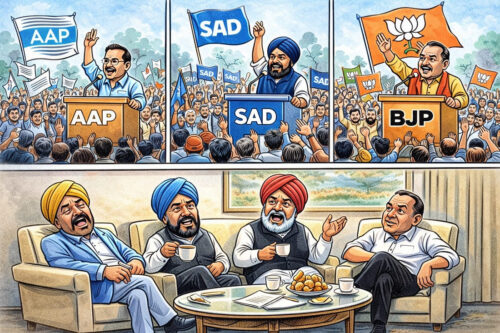
 In Punjab’s political circus, power is not a responsibility — it is a magic switch. The moment a politician gets power, a strange transformation begins. Their walking style changes, their talking style changes, and even the way they look at ordinary people changes. Yesterday they were calling the public “brothers and sisters,” today they behave like the public is disturbing their royal nap. Power comes, and suddenly even their silence becomes “historical.”
When they are in power, every politician becomes a great philosopher. They deliver long speeches about honesty while sitting in rooms filled with luxury. Every mistake suddenly becomes “the opposition’s conspiracy.” If roads break, it is a conspiracy. If hospitals don’t have doctors, it is a conspiracy. If the minister shows up late, that too is a conspiracy planned by someone jealous of their greatness.
But the real comedy begins when they lose power. Overnight, their tone becomes sweet like jaggery. The same leaders who never answered a call now start calling everyone themselves: “Paaji, tussi yaad karde ho?” They suddenly discover that democracy is in danger and the constitution is under attack. They roam around with tearful eyes saying, “I am being targeted because I worked for the people.” Yesterday they were kings, today they are victims.
Out of power, they become the biggest “people’s protectors.” They visit villages, drink tea at roadside dhabas, and sit cross-legged on charpais — something they would not do even in their own home. They give long speeches about morality, forgetting completely what they did when they were in power. They start every sentence with “When we were in government…” conveniently skipping the parts where they messed up.
In Punjab, politicians change faster than the weather. When they’re in power, they forget the people. When they’re out of power, they remember only the people. And the public? We watch the show, buy popcorn, and wait for the next election — because in this state, comedy never ends.