
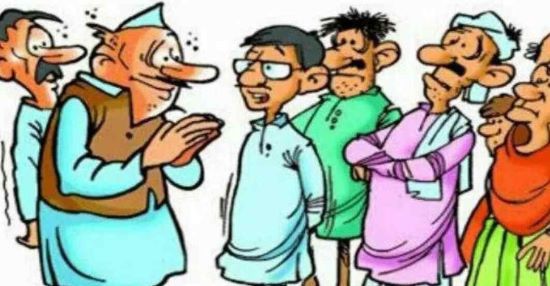
 In every town, mohalla, village square, office corridor, and WhatsApp group exists a rare but loud species: the Good-For-Nothing Authority. These are people with no post, no portfolio, no responsibility, and absolutely no decision-making power—yet they speak as if the sun rises only after consulting them. Their greatest qualification is free time, and their most prized asset is an unverified rumour.
You will find them seated permanently at tea stalls, on cracked plastic chairs tilted at dangerous angles, issuing global directives between sips of chai. One moment they are dismissing governments, the next they are reshuffling cabinets, and before the kettle whistles again, they have already solved international conflicts. Elections? Fixed. Transfers? Already decided. Budgets? Misused—according to sources they cannot name but deeply trust.
These self-appointed world managers function on a unique system of intelligence gathering known as “I heard from someone who knows someone.” Facts are optional; confidence is compulsory. If a road is broken, it is because “they want it that way.” If a bridge is built, it is surely a scam. If nothing happens, it proves everything is happening secretly. In their universe, silence is evidence and noise is confirmation.
Despite having zero authority, these experts speak in commands. “This officer should be suspended.” “That leader will fall in two days.” “If I were in power, things would be different.” Curiously, when asked why they are not in power, they immediately change the topic or blame a grand conspiracy that began at birth and continues exclusively to block their greatness.
Their daily schedule is packed. Morning gossip about neighbours, afternoon analysis of national politics, evening character assassination of relatives, and late-night forwarding of messages that begin with “Breaking News” and end with “Forwarded many times.” Not once do they verify, but verification is for the weak; assumptions are for leaders.
Ironically, these people fear actual responsibility. Give them a form to fill, a queue to stand in, or a task to complete, and they vanish faster than promises after elections. Power, after all, requires work. Gossip requires only a mouth and an audience—both of which they possess in unlimited supply.
Yet, society cannot function without them. They are the unofficial entertainment department, the background noise of public life, the living proof that opinions are free and wisdom is rare. They remind us daily that the loudest voices are often the emptiest vessels, echoing endlessly while the real world moves on without noticing.
And so, the Good-For-Nothing Authority continues its rule—issuing orders no one follows, making decisions no one implements, and governing a world that exists only in their conversations. The irony is complete, the satire writes itself, and the tea, thankfully, is still hot.