
 Suicide in Punjab: Numbers, Trends, and Underlying Reasons-Satnam Singh Chahal
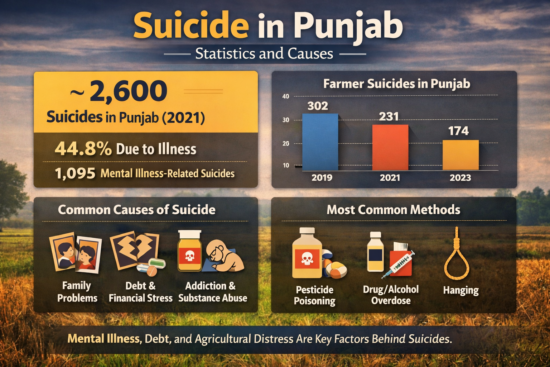
Suicide remains a significant public health and social concern in Punjab, shaped by a complex interplay of mental health issues, chronic illness, economic stress, and social pressures. According to the National Crime Records Bureau (NCRB) data for 2021, the state recorded about 2,600 suicides — a figure that reflects both persistent distress and the limitations of official reporting systems.
One of the most striking patterns in Punjab’s suicide data is the role of illness. In 2021, approximately 44.8 % of suicides in the state — around 1,164 deaths — were attributed to disease, including mental illness and chronic physical conditions. This proportion is about 2.5 times higher than the national average, suggesting that health-related despair is a particularly serious factor in Punjab.
While the overall suicide rate in Punjab has sometimes been reported as lower than the national average, the share of suicides linked to illness and mental health concerns is notably high. Of those illness-related suicides in 2021, around 1,095 cases were due to mental illness alone, with men comprising the majority.Agricultural distress, historically a major concern in Punjab, also contributes to the suicide picture — even if recent official figures show a decline in farm suicides. NCRB data indicates that farm suicides (cultivators and labourers combined) dropped from 302 in 2019 to 174 in 2023. Among these, 141 were cultivators and 33 were farm labourers. However, many farmer organisations dispute this data, arguing that the true scale of distress is underreported, and that broader economic hardship, debt, and lack of institutional support remain major drivers.
The reasons behind suicide in Punjab extend beyond health and farming. According to police and institutional data, family problems, domestic disputes, unemployment, relationship breakdowns, and pressure from academic or professional life are common contributors. For instance, in nearby Chandigarh (whose figures often reflect broader regional trends), family disputes and prolonged illness were among the top reasons cited for suicides in 2023.Another troubling aspect is the role of addiction and substance abuse. Punjab has long struggled with high rates of drug use, and mental health professionals and police have identified addiction — particularly to opioids and alcohol — as a factor in many suicide cases, especially among young men. While national trends often highlight family or financial reasons, substance abuse remains a significant stressor in the Punjab context.
The mechanisms of suicide in the state also reflect broader rural characteristics. Access to pesticides and toxic agricultural chemicals, commonly stored on farms, increases the use of poisoning as a method of suicide. Separate NCRB reports show that Punjab, Haryana, and Himachal Pradesh together accounted for a significant share of pesticide poisoning deaths, with Punjab alone reporting over 500 such fatalities in 2023 — many of which overlap with suicide cases due to the deliberate ingestion of these chemicals.
Moreover, suicide is not limited to one demographic group. While men account for the majority of suicides — consistent with national patterns — women in rural and urban settings face pressures from family disputes, marital issues, societal expectations, and domestic violence. Students, unemployed youth, and daily wage earners also appear in suicide statistics, underscoring the wide spectrum of distress across age and social groups.
Experts emphasise that statistics alone cannot capture the deep psychological and socioeconomic drivers behind suicide. Factors such as stigma around mental health, lack of accessible counselling and psychiatric care, economic insecurity, social isolation, and the erosion of traditional community support systems all intensify the risk of suicide. Effective suicide prevention, therefore, requires integrated strategies addressing mental health services, economic support, social counselling, and community awareness campaigns to reduce stigma and encourage help-seeking behavior.