
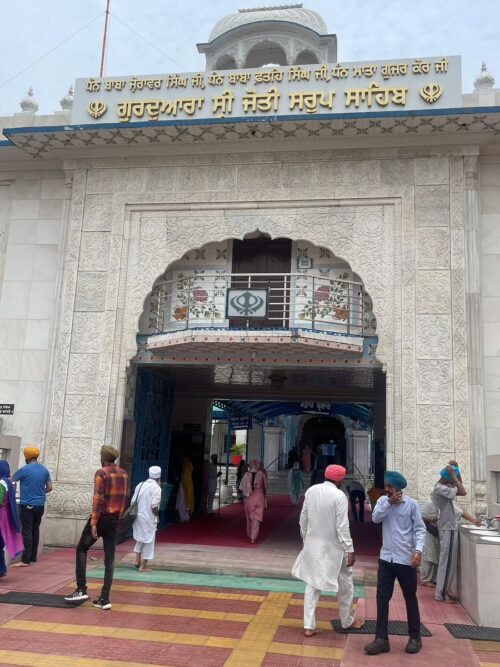
 The month of Poh, the tenth in the Nanakshahi calendar, is one of profound solemnity and deep emotional resonance for Sikhs worldwide. Beginning this year on December 15, 2024, and lasting until January 13, 2026, Poh coincides with the cold embrace of winter (Sisiar), yet its days are imbued with an even greater chill—a collective grief and remembrance of sacrifices unparalleled in human history. This sacred month is a time to honour the legacy of the four Sahibzadas, Mata Gujri Ji, and countless Sikhs—both men and women—who stood steadfast in their faith amidst immense adversity, choosing martyrdom over compromise.
The first half of Poh, in particular, carries an overwhelming sense of mourning, as the Sikh community across the globe reflects on these monumental acts of courage and devotion. Unlike other months, the Sangrand of Poh is marked not with greetings or celebrations but with solemn silence and heartfelt introspection. It is a time to grieve, to commemorate, and to draw strength from the sacrifices that forever shaped Sikh history and identity.
Early Poh – The Beginning of Adversity
On 6 Poh (December 21, 1704), Guru Gobind Singh Ji made an immensely challenging decision to leave the fortified city of Anandpur Sahib, the birthplace of the Khalsa (April 13, 1699). This decision was influenced by solemn assurances from the Mughal rulers, who swore upon the Holy Quran to provide safe passage to the Guru, his family, and his followers. However, this promise of safety was laced with betrayal. The departure, undertaken under siege and treachery, marked the beginning of one of the most gruelling and transformative chapters in Sikh history. It set the stage for unparalleled acts of valour, sacrifice, and spiritual resilience that remain eternally etched in the Sikh collective memory.
The Days of Ultimate Sacrifice
On 7 Poh (December 22), Mata Gujri Ji, mother of Gru Gobind Singh ji, and the younger Sahibzadas—Baba Zorawar Singh and Baba Fateh Singh—became separated from the main group at the Sirsa River. This separation led to a chain of events that would culminate in their martyrdom.
Chronological Order of Events: The Battle of Chamkaur
December 21, 1704 (6 Poh)
Arrival at Chamkaur: Guru Gobind Singh Ji and his followers reached the Kachi Garhi (mud fortress) in Chamkaur after leaving Anandpur Sahib.
Preparations began for a defence against the pursuing Mughal forces.
December 22, 1704 (7 Poh)
Siege Begins: The Mughal forces laid siege to the fortress, launching the first major assault.
The Sikhs valiantly repelled the attacks, demonstrating unwavering courage despite being vastly outnumbered.
During the night, Guru Gobind Singh Ji, following the Hukamnama of the remaining Sikhs, prepared to leave the fortress to ensure the survival of the Khalsa mission.

December 23, 1704 (8 Poh)
Final Day of Battle:
The elder Sahibzadas, Baba Ajit Singh (18 years) and Baba Jujhar Singh (14 years), heroically charged into battle and attained martyrdom.
Three of the original Panj Pyare—Bhai Mohkam Singh, Bhai Himmat Singh, and Bhai Sahib Singh—also achieved martyrdom while fighting alongside the Sahibzadas.
Guru Gobind Singh Ji left the fortress under the cover of night, accompanied by Bhai Daya Singh and Bhai Dharam Singh, remaining two of the original Panj Pyare, who survived the battle.
Last Defenders:
Bhai Sangat Singh, wearing Guru Gobind Singh Ji’s attire to confuse the enemy, and Bhai Sant Singh made a final stand and attained martyrdom.
December 24, 1704 (9 Poh)
The Remaining Stand:
The last defenders of Chamkaur continued fighting until their martyrdom, cementing the battle as a legendary display of Sikh valor and resilience.
Gurudwara Sri Chamkaur Sahib – Ropar – Sikh Places
Gurdwara Garhi Sahib, Chamkaur Sahib, district Ropar.
Key Outcomes of the Battle
The martyrdom of Baba Ajit Singh, Baba Jujhar Singh, and three of the Panj Pyare became symbols of unshakable faith and self-sacrifice.
The last defenders, including Bhai Sangat Singh and Bhai Sant Singh, fought until their final breath, ensuring the enemy could not capture Guru Gobind Singh Ji.
Guru Gobind Singh Ji’s escape and survival allowed the continuation of the Sikh mission, a turning point in Sikh history.
The battle exemplified the indomitable spirit of the Khalsa, inspiring generations to uphold righteousness and resilience in the face of adversity.
The Unparalled Sacrifices at Sirhind: A Saga of Resilience
On 10 Poh (December 25, 1704), the stage was set for one of the darkest and most heartrending chapters in Sikh history at Sirhind. The younger Sahibzadas—Baba Zorawar Singh (9 years old) and Baba Fateh Singh (7 years old)—along with their revered grandmother, Mata Gujri Ji, were captured and confined in the icy Thanda Burj (Cold Tower) under the orders of Wazir Khan, the ruthless Faujdar of Sirhind. Despite their tender ages and the freezing conditions, the young Sahibzadas demonstrated extraordinary spiritual fortitude. They stood unwavering in their faith, resisting relentless efforts by the Mughal authorities to alternately coerce, entice, and intimidate them into renouncing their beliefs. Their resilience in the face of such inhumanity became a beacon of courage and devotion that continues to inspire the Sikh community and humanity at large.