
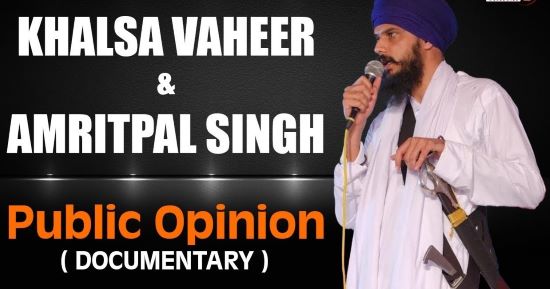
 Although both Engineer Rashid, the Member of Parliament from Baramulla (Jammu & Kashmir), and Amritpal Singh, the Member of Parliament from Khadoor Sahib (Punjab), are currently lodged in jail, the legal and constitutional reasons governing their custody are fundamentally different. This difference in the nature of detention, the laws invoked, and the relief granted by courts explains why Rashid has been permitted to participate in Parliamentary proceedings while Amritpal Singh remains barred from attending the Winter Session of the Lok Sabha.
The most important distinction lies in the type of law under which both leaders are detained. Engineer Rashid is lodged in jail under Unlawful Activities (Prevention) Act (UAPA) and related criminal provisions stemming from alleged terror-funding charges. UAPA, though stringent, is still part of the regular criminal justice system, where judicial review, bail, and temporary relief remain legally possible. On the other hand, Amritpal Singh is detained under the National Security Act (NSA), which is a preventive detention law. Preventive detention is not based on conviction or trial but on the government’s claim that the person poses a future threat to national security and public order. Under NSA, detainees can be held for months without trial and ordinary bail provisions do not apply.
Another crucial factor is court intervention. In Engineer Rashid’s case, the matter reached the judiciary, and the court considered his status as an elected Member of Parliament. The court granted him custodial parole or temporary permission specifically to discharge his constitutional duties as an MP. The judiciary weighed the rights of voters, the importance of parliamentary representation, and the principle that jail should not automatically silence an elected representative if the law permits limited participation. This judicial relief created a legal pathway for Rashid to attend the Lok Sabha under strict security.
In contrast, Amritpal Singh’s detention under the NSA places him almost entirely under executive control, not routine judicial supervision. Preventive detention laws are designed precisely to curtail such participatory rights if the government believes national security is at stake. Amritpal has also been lodged in Dibrugarh Jail, Assam, far from Punjab and Delhi, deliberately to reduce his political access and influence. Under the NSA framework, even an elected MP does not enjoy automatic rights to attend Parliament, and unless the detention itself is quashed by a High Court or the Supreme Court, no temporary participation is normally allowed.
There is also a difference in how the state views the political impact of both individuals. Engineer Rashid, while controversial, is viewed primarily through the prism of a criminal-terror financing case, whereas Amritpal Singh is seen by the Union government as a radical mobilizer capable of triggering mass unrest in Punjab. The state believes that his physical presence in Parliament could reignite political tensions, revive separatist symbolism, and disturb public order. This political-security assessment plays a powerful role in NSA cases, where “potential threat” weighs more than legal technicalities.
Another legal reason is that UAPA cases allow courts to grant interim relief even without full bail, whereas NSA detention requires complete quashing or revocation of detention before any freedom of movement is restored. In Rashid’s case, the court did not free him permanently but allowed limited participation under escort, which is legally permissible under criminal custody. In Amritpal’s case, no such halfway relief exists under preventive detention, making his parliamentary participation legally blocked unless the NSA order is struck down.
The difference also raises larger constitutional and democratic questions. Supporters of Amritpal Singh argue that denying an elected MP the right to attend Parliament disenfranchises nearly 20 lakh voters of Khadoor Sahib, while supporters of Rashid hail the court’s decision as a victory for democratic representation. However, from the government’s perspective, national security overrides representative privilege, especially under preventive detention laws.
In effect, the contrasting situation exposes a deeper structural reality of India’s legal system: not all jails are equal in constitutional terms. A person jailed under criminal law still retains limited political and civil rights through the courts. A person jailed under preventive detention loses most of those rights because the law itself is designed to preempt political action, not merely punish crime. This is the core reason why Engineer Rashid is inside Parliament under guard, while Amritpal Singh remains locked away in Assam during the same Winter Session.
Ultimately, this difference is not merely about justice or favoritism, but about two separate legal universes operating within the same democracy—one governed by courts and due process, and the other governed by executive suspicion and preventive authority. The contrast has triggered national debate on selective application of law, political messaging, minority representation, and the future of civil liberties in India.