
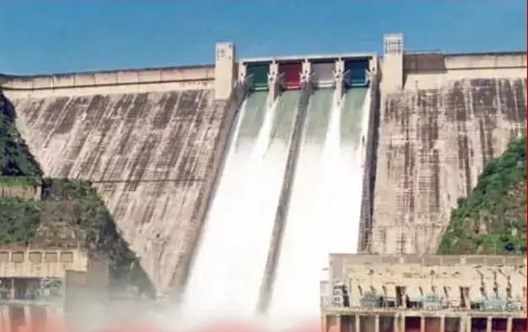
 The Dam Safety Act, 2021 is a nationwide law passed by the Parliament of India with the stated purpose of creating a uniform and legally binding framework to ensure the surveillance, inspection, operation, and maintenance of large dams across the country. India has over 5,000 large dams, many of which are ageing and require professional technical oversight. To address safety risks, the Act establishes a system of institutions such as the National Dam Safety Authority (NDSA) at the central level and State Dam Safety Organisations (SDSOs) within each state. These bodies are responsible for periodic safety inspections, standard-setting, audits, emergency action plans, and recommending corrective measures to dam operators. The law also lays out penal provisions for negligence and empowers authorities to intervene when a dam poses risks to life or property.
Although the Act appears technical on paper, it has triggered intense opposition in Punjab, where water and dam management are politically sensitive and historically intertwined with the state’s federal rights. Punjab argues that the Act gives excessive powers to the Centre to interfere in dams and river systems that fall within Punjab’s boundaries. The concern is that through the NDSA and centralised procedures, the Union Government gains the authority to review and direct actions in jurisdictions that have traditionally been under state control. For Punjab, this is not just an administrative concern but a question of constitutional and historical rights over its water resources, which have already been the subject of long-standing disputes related to river allocations and the functioning of bodies such as the Bhakra Beas Management Board (BBMB).
The political context around the Act is equally important. In recent years, Punjab has accused the BBMB and certain central ministries of taking decisions that impact the state’s water supply and dam operations without meaningful consultation. Issues such as the appointment of officers, proposed deployment of CISF, and alleged financial constraints placed on BBMB have added to Punjab’s perception that the Centre is gradually increasing control over institutions historically linked to Punjab’s hydrological system. Against this backdrop, the Dam Safety Act is viewed not as a neutral technical regulation but as part of a larger pattern of centralization that could dilute Punjab’s authority over the rivers crucial to its agriculture-based economy.
In this political climate, the Punjab Vidhan Sabha passed a resolution against the Dam Safety Act, strongly rejecting the law and demanding its repeal. The meaning of such a resolution lies primarily in its symbolic and political force. A state assembly resolution cannot by itself overturn a central law, as only Parliament has the authority to repeal it. However, the resolution serves as a powerful expression of the state’s collective political will, signaling to the Union Government that Punjab considers the Act unacceptable. It urges the Centre to revisit or repeal the law, strengthens the state’s bargaining position, and lays the groundwork for potential legal or administrative challenges. Essentially, it is a political declaration asserting Punjab’s rights and mobilising public sentiment.
The Punjab resolution itself contains several strong and unambiguous statements. It declares the Dam Safety Act an “attack on the rights of Punjab,” arguing that the law undermines the state’s exclusive control over its dams and water resources. The resolution accuses the Centre and BBMB of taking key decisions without adequately involving Punjab and demands the reconstitution of the BBMB to restore Punjab’s rightful role. It also objects to proposals such as deploying CISF at dam sites, arguing that Punjab Police is fully capable of ensuring security and that the state should not bear unnecessary financial burdens. Additionally, the resolution asserts that until Punjab’s concerns are resolved, the state will not agree to provide any water beyond its entitlement to neighbouring states, especially Haryana, a long-standing point of friction.
In conclusion, the Dam Safety Act, 2021, though crafted as a technical safety law, has become a flashpoint in Punjab because it is seen through the lens of federalism, historical grievances, and water politics. Punjab’s opposition stems from fears of central overreach and the belief that the Act could weaken the state’s constitutional position regarding its rivers and dams. The Assembly’s resolution, while not legally binding on the Centre, is a firm political stand that elevates the issue to the national stage and sets the groundwork for further political, legislative, or legal steps. The controversy ultimately reflects the deeper and unresolved tensions between state autonomy and central authority in India’s federal structure, especially on critical issues such as water, irrigation, and inter-state river management.