
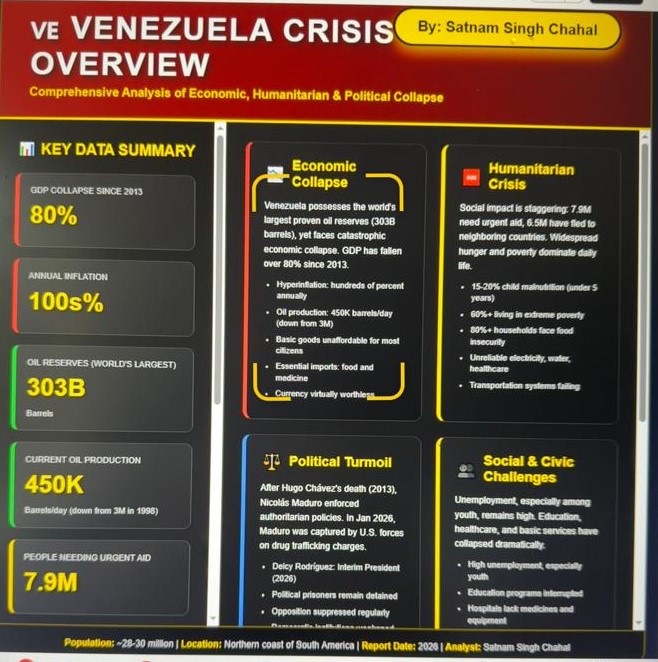
 Venezuela, a nation on the northern coast of South America, possesses the world’s largest proven oil reserves, estimated at over 303 billion barrels. Despite this wealth, the country has faced one of the most severe economic collapses in modern history. Since 2013, Venezuela’s GDP has fallen by more than 80%, plunging millions of citizens into extreme poverty. Hyperinflation has surged into the hundreds of percent annually, making even basic goods unaffordable. Oil production, which once exceeded 3 million barrels per day, has dropped to around 450,000 barrels per day due to mismanagement, underinvestment, and international sanctions. As a result, Venezuela now relies heavily on imports for essentials such as food and medicine.
The humanitarian situation is alarming. Around 7.9 million people require urgent humanitarian aid, and 6.5 million Venezuelans have fled the country in recent years, creating one of the largest migration crises in Latin America. Malnutrition is widespread, with 15–20% of children under five suffering from moderate to severe stunting, while extreme poverty affects over 60% of the population. Food insecurity continues to impact more than 80% of households, and public services such as electricity, water, healthcare, and transportation remain unreliable or unavailable in many areas.
Venezuela’s political environment has been unstable for decades. After Hugo Chávez’s death in 2013, Nicolás Maduro assumed power, and his tenure has been marked by authoritarian measures, electoral disputes, and repression of opposition groups. In January 2026, Maduro was captured by U.S. special forces on charges related to drug trafficking and narco-terrorism. Following his capture, Vice President Delcy Rodríguez assumed the role of interim president, reflecting the fragility of Venezuela’s political system. Political prisoners remain in custody, protests are frequently suppressed, and democratic institutions continue to weaken.
The social consequences of Venezuela’s crisis are profound. Unemployment and underemployment remain high, particularly among youth, while schools and literacy programs have suffered interruptions due to economic constraints. Hospitals face chronic shortages of essential medicines and equipment, and daily life is disrupted by frequent power outages and shortages of food and water. The combined economic, social, and political challenges have significantly diminished the quality of life for most Venezuelans.
Internationally, the crisis has far-reaching implications. The U.S. has intervened directly, temporarily taking control of governance and oil resources, while Venezuela’s alliances with Russia, China, Cuba, and Iran influence energy, military, and humanitarian aspects. The migration crisis has affected neighboring countries like Colombia, Brazil, Peru, and Mexico, creating regional instability. Global discussions continue around the legality of foreign intervention, human rights, and the path toward rebuilding the Venezuelan state.
In conclusion, Venezuela in 2026 stands at a critical crossroads. The combination of economic collapse, political upheaval, humanitarian crises, and foreign intervention has created an uncertain future. Restoring governance, stabilizing the economy, and addressing the urgent needs of citizens will require domestic reforms, international cooperation, and long-term planning. Venezuela’s experience demonstrates how even immense natural wealth can be overshadowed by mismanagement, corruption, and political instability.