
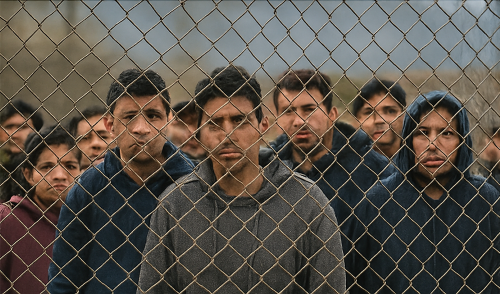
 Punjab has increasingly become known as a major center for illegal human smuggling, driven by a combination of economic distress, unemployment, and the deep‑rooted social aspiration to settle abroad. For many families, migration is seen not just as an opportunity but as a necessity for dignity and financial stability. This desperation fuels a thriving underground network of unlicensed travel agents and international smugglers who promise safe passage to countries like the United States, Canada, and various European nations. Tragically, many migrants end up facing detention, deportation, exploitation, or life‑threatening journeys through unfamiliar territories.
To address this growing crisis, the Punjab Assembly passed the Punjab Prevention of Human Smuggling Act in 2012, followed by amendments aimed at tightening regulations on travel agents and penalizing fraudulent practices. The law requires agents to register with authorities and outlines punishments for cheating and illegal migration schemes. However, despite these legislative efforts, enforcement on the ground remains weak. Many agents continue to operate without licenses, often under new business names or through informal networks that are difficult to trace. Victims rarely come forward due to fear, stigma, or the hope that the agent might still fulfill their promise. As a result, the law exists largely on paper, with little visible impact on dismantling smuggling operations.
The situation becomes even more concerning when viewed alongside the lack of transparency in Punjab’s enforcement system. There is no consistent public reporting on how many agents are prosecuted or convicted under the 2012 Act. Investigations often move slowly, trials are delayed, and convictions are rare. Without a centralized database or annual performance review, it is nearly impossible to measure progress or identify patterns in smuggling activities. Compounding the issue is the legal ambiguity between human trafficking and human smuggling. While trafficking involves exploitation and coercion, smuggling typically refers to consensual but illegal border crossings. India lacks a dedicated law specifically targeting human smuggling, which limits the ability of authorities to pursue these cases effectively.
In contrast, the United States offers a clearer example of how strong enforcement and institutional coordination can produce measurable results. In fiscal year 2023, U.S. attorneys received 2,329 referrals for human trafficking offenses, a 23 percent increase from 2013. Prosecutions rose sharply as well, climbing from 1,030 in 2013 to 1,782 in 2023, representing a 73 percent increase. Convictions followed a similar upward trend, rising from 616 to 1,008 over the same period. These numbers reflect a system that not only enacts laws but actively enforces them through specialized investigative units, coordinated federal‑state efforts, and structured victim support programs.
State‑level data in the U.S. further highlights the strength of this enforcement model. In 2023, 916 individuals were admitted to state prisons for human trafficking offenses, and by the end of the year, 2,220 people were serving sentences for such crimes. These figures demonstrate a functioning legal pipeline in which offenders are investigated, prosecuted, convicted, and incarcerated in significant numbers. Public access to this data also ensures transparency, allowing policymakers, researchers, and the public to evaluate the effectiveness of anti‑trafficking efforts.
The contrast between Punjab and the United States underscores a fundamental difference: while Punjab has laws, the U.S. has laws backed by consistent action, institutional capacity, and transparent reporting. Punjab’s enforcement challenges stem from political influence, limited resources, and a lack of accountability. Without meaningful implementation, even well‑designed laws cannot protect vulnerable citizens or deter smugglers. The U.S. model shows that strong institutions, clear legal definitions, and public data can significantly strengthen the fight against human smuggling and trafficking.
For Punjab to make real progress, it must move beyond symbolic legislation and invest in specialized enforcement units, transparent reporting systems, and legal reforms that distinguish smuggling from trafficking. Victims need safe avenues to report fraud, and public awareness campaigns must highlight the dangers of illegal migration while promoting safer, legal alternatives. Only through a combination of strong laws, effective enforcement, and community engagement can Punjab hope to dismantle the networks that exploit its youth and restore confidence in the rule of law.