
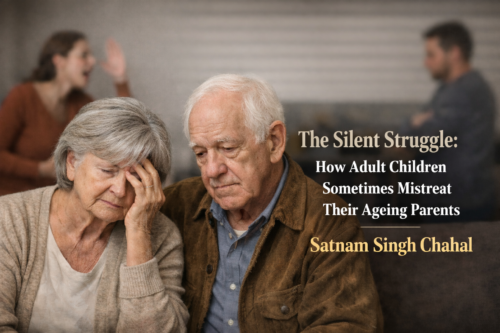
 As parents age and their children reach adulthood, the family dynamic undergoes a profound transformation. Ideally, this shift brings mutual respect, deeper understanding, and cherished time together. Yet for many families, this transition reveals a troubling reality: adult children sometimes treat their ageing parents with neglect, impatience, or even cruelty. This pattern, though rarely discussed openly, affects millions of families and leaves lasting emotional scars on both generations.
Mistreatment of elderly parents doesn’t always look like the dramatic scenarios portrayed in the media. More often, it manifests in subtle but deeply painful ways that erode the parent-child relationship over time.
Perhaps the most common form is emotional neglect. Adult children become consumed by their own lives, careers, marriages, children, and their ageing parents fade into the background. Phone calls become infrequent, visits grow rare, and the elderly parent is left feeling forgotten and invisible. What once was a vibrant relationship dwindles to obligatory holiday appearances and hurried check-ins.
Impatience and dismissiveness represent another widespread problem. When parents struggle with technology, repeat themselves due to memory issues, or move more slowly than they once did, some adult children respond with visible frustration or condescension. They speak to their parents as if addressing children, stripping away their dignity with every eye roll and heavy sigh. The very people who once patiently taught them to tie their shoes and read now find themselves treated as burdens rather than beloved family members.
Financial exploitation, though perhaps less common, inflicts severe damage when it occurs. Some adult children view their parents’ savings as an eventual inheritance to be accessed early, pressuring elderly parents for loans they’ll never repay or manipulating them into signing over assets. Others fail to contribute financially to their parents’ care, even when able, leaving ageing parents to struggle alone with mounting medical bills and living expenses. More active forms of mistreatment include verbal abuse, where adult children lash out with harsh words, blame their parents for past mistakes, or use guilt as a weapon. In the most severe cases, some adult children engage in physical neglect of dependent parents, failing to provide adequate food, medical care, or safe living conditions.
Unresolved childhood issues often poison adult relationships. An adult child who felt neglected, criticized, or unloved during childhood may harbor resentment that resurfaces when roles begin to reverse. The opportunity for “payback,” conscious or unconscious, becomes tempting when the once-powerful parent becomes vulnerable and dependent.The overwhelming demands of modern life create another significant factor. Many adult children find themselves in what researchers call the “sandwich generation,” caring simultaneously for their own children and aging parents while managing demanding careers. The stress can become unbearable, and unfortunately, the parent often becomes the outlet for that frustration. Unlike young children or employers, aging parents may seem like “safer” targets for stress release, as they’re less likely to retaliate or leave.
Cultural shifts have also played a role. In previous generations and in many cultures today, caring for elderly parents is considered an honor and an expected responsibility. However, Western society increasingly emphasizes independence, individualism, and nuclear family units over extended family obligations. This cultural framework can make adult children view parental care as an unwelcome burden rather than a natural part of life’s cycle. Some adult children also struggle with denial and fear. Watching a parent age, decline physically or mentally, and approach mortality forces uncomfortable confrontation with one’s own aging and eventual death. Rather than face these fears compassionately, some people distance themselves emotionally and physically, leading to neglect that looks like indifference but may actually stem from psychological self-protection.Finally, role reversal creates genuine psychological difficulty. The parent who once provided strength, guidance, and protection now needs help with basic tasks. This shift can feel disorienting and even threatening to adult children who haven’t fully matured emotionally or who still depend on viewing their parents as invincible authority figures.
The consequences of mistreatment by adult children extend far beyond hurt feelings. Research consistently shows that elderly people who feel neglected or mistreated by their families experience higher rates of depression, anxiety, and physical health decline. The emotional pain of feeling unwanted or burdensome to one’s own children can be devastating, particularly for parents who sacrificed extensively for those children during their younger years.Social isolation compounds these problems. When adult children withdraw or prevent other family members from visiting, elderly parents lose vital social connections that keep them mentally and emotionally healthy. Many aging parents suffer in silence, unwilling to speak up about mistreatment for fear of making things worse or further alienating the children they desperately want in their lives.The physical toll shouldn’t be underestimated either. Chronic stress from family conflict weakens the immune system, exacerbates existing health conditions, and has been linked to increased mortality risk among the elderly.
Addressing this problem requires honesty, self-reflection, and often professional help. Adult children who recognize problematic patterns in how they treat their parents can take several constructive steps.First, acknowledge the reality without making excuses. If you’re avoiding your parents, speaking to them harshly, or failing to help when you’re able, admit it honestly to yourself. Understanding why you behave this way matters, but it doesn’t justify continuing the behavior.Seek counseling, particularly if childhood issues fuel your current relationship with your parents. A skilled therapist can help you process old wounds in healthy ways rather than reenacting them through mistreatment or neglect.Set realistic boundaries rather than choosing complete avoidance. You don’t need to sacrifice your entire life to care for aging parents, but you can commit to regular, meaningful contact. Perhaps that’s a weekly phone call, a monthly visit, or helping with specific tasks like medical appointments. Clear, consistent boundaries actually enable more sustainable long-term support than sporadic, guilt-driven over-involvement followed by withdrawal.
Practice empathy actively. Before speaking impatiently to your parent, pause and imagine being in their position—aging, possibly in pain, watching your independence slip away. Remember that you too will age, and how you treat your parents models for your own children how to treat you someday.
Find support for yourself. Join support groups for adult children of aging parents, talk to friends in similar situations, or consult with social workers who can suggest resources. Caring for aging parents is genuinely challenging, and getting help for yourself enables you to help your parents more effectively.
Finally, appreciate the time remaining. None of us knows how many more conversations, holidays, or ordinary moments we’ll have with our parents. The regret that comes from wasting those precious years on conflict, avoidance, or mistreatment can haunt people for the rest of their lives.
How a society treats its elderly reveals something fundamental about its values and character. When adult children mistreat aging parents, it reflects not only individual family dysfunction but also broader cultural failures—our worship of youth and productivity, our discomfort with vulnerability and dependence, our erosion of intergenerational bonds.Changing this pattern requires both personal accountability and cultural shift. Adult children must do the difficult work of becoming better, more compassionate people. But we also need communities, policies, and cultural messages that honor elderly people, support family caregivers, and recognize that caring for those who once cared for us is not a burden but a privilege and a responsibility.
Our parents gave us life and, in most cases, devoted years to raising us. They deserve our respect, our time, and our care as they navigate the challenges of aging. Providing that doesn’t erase past hurts or solve every family problem, but it does honor the profound bond between parent and child—and it models for future generations what it means to love and care for family through all of life’s seasons.