
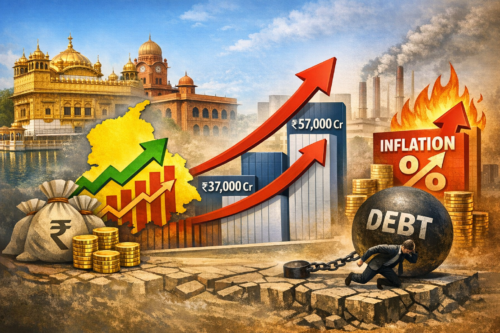
 As Punjab’s outstanding debt is projected to cross a staggering ₹4.17 lakh crore by the end of March 2026, a growing chasm has emerged between the lifestyle of the ruling elite and the financial reality of the state. Critics and opposition leaders have frequently pointed to the “Sheesh Mahal 2.0” controversy in Chandigarh—a multi-acre, high-end residence allegedly renovated with 7-star amenities using taxpayer funds. While the government defends these as necessary administrative upgrades, the imagery of private jets and a proposed ₹114 crore luxury vehicle fleet for ministers has fueled a narrative of hypocrisy. For a party that rose to power on the promise of “Aam Aadmi” (Common Man) simplicity, the shift toward bulletproof SUVs and high-end aviation has become a primary point of public resentment.
The Breakdown of Law and Order
Beyond the optics of luxury, the ground reality in Punjab has been marked by a perceived collapse of the state’s security apparatus. The rise of “sensational murders,” daylight robberies, and the unchecked influence of transnational gangsters has created a climate of fear. Governor Gulab Chand Kataria recently described the security situation as the state’s “weakest link,” noting that violent crime has become an almost daily occurrence. This lack of safety is no longer just a social issue; it has become an economic one, as industries reportedly begin to migrate to neighboring states to escape extortion and a deteriorating business environment.
The Broken Promise of a Drug-Free Punjab
Perhaps the most significant failure cited by the electorate is the government’s inability to curb the drug epidemic. Despite categorical pre-poll “guarantees” to break the supply chain within weeks, addiction and overdose deaths continue to plague rural heartlands. While the Punjab Police report high numbers of low-level arrests, the systemic “big fish”—the financiers and kingpins—remain largely elusive. This failure is compounded by administrative lapses; at one point, a Cabinet Minister was discovered to be heading a non-existent department for nearly 20 months, reflecting a lack of focus on the core issues affecting the youth.
Fiscal Recklessness and Delayed Welfare
The administration’s economic model
often criticized as “Freebie Culture”has pushed the state into a precarious debt trap. While the government touts its free electricity and health clinics, these projects are being funded by massive borrowing rather than new revenue streams. This fiscal mismanagement led to the years-long delay of the ₹1,000 monthly stipend for women, which was only formally rolled out in the final year of the term. For many, this “eleventh-hour” implementation feels like a tactical electoral bribe rather than a sustainable welfare policy, especially as infrastructure projects like the promised 16 medical colleges remain stalled in the planning stages.
Research Data Summary (As of March 2026)
Total Debt: Projected ₹4,17,000 Crore
.
Administrative Lapse: Cabinet Minister assigned to a non-existent department for 20 months.
Luxury Spending: Proposed ₹114 Crore for 108 new luxury/bulletproof vehicles.
Public Safety: Rising “gangster culture” and daily reports of gun violence.
Proactive Suggestion: Would you like me to create a visual table comparing the AAP’s initial 2022 campaign promises against the actual status of those projects today?