
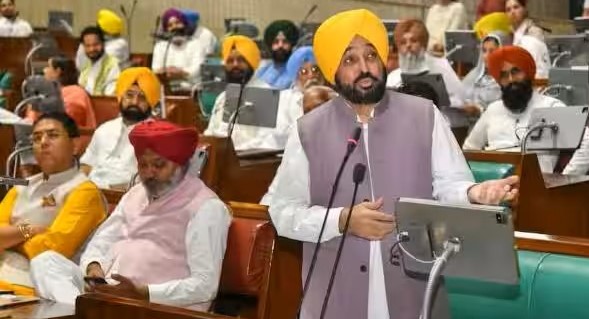
In what has quickly become the talk of political corridors and public debate alike, the recent special session of the Punjab Assembly has found itself overshadowed not by policy discussions or legislative breakthroughs but by controversy surrounding the conduct of Chief Minister Bhagwant Mann. Allegations circulating in political and media circles claim that the Chief Minister attended the high-profile session in an inebriated state, raising serious questions about decorum, accountability, and leadership.
The special session itself was convened with much fanfare, intended to address pressing political matters and demonstrate the government’s strength. However, instead of focusing on governance, attention quickly shifted to whispers, then accusations, and eventually a full-blown political storm. Opposition leaders wasted no time in seizing the moment, alleging that such behavior, if true, not only undermines the dignity of the Assembly but also sends a troubling message about the seriousness with which public office is treated.
Supporters of the Chief Minister, on the other hand, have either dismissed the claims as baseless political propaganda or maintained a studied silence, suggesting that the controversy is being exaggerated for political mileage. In the age of viral videos and instant narratives, even unverified claims can take on a life of their own, making it increasingly difficult to separate fact from political fiction.
Beyond the immediate political mudslinging, the issue raises a broader and more uncomfortable question: what standards should be expected from those in positions of power? The Punjab Assembly is not merely a building; it is a symbol of democratic responsibility, where decisions impacting millions are debated and decided. Any perception real or alleged of compromised conduct risks eroding public trust in institutions already under scrutiny.
This incident, whether proven or disproven, also reflects the changing nature of political discourse in India. Today, perception often carries as much weight as reality. A single allegation can dominate headlines, shift narratives, and influence public opinion long before any official clarification emerges.
In the end, what Punjab needs is not just damage control but clarity. If the allegations are unfounded, they deserve to be firmly rebutted with evidence. If there is any truth, accountability must follow—not merely as a political necessity but as a moral obligation to the people.
Because governance, much like democracy itself, cannot afford to run on “high spirits” it demands sobriety, seriousness, and above all, responsibility.