
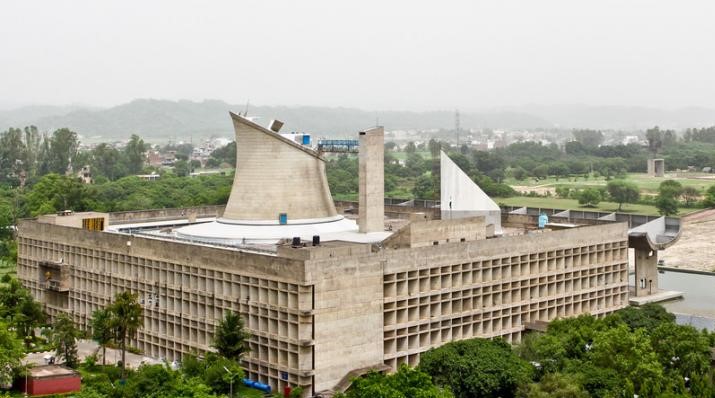
 The Punjab Assembly witnessed tense scenes during a special Labour Day session on Friday when the Opposition accused Chief Minister Bhagwant Mann of attending the House in an intoxicated state. The controversy erupted after a Congress MLA claimed the Chief Minister had arrived under the influence of alcohol.Leader of Opposition Partap Singh Bajwa called for closed-door alcohol testing of all MLAs, citing concerns about the Chief Minister’s conduct. He wrote a letter to the Speaker, terming the issue a matter of “grave concern” affecting the dignity of the Assembly, and demanded immediate testing of all members, beginning with the Chief Minister.
Congress MLAs staged a walkout and called for dope testing of all MLAs and an independent medical check by PGIMER. Congress MLA Sukhpal Singh Khaira said opposition members even offered to undergo testing themselves.The Shiromani Akali Dal posted videos from the Assembly on social media and called the situation “very shameful,” also demanding that Bhagwant Mann undergo a dope test in front of the people of Punjab. BJP’s Sunil Jakhar also joined the calls for a breathalyser test.
BJP MP Swati Maliwal, who recently quit the Aam Aadmi Party, shared a video clip of Mann addressing the House and demanded an alcohol test. She alleged that Mann had repeatedly attended official engagements including religious visits and government meetings while intoxicated, and referred to an earlier public promise in which he had vowed to abstain from alcohol. She demanded he be removed from office if the allegations were proven.
After the uproar, Chief Minister Bhagwant Mann said the special session was dedicated to Labour Day and urged all members to avoid arguments and maintain decorum in the House.The controversy comes at a politically sensitive time, with Punjab heading toward Assembly elections next year. It also follows Maliwal’s recent exit from the Aam Aadmi Party and her alignment with the BJP. This is not the first time such allegations have surfaced against Mann — in 2022, opposition leaders made similar claims about an incident on a flight, which AAP had dismissed as baseless.
The AAP government had convened the special session on the occasion of Labour Day to pay homage to the working class of the state. The decision to hold the session was taken days after AAP’s seven Rajya Sabha MPs six of them from Punjab quit the party and joined the BJP.As of now, no alcohol or dope test has been conducted, and there has been no official denial from CM Mann or AAP regarding the allegations.The Punjab Assembly witnessed deeply embarrassing scenes on Friday, May 1, 2026, during a special session convened to mark International Labour Day. Opposition parties, including the Congress and Shiromani Akali Dal, levelled serious allegations against Chief Minister Bhagwant Mann, claiming he arrived at the Vidhan Sabha under the influence of alcohol. What was meant to be a dignified session paying homage to the working class of Punjab turned into a spectacle of chaos, uproar, and political mud-slinging that shocked observers across the country.
The controversy erupted when a Congress MLA alleged that the Chief Minister appeared visibly intoxicated while addressing the House. Leader of Opposition Partap Singh Bajwa quickly escalated the matter by demanding that all doors of the Assembly be locked and that every MLA, starting with the Chief Minister, undergo an immediate breathalyser and dope test. He wrote a formal letter to the Speaker, calling it a matter of “grave concern” that struck at the very dignity of the House. Congress MLA Sukhpal Singh Khaira backed the demand and announced that opposition members were even willing to undergo testing themselves. The Congress ultimately staged a walkout and called for an independent medical examination by PGIMER.
The Shiromani Akali Dal joined the attack, posting videos from inside the Assembly on social media and condemning the Chief Minister’s alleged conduct as “very shameful.” The party demanded that Bhagwant Mann take a public dope test to establish the truth before the people of Punjab. BJP leader Sunil Jakhar also added his voice, supporting calls for a breathalyser test. BJP MP Swati Maliwal, a former AAP member who recently joined the BJP, went a step further, sharing a video clip of Mann’s address and accusing him of repeatedly attending official engagements, religious places, and government meetings while drunk. She reminded the public of his earlier promise, made with his hand on his mother’s head, to never consume alcohol again, and demanded his removal from office if the allegations were proven true.
In response to the uproar, Chief Minister Bhagwant Mann urged members to maintain decorum, saying the session was dedicated to honouring the working class. Neither he nor the AAP officially denied the allegations or agreed to any testing, which only added fuel to the fire of the controversy.What makes this incident particularly painful is the damage it has done to the image of Punjab and Punjabis on a national and global stage. Punjab is a state with a proud, hardworking, and dignified people a community that has contributed enormously to India’s agriculture, defence, and culture. Scenes of chaos inside the Assembly, with allegations of the Chief Minister being drunk on duty, paint an embarrassing picture of the state’s leadership before the entire world. At a time when Punjab is already grappling with serious issues of drug abuse, border security, and unemployment, having the very person at the helm accused of intoxication in the “temple of democracy” sends a deeply troubling message. It reinforces harmful stereotypes about Punjab and its people, and undermines the efforts of millions of hardworking Punjabis who strive every day to bring honour to their state.
The timing could not have been worse. The special session was called specifically to celebrate Labour Day a day meant to honour the dignity of workers and common people. Instead, it descended into accusations, walkouts, and viral videos that trended across social media for all the wrong reasons. The world was watching, and what it saw was not the proud, vibrant Punjab that its people deserve to be represented by. It was a moment of deep shame for the state, and one that its people will not easily forget as they head toward Assembly elections next year.
I wish to share a true and deeply personal account from the time of the Partition of India in 1947. It is the story of a young Muslim girl who, after losing her family in the turmoil, was taken in by ours and later became a respected member of our family. I would be grateful if you would consider publishing this piece in your esteemed publication.
Regards,
Satnam Singh Chahal
The Partition of India in 1947 was not merely the division of a nation; it was the fracturing of millions of lives. While history records it as a political milestone marked by hastily drawn borders, for those who lived through it—and for generations that inherited its memories—it remains a deep, unhealed wound. Though I was born after those turbulent years, I grew up listening to stories that carried the weight of that time. These were not accounts found in textbooks or official archives, but lived experiences—stories shared in quiet moments, filled with grief, resilience, and, occasionally, extraordinary humanity.
Among those stories, one has remained with me more powerfully than any other. It is the story of my aunt, a young Muslim girl who, in the midst of unimaginable chaos, found compassion instead of hatred and became an inseparable part of our family. In the aftermath of Partition, Punjab was engulfed in fear and uncertainty. Communities that had lived together for generations suddenly turned suspicious of one another, and rumours of violence spread rapidly. In one such village, this teenage girl found herself completely alone. Her family had disappeared in the upheaval—whether separated, displaced, or killed, she never knew. Surrounded by danger and with no safe refuge, she made a desperate decision to hide inside a village well, locally known as a khoh.
For seven days, she remained there in darkness without food or water, unsure if she would survive. Life continued above her, while she stayed hidden below, clinging to hope. Eventually, whispers spread through the village that a Muslim girl was hiding in the well. When my father and other family members heard this, they did not hesitate. Guided purely by humanity, my father climbed down into the well and brought her out into the light. What followed was not an act of charity, but one of moral duty. My family gave her shelter, food, and protection at a time when the world outside had become hostile.
With time, and with her consent, she married my uncle. This union stood as a quiet defiance of the divisions that had torn society apart. She later embraced the Sikh faith, raised four daughters, and became a deeply respected figure within our family. Her strength, dignity, and kindness left a lasting impression on everyone who knew her. Years later, long after the violence had subsided, a family from Pakistan arrived in our village searching for her. Sadly, they came too late, as she had already passed away. Their grief was profound, but what stood out was the hesitation of her children to meet them, perhaps due to fear of social stigma. It was a stark reminder that while borders may have been drawn overnight, the divisions they created continued to live on in human hearts.
Before leaving, the visiting family revealed that she had distant ties to General Pervez Musharraf. They left contact details, but unfortunately, these were lost over time. Despite efforts to reconnect, no link could be re-established. Around the same time, her young cousin, a Muslim boy, also found refuge in our home. With our family’s support, he married into a Sikh household, raised four children, and built a life in our village. We even provided him with land to ensure his stability. Yet, like many who were displaced, he carried a quiet longing to reconnect with his family across the border—a wish that remained unfulfilled.
For the world, Partition may be a chapter in history, but for families like mine, it remains an unfinished story. It lives on in memories, silences, and unanswered questions, in the sorrow of those who never reunited with loved ones, and in the longing of those who could never return home. My aunt’s life embodied both tragedy and hope. She lost her family but found another, lost her homeland but built a new one. When I think of her, I see both the frightened girl hidden in a dark well and the dignified woman who became a pillar of our family. Her story is a powerful reminder that even in humanity’s darkest moments, compassion can prevail, leaving a legacy that echoes across generations.