
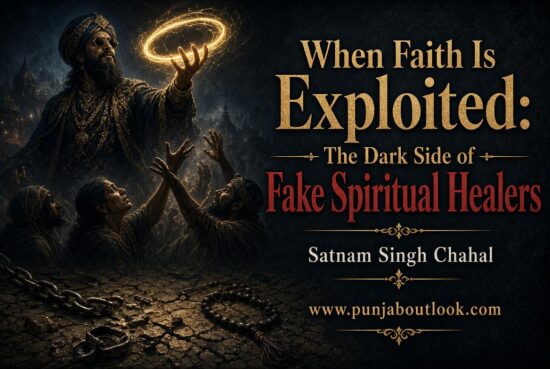
Author’s Note: I wish to make it absolutely clear that this article is not intended to criticise, question or comment negatively on Islam, Muslims, Hinduism, Sikhism, Christianity, Sufism or any other faith, religious institution or spiritual community. I have the utmost respect for all genuine religious traditions and for the millions of people who follow their faith sincerely. The purpose of this article is limited to promoting awareness about the protection of vulnerable people from the possible misuse of spiritual or religious authority by individuals. Any reference to misconduct is intended to concern individual conduct only and must never be understood as a reflection on an entire religion, community or tradition. Where allegations are discussed, they should be understood in accordance with the principles of due process and the presumption of innocence.-Author
Faith is deeply woven into the social and cultural life of South Asia. Religious and spiritual traditions have provided generations of people with faith, community, charity, moral guidance, comfort and hope. Genuine religious and spiritual teachers have earned the respect of their followers through their teachings, service, character and conduct.This article is not a criticism of any religion, religious institution or genuine spiritual tradition. Its purpose is much narrower: to examine the importance of protecting vulnerable people from individuals who may misuse religious or spiritual authority for personal, financial, sexual or other unlawful purposes. Such conduct, where established, should be treated as the responsibility of the individual concerned and should never be used to judge an entire faith or community.
People who seek spiritual guidance may sometimes be experiencing difficult circumstances, including illness, bereavement, family difficulties, financial hardship, loneliness or emotional distress. During such times, people may place considerable trust in those whom they regard as spiritual advisers or teachers. That trust should always be treated with responsibility, compassion and respect.Warning signs of possible exploitation can include demands for unusually large payments, pressure to surrender property, promises of guaranteed cures or supernatural results, demands for unquestioning obedience, attempts to isolate people from their families, discouragement of appropriate professional or medical assistance, threats of spiritual punishment, or inappropriate requests for private meetings or physical contact.
Financial exploitation can take many forms. In some cases reported around the world, individuals claiming special spiritual powers have allegedly demanded money in exchange for healing, blessings, amulets, prayers or other services. Such practices should not be confused with legitimate charitable donations, religious offerings or voluntary contributions. The concern arises when claims of spiritual authority are allegedly used to deceive, pressure or financially exploit vulnerable people.Sexual exploitation is an especially serious abuse of trust. A person regarded as a spiritual guide, teacher or healer may be given considerable access to people who trust them. Where allegations of sexual misconduct or abuse arise, they should be taken seriously and reported to the appropriate authorities. At the same time, an allegation remains an allegation unless and until it is established through the proper legal process.
India has witnessed criminal cases involving individuals who presented themselves as spiritual or religious figures. Some cases have resulted in convictions following judicial proceedings. Such cases concern specific individuals and must never be interpreted as evidence against Hinduism, Sikhism, Islam, Christianity, Sufism or any other religious or spiritual tradition.The same principle applies everywhere. A criminal act committed by an individual who uses religious or spiritual identity does not make the religion responsible for that person’s conduct. Millions of people follow their faith sincerely and peacefully, and the actions of an individual should never be used to create suspicion or hostility toward an entire community.
The distinction between an allegation, an arrest and a conviction is particularly important. An allegation is a claim requiring investigation. An arrest means that authorities have taken legal action against a person; it does not by itself establish guilt. A conviction follows a judicial determination according to law. Responsible journalism must maintain these distinctions whenever reporting on sensitive cases.Families should also remember that genuine spiritual guidance does not require the surrender of personal dignity, freedom or independent judgment. People should be able to maintain healthy relationships with their families, ask reasonable questions, make financial decisions freely and seek appropriate professional assistance when necessary.
Children deserve particular protection. Parents and guardians should take reasonable steps to ensure that any religious, educational, charitable or spiritual environment involving children has appropriate safeguarding arrangements, responsible supervision and clear mechanisms for reporting concerns.The financial affairs of religious and charitable organisations should also be handled responsibly. Where substantial donations are collected, transparency, proper accounting and accountable management can help protect donors and strengthen public confidence in the organisation.The central issue, therefore, is not religion. It is the responsible use of trust and authority.
Genuine spiritual teachers should not be judged by the actions of individuals who may misuse religious language, titles, clothing or institutions. Likewise, people who raise legitimate concerns about possible abuse should not automatically be regarded as being opposed to religion or faith.The best protection against exploitation is awareness. Families and individuals should be cautious about claims of guaranteed miracles, extraordinary promises, pressure to provide large sums of money, demands to surrender property, attempts to isolate people from loved ones, inappropriate personal demands or advice that places someone’s safety at risk.
Serious allegations should be reported to appropriate authorities and dealt with through lawful procedures rather than rumours, public accusations or vigilantism. Social media should also be used responsibly, particularly when allegations involve identifiable individuals.People who may have been exploited should not be blamed for having trusted someone. Seeking spiritual comfort or guidance during difficult circumstances is not a weakness. The responsibility for any deliberate exploitation lies with the person who engages in such conduct.It is equally important to recognise the enormous positive contribution made by genuine religious and spiritual institutions and teachers. Across South Asia and around the world, faith communities have established schools, hospitals, charitable organisations, food programmes, shelters and other services that have helped millions of people.
Protecting people from exploitation therefore does not mean questioning faith. On the contrary, it helps protect the dignity of believers and preserves the trust placed in genuine religious and spiritual institutions.The message is simple: faith deserves respect, spiritual guidance deserves responsibility, vulnerable people deserve protection, and allegations of criminal conduct deserve due process.Faith is precious. That is precisely why the trust placed in religious and spiritual authority should always be treated with honesty, dignity and responsibility.
Editorial Disclaimer:This article is intended for general information, public awareness and discussion. It does not accuse any particular religious community or faith tradition of wrongdoing. Any future publication of specific cases involving identifiable individuals should be based on reliable and current sources, including official statements, court records and reputable reporting. Allegations and arrests should not be presented as convictions, and the legal status of any case should be verified before publication.