
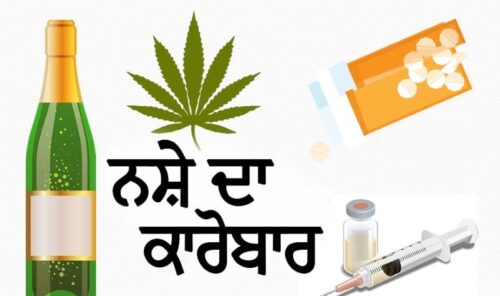
 Punjab is facing a serious and continuing challenge from drug abuse and trafficking. For years, governments have announced campaigns, launched enforcement drives and promised to tackle the problem. Yet if families and young people continue to experience the consequences of drugs, Punjab needs more than another campaign. It needs an honest reassessment of its entire approach. The central question should no longer be how many announcements have been made, but how many lives have actually been protected and restored.
We believe that the fight against drugs cannot be left to the government and police alone. It is simultaneously a public-health, education, employment, family and community issue. Punjab therefore needs a coordinated strategy involving government agencies, law enforcement, healthcare professionals, schools, parents, religious institutions, civil society and, most importantly, young people themselves.
The first priority must be to disrupt major drug-trafficking networks. A person struggling with addiction and a person operating an organized trafficking network are not the same problem. People suffering from addiction may need treatment and long-term support, while those involved in organized trafficking should face effective law-enforcement action through due process. Investigators should focus not only on street-level sellers but also on the wider supply, financial and distribution networks behind the illegal trade.
Following the money should also be an important part of the strategy. Where legally established evidence exists, authorities should investigate financial transactions and assets connected to illegal drug activity and take appropriate action under the law. At the same time, every investigation must respect due process. Allegations must be investigated fairly, and no person should be treated as guilty merely because an allegation has been made.
Public confidence will depend heavily on whether people believe the law is applied equally. Where credible allegations involving influential individuals, officials or politically connected persons arise, they should be investigated impartially through established legal procedures. The anti-drug campaign should never become a tool for political retaliation. Its purpose must remain the protection of Punjab’s people and its younger generation.
Enforcement, however, cannot solve addiction by itself. Punjab needs accessible, affordable and quality treatment services. Every district should have access to qualified medical professionals, mental-health specialists, counsellors and rehabilitation services. Recovery should not be viewed as a short-term process that ends when someone leaves a treatment facility. Many people need continuing family, psychological and social support to maintain recovery.
Rehabilitation must mean rebuilding a life, not simply stopping drug use. A person returning from treatment needs opportunities to learn skills, find employment, participate in sports and rebuild social connections. Without a realistic path toward education, employment and dignity, the risk of returning to substance use can remain.
Prevention must begin in schools and colleges. Young people need more than occasional lectures warning them about the dangers of drugs. They need education, sports, skills, opportunities and a sense of purpose. Teachers and parents should also receive appropriate guidance on recognizing serious changes in a young person’s behaviour and connecting them with professional help when necessary.
Families are on the front line of this battle. Parents need an environment in which they can communicate openly with their children rather than approaching the issue only through fear or punishment. Families should also have access to confidential counselling and professional guidance. Hiding addiction because of social stigma does not make the problem disappear; early intervention can give a family a much better chance of helping a loved one recover.
Punjab’s Gurdwaras and religious institutions can also contribute significantly. They can help connect young people with education, sports, volunteering and constructive community activities, while encouraging families to seek qualified professional treatment when needed. Religious and community support can complement not replace medical and mental-health services.
The government should also make the results of its anti-drug strategy transparent. Arrest figures and drug seizures alone cannot demonstrate success. The public should be able to see meaningful indicators such as treatment access, treatment completion, long-term recovery, major trafficking prosecutions and broader trends in drug-related harm. An anti-drug campaign should be measured by outcomes, not by the number of press conferences held.
We also believe that Punjab needs a long-term, non-partisan drug strategy that does not disappear or change direction whenever governments change. Its implementation should be independently reviewed on a regular basis, with findings made publicly available. Doctors, mental-health professionals, law-enforcement and legal experts, educators, community organizations, religious representatives and youth should all have a meaningful role in shaping and evaluating the strategy.
Ultimately, Punjab must work on three fronts at the same time: reducing the supply of illegal drugs, reducing demand through prevention and education, and providing treatment and a genuine second chance to people already struggling with addiction. Ignoring any one of these areas will leave the overall response incomplete.Punjab should stop asking only when the drug problem will disappear. The more important question is: What are we going to change today?
The objective should not simply be to keep young people away from drugs. The objective should be to build a Punjab where young people have education, employment, opportunity, community support and a meaningful future and where drugs have far less opportunity to take hold.Punjab’s young people are its future. Protecting them from drugs is not the responsibility of one government or one institution. It is a shared responsibility of the entire Punjab community.
Disclaimer: This article and accompanying images are for informational and illustrative purposes only. Some visuals may be AI-generated or digitally enhanced and may not depict actual events or persons.Views expressed are based on publicly available information and analysis