
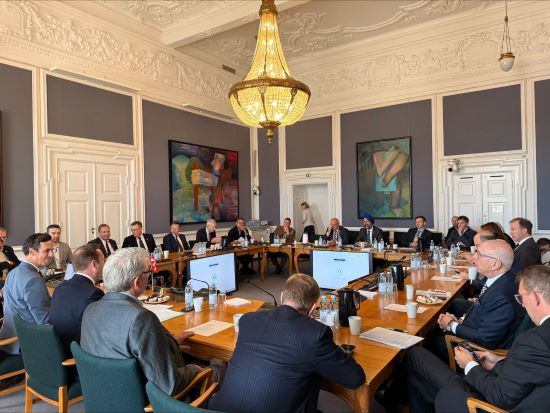
COPENHAGEN/LONDON: British Labour MP and Chair of the UK House of Commons Defence Committee Tanmanjeet Singh Dhesi has used his visit to Copenhagen to underline the growing importance of European defence cooperation, particularly as the strategic significance of the High North and the wider North Atlantic continues to increase.
Describing Denmark as a “close ally” of the United Kingdom, Dhesi said it was valuable, as part of the Defence Committee’s High North inquiry, to learn from members of Denmark’s Foreign Affairs and Defence Committee and other prominent figures in Copenhagen about the country’s sharply increased defence spending and the need for greater collaboration to keep Europe safe.
His visit comes at a time when European governments and NATO allies are paying increasing attention to security across northern Europe, the North Atlantic and the Arctic. Areas that were once regarded primarily as remote geographical regions are now closely connected with questions of European defence, maritime security, military preparedness and protection of critical infrastructure.The High North Moves to the Centre of Europe’s Security Debate
The High North has emerged as one of the key areas being examined by the British Defence Committee.The region has strategic importance because of its connection to the North Atlantic, Arctic approaches and vital maritime routes. It is also home to critical undersea infrastructure and communications links that are essential to modern European economies and security systems.During the committee’s inquiry, British government officials have stressed that security in the High North is not simply a regional issue. Developments in the area can have direct implications for the security of northern Europe and the wider NATO alliance.The inquiry has therefore been examining questions surrounding deterrence, maritime security, protection of undersea infrastructure, military readiness and the ability of allied forces to operate effectively together.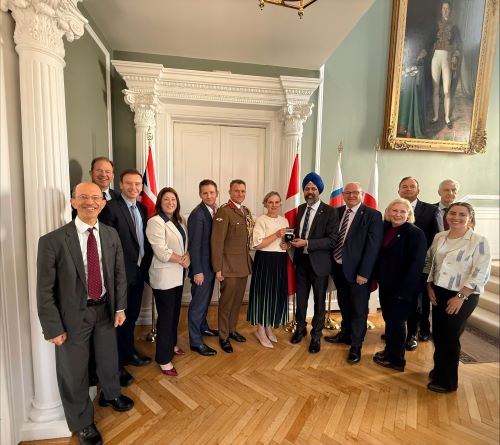
Why Denmark Matters
Denmark occupies a strategically important geographical position in the North Atlantic and Arctic security environment.Its relationship with Greenland and the Faroe Islands gives Denmark a particularly significant role in the wider High North. This makes cooperation between Britain and Denmark relevant not only to bilateral relations but also to NATO’s broader security architecture.For Britain, cooperation with Denmark can involve maritime security, surveillance, protection of critical infrastructure, military exercises and coordination with other European allies.Dhesi’s Copenhagen meetings therefore come within a much wider strategic context as European countries reassess their defence requirements and seek closer coordination.
Denmark’s Rising Defence Spending
One of the important subjects discussed during the Copenhagen engagement was Denmark’s increased defence spending.Across Europe, governments have been reassessing defence budgets and military capabilities in response to the changing security environment. Denmark’s approach provides another example of how European allies are strengthening their defence commitments.Dhesi’s interest in Denmark’s experience reflects the broader work of the Defence Committee, which is examining how Britain and its allies can strengthen military preparedness and make better use of collective capabilities.The challenge is not simply about spending more money on defence. It also involves ensuring that allied countries can coordinate their forces, share information, conduct joint exercises and respond effectively to common security challenges.
Russia and the Changing Arctic Environment
Russia remains an important factor in discussions about security in the High North because of its substantial military presence in the Arctic.At the same time, changes in the Arctic environment and increasing accessibility to parts of the region have generated wider international interest in maritime routes, natural resources and strategic influence.These developments have transformed the High North from a relatively specialised Arctic policy issue into an increasingly important component of European security planning.For Britain and its European partners, understanding these changes and preparing for their potential consequences has become an important part of wider defence policy.
“Collaboration to Keep Europe Safe”
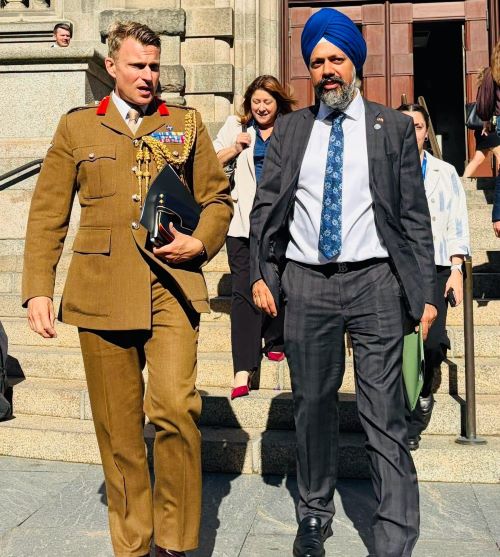 The central message from Dhesi’s Copenhagen visit is the importance of cooperation among European allies.Modern security challenges increasingly cross national borders. Maritime surveillance, intelligence sharing, protection of undersea infrastructure, cybersecurity, military exercises and rapid deployment capabilities all require coordination between countries.Structures such as NATO and the Joint Expeditionary Force provide mechanisms through which participating nations can improve interoperability, training and collective preparedness.Dhesi’s emphasis on collaboration therefore reflects the broader principle that European security increasingly depends upon countries being able to work effectively together.
Copenhagen Becomes a Major Defence Forum
Dhesi’s visit also coincided with the NATO Military Committee Conference held in Copenhagen on September 18 and 19.Senior military representatives from NATO member states gathered in the Danish capital to discuss alliance defence and security matters, further highlighting Copenhagen’s importance as a venue for European and North Atlantic security discussions.Against that backdrop, Dhesi’s meetings with Danish parliamentary and defence figures provided an additional opportunity to exchange perspectives on the security challenges facing the region.The timing also demonstrated the increasing attention being paid to the northern flank of Europe and the wider North Atlantic security environment.
Dhesi’s Expanding Parliamentary Defence Role
As Chair of the House of Commons Defence Committee, Dhesi has become closely involved in parliamentary scrutiny of Britain’s defence policy.The committee has been examining issues including defence investment, military readiness, the security implications of Russia, North Atlantic activity and the strategic importance of the High North.His engagement in Copenhagen adds an international dimension to that parliamentary work, allowing the committee to hear directly from an important European ally and examine how Denmark is responding to the changing security environment.The visit also reflects the increasingly international nature of defence policy, where decisions taken by one country can have implications for the wider alliance.
Europe Faces a Broader Security Challenge
The discussions in Copenhagen underline a fundamental change in the nature of European security.Defence is no longer limited to protecting national borders. Maritime routes, energy networks, communications systems, subsea cables and pipelines, airspace, cyber systems and military logistics are all increasingly regarded as components of national and collective security.This makes cooperation between Britain, Denmark and other European allies increasingly important as governments seek to strengthen resilience and preparedness.
A Strategic Question for Britain and Europe
Dhesi’s Copenhagen visit is therefore more than a parliamentary engagement. It forms part of the wider effort to understand how Britain and its European allies should respond to a changing strategic environment.By describing Denmark as a close ally and highlighting the importance of learning from its increased defence spending, Dhesi has drawn attention to the practical value of cooperation between European partners.The central question now facing Britain and its allies is how effectively they can combine their defence capabilities, resources, intelligence and strategic planning while maintaining strong cooperation through NATO and other international partnerships.From Copenhagen, Dhesi’s message is clear: the security challenges facing northern Europe are increasingly interconnected, and cooperation among allies will remain a central part of the continent’s defence planning.