
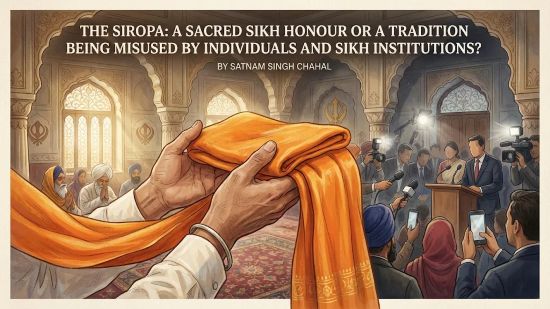
 The Siropa (ਸਿਰੋਪਾਓ) occupies a highly respected place in Sikh history, tradition and religious life. It is not merely a piece of cloth, a robe or a ceremonial gift presented to someone during a public function. It represents honour, dignity, recognition, respect and acceptance of an individual’s contribution to the Sikh community and the principles of Sikhi. Historically, receiving a Siropa was considered a privilege because it symbolised recognition for service, sacrifice, bravery, religious commitment and contributions to humanity. Unfortunately, a serious question needs to be raised today: Are Sikh institutions and individuals preserving the dignity of the Siropa, or gradually reducing this historic honour to a routine political and social formality?
The word Siropa is derived from the Persian expression Sar-o-Pa, meaning from head to foot, and historically referred to a robe of honour. In Sikh tradition, it developed a distinct religious and spiritual significance. Historical accounts associate the practice with the time of Guru Angad Dev Ji, who is traditionally recorded as presenting a scarf to Guru Amar Das Ji. Guru Amar Das Ji treated these gifts with great reverence and preserved them as sacred tokens of affection and honour. Over time, the Siropa became an important expression of respect within Sikh religious and community life.
Traditionally, the Siropa was bestowed upon individuals whose service, sacrifice, dedication or contribution deserved recognition from the Sangat. It could be presented to someone who had devoted their life to Sikh religious institutions, defended the rights of the community, served humanity, promoted education or made an exceptional contribution to the Panth. Its real value was never determined by the cost of the material or the personality presenting it, but by the principles and recognition represented through the honour.
Unfortunately, the contemporary practice in many places has raised serious concerns. Today, photographs of politicians, businessmen, celebrities, government officials, visiting dignitaries and influential personalities receiving Siropas are frequently circulated on social media. In some cases, the presentation appears to have little connection with their contribution to Sikhism or the welfare of the community. It seems that the Siropa has become a routine arrangement for welcoming VIPs rather than a special recognition of genuine service and sacrifice.
There is nothing wrong with welcoming guests into a Gurdwara Sahib or showing respect to visitors. Sikhism teaches hospitality, equality and respect for humanity. However, welcoming someone and conferring a special religious honour are two different things. A person who visits a Gurdwara Sahib to pay obeisance should be welcomed with respect, but that does not automatically make that person deserving of a Siropa. Similarly, making a financial contribution to a Gurdwara should not create an automatic entitlement to receive this honour. The Siropa should recognise service, not social status; sacrifice, not political influence; and commitment, not financial power.
The politicisation of the Siropa has become a particularly sensitive issue in Punjab. Political leaders from different parties have, at various times, received this honour during visits to Sikh shrines. On other occasions, similar presentations have generated controversy, disciplinary action and accusations of violating religious protocol. A notable controversy emerged in September 2025, when the SGPC took disciplinary action against four employees following the presentation of a Siropa to Congress leader Rahul Gandhi at Gurdwara Samadh Baba Budha Sahib in Ramdas. This incident once again raised questions about the rules governing the presentation of religious honours to political personalities.
The SGPC has previously recognised the need to regulate this practice. In 2022, its executive committee decided that Siropas should be presented sparingly and that special honours inside Darbar Sahib should be reserved for deserving Panthic personalities. In January 2024, the SGPC reiterated restrictions on routine presentations and outlined categories of individuals considered eligible under its stated policy. These decisions demonstrate that the issue is not new. The real question is whether these guidelines are being implemented consistently, transparently and without political considerations.
The Shiromani Gurdwara Parbandhak Committee, the Delhi Sikh Gurdwara Management Committee, Takht managements, historical Gurdwaras and other Sikh religious organisations have a particular responsibility to protect the dignity of this tradition. They should establish clear and publicly accessible guidelines explaining who deserves a Siropa, under what circumstances it should be presented and which authorised religious representatives may confer it. There should be no room for personal favouritism, political pressure or financial influence in decisions involving religious honours.
Equally important is the question of whether Sikh institutions are recognising the right people. There are countless Sikh volunteers who spend decades maintaining Gurdwaras, educating poor children, helping families in distress, supporting Sikh prisoners, protecting religious heritage and working for the preservation of Punjabi and Sikh identity. There are individuals who have dedicated their entire lives to community service without seeking publicity, political positions or financial rewards. There are families who have made extraordinary sacrifices for the Sikh Panth. Yet, many such individuals remain unrecognised while influential personalities frequently receive ceremonial honours. Does their dedication carry less value than the arrival of a politically powerful visitor? This is a question that Sikh institutions must honestly answer.
The responsibility does not rest entirely with Gurdwara management committees. Individuals who accept the Siropa also have a moral responsibility to understand its significance. A person should not feel proud merely because a religious institution has placed a ceremonial cloth around their shoulders. The more important question should be whether their actions, public conduct and contribution to society justify such recognition. Sikh politicians, businessmen and public personalities should also demonstrate humility and avoid treating religious honours as achievements to be displayed on social media.
Another disturbing development is the growing culture of measuring religious respect through photographs, public announcements and social media publicity. Some people appear more interested in receiving a Siropa in front of cameras than in understanding the responsibility associated with this honour. Religious institutions must not become platforms for personal promotion. The sanctity of a Gurdwara Sahib and the dignity of its traditions must remain above the culture of VIP treatment and publicity.
The Sikh community should also initiate a serious discussion about restoring the original dignity of the Siropa. Sikh scholars, historians, religious representatives, intellectuals and ordinary members of the Sangat should be involved in developing a consistent approach. The SGPC and other major Sikh institutions should review their existing policies and ensure that the same standards apply to politicians from every political party, wealthy donors, government officials and ordinary citizens. If a rule exists, it must be implemented equally.
The Siropa is part of the historical and spiritual heritage of the Sikh community. It represents a relationship between the Guru, the Sangat and an individual whose service is considered worthy of recognition. Its dignity must not be compromised by political competition, financial influence, personal relationships or the culture of publicity. Sikh institutions must remember that religious honours are not instruments for pleasing influential visitors or strengthening political connections. They are symbols of values that should remain above politics and personal interests.
The time has come for Sikh institutions to ask themselves a difficult but necessary question: Are we protecting the traditions of the Gurus, or turning sacred traditions into ceremonial arrangements for influential people? If every visitor receives a Siropa and every influential personality is treated as deserving of the same honour, what distinction will remain for those who have genuinely sacrificed their lives for the Sikh Panth?
A Siropa does not become valuable because of the person who presents it. It becomes valuable because of the principles, service and sacrifices represented by the person who receives it. The Siropa must remain an honour to be earned through service, sacrifice and character—not a gift distributed for convenience.