
Punjab Police have reported a major crackdown on organised crime, claiming that an average of 60 gangsters and criminals have been arrested every month over the past four-and-a-half years. According to a report published by The Tribune on November 10, 2026, a total of 3,339 gangsters and criminals have been arrested since the formation of the Anti-Gangster Task Force (AGTF) on April 6, 2022. During the same period, police claim to have busted 1,293 criminal modules, neutralised 41 criminals and recovered 2,525 weapons and 755 vehicles allegedly connected with criminal activities.
The figures also reveal that the Anti-Gangster Task Force itself arrested 503 criminals, neutralised 10 and busted 196 criminal modules. District and field police units accounted for another 2,836 arrests, 31 neutralised and 1,097 criminal modules busted. Police have also reported that 17 foreign-based gangsters have been deported or extradited to India, while international cooperation has resulted in the issuance of 49 Red Corner Notices through the National Central Bureau, with additional notices pending or being processed.
However, these impressive figures raise a much bigger question about the actual situation on the ground. If Punjab Police have arrested 3,339 gangsters, busted 1,293 criminal modules and recovered more than 2,500 weapons, why does organised gangsterism continue to remain a serious concern in Punjab? Why do criminal networks continue to operate, why are extortion threats still a public concern, and why do people continue to hear reports of shootings, targeted attacks and criminal intimidation? The public deserves to know whether these arrests are permanently dismantling criminal networks or merely removing individual members while other people take their places.
The police data itself indicates that the challenge is not over. According to the DGP’s statement reported by The Tribune, nine major gangs remain active in Punjab, many of them allegedly directed by leaders based abroad. The newspaper has also reported that nine most-wanted criminals carry rewards of Rs 10 lakh each. Their continued presence on the wanted list raises questions about the effectiveness of intelligence gathering, international coordination and efforts to dismantle the financial and operational networks supporting organised crime.
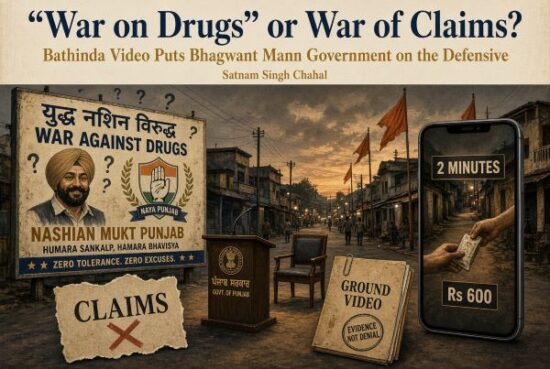
The problem becomes even more serious when gangsterism and illegal drug trafficking are examined together. Punjab has been conducting an extensive anti-drug campaign under the name ‘Yudh Nasheyan Virudh’. According to figures released by the Anti-Narcotics Task Force and reported in September 2026, between March 1, 2025, and September 3, 2026, authorities registered 59,293 FIRs under the NDPS Act and reported 25,339 arrests. The reported seizures included 3,757 kg of heroin, 964 kg of opium, 45 tonnes of poppy husk, 1,288 kg of ganja and 71 kg of methamphetamine, commonly known as ICE.
These figures demonstrate the scale of enforcement, but they also raise an uncomfortable question: despite so many arrests, FIRs and drug recoveries, why has Punjab not been able to eliminate the supply networks responsible for bringing illegal drugs into villages, towns and cities? Why does the drug trade continue to create concerns among families, parents and communities? Arresting people found selling drugs at the street level is necessary, but the larger challenge is identifying and prosecuting the suppliers, financiers, transporters, distributors and protectors who may be operating higher up the chain.
There is also a need to distinguish between the number of arrests and actual convictions. An arrest is the beginning of a legal process, not proof of guilt. The government and police should regularly disclose how many arrested gangsters and drug traffickers have been charge-sheeted, how many cases have resulted in convictions, how many accused have been acquitted and how many investigations remain pending. Such information would help the public understand whether enforcement operations are translating into lasting results.
The government must also explain what action is being taken against the financial foundations of organised crime. Criminal networks cannot survive on weapons and threats alone. They require money, communication channels, logistics, local contacts and networks that facilitate their activities. Investigating financial transactions, identifying alleged proceeds of crime, tracing property and assets, and prosecuting those who finance criminal activities are essential parts of dismantling these networks. Without sustained action against the financial structure, the arrest of individual gang members may not be sufficient to prevent the reorganisation of criminal groups.
Another important issue is the relationship between gangster networks and drug trafficking. The authorities should investigate whether particular criminal networks are involved in drug distribution, extortion, illegal weapons and other organised offences, rather than treating every problem as an isolated case. However, such connections must be established through evidence and proper investigation, not assumptions. The public needs transparent information about the actual findings of these investigations.
The Punjab Government should also publish a district-wise assessment of gangsterism and drug trafficking, identifying areas where criminal activity remains a serious concern and explaining what corrective measures are being taken. The performance of the Anti-Gangster Task Force and Anti-Narcotics Task Force should not be measured only by the number of arrests and recoveries. Their success should also be assessed through convictions, disruption of supply chains, reduction in extortion, prevention of violent incidents and a measurable decline in the availability of illegal drugs.
Punjab Police deserve recognition for the risks involved in confronting organised criminal networks and for the recoveries and arrests reported. However, the responsibility of the government does not end with announcing enforcement statistics. People want to know whether their neighbourhoods are becoming safer, whether businesses can operate without fear of extortion, whether young people are becoming less exposed to drugs and whether criminal networks are losing their ability to operate.
The most important question for the Punjab Government is straightforward: if 3,339 gangsters have been arrested, 1,293 criminal modules busted and 2,525 weapons recovered, why is there still no clear end to gangsterism and illegal drug trafficking in Punjab?
The people of Punjab need more than monthly arrest figures and press conferences. They need a comprehensive strategy that targets the leadership, finances, international connections and supply chains of organised crime, alongside effective prosecution, drug prevention, rehabilitation and protection for witnesses and victims.
The ultimate measure of success should not be how many criminals are arrested every month, but how much organised crime and illegal drug availability have actually declined in Punjab.
Sources: The Tribune, November 10, 2026, report on Punjab Police and the Anti-Gangster Task Force; Times of India, September 5, 2026, report on Punjab’s anti-drug campaign and Anti-Narcotics Task Force figures.