
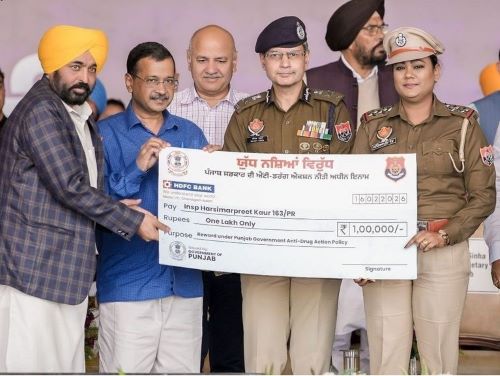
 The political atmosphere of Punjab was shaken when the Chief Secretary and the Director General of Police (DGP) addressed a purely political AAP rally in Moga. Leaders across the state condemned this act, calling it “the blackest day of Punjab’s democratic history.” One senior advocate remarked, “This is not just misconduct, this is a constitutional crime.” Citizens are alarmed that the neutrality of the state machinery has been compromised in such a blatant manner.
The presence of the state’s top bureaucrats on a party stage has sparked massive outrage. Opposition leaders warned, “If the bureaucracy speaks the language of a party, democracy dies.” Civil society groups and retired officials also described the act as a blatant misuse of government machinery, warning that it sets a dangerous precedent for future governance. The question on everyone’s mind is simple: if the top officials can openly endorse a party, who will ensure fair administration in Punjab?
Under the All India Services (Conduct) Rules, 1968, Rule 5 clearly states: “No member of the Service shall take part in politics or be associated with any political party.” Addressing a political rally is not a minor error it is a direct violation of these rules. As a former DGP commented, “A policeman is loyal to the Constitution, not to a party stage.” Such acts erode citizens’ trust, who expect bureaucrats to serve the public without political bias.
This rally was purely partisan, not a government or welfare programme. By addressing the gathering, bureaucrats blurred the lines between government and party, turning the stage into a symbol of political patronage. Legal experts warn that this is a dangerous fusion of administrative authority and political power, which could encourage future violations and weaken institutional independence.
Experts further point out that this incident violates constitutional principles. Under Article 14, citizens have a right to equality before the law, which is compromised when officials openly support a political party. Article 21, guaranteeing the right to fair governance, is similarly undermined. Even Article 324, which ensures free and fair elections, is threatened when bureaucrats become political agents rather than neutral servants of the Constitution.
The outrage across Punjab is not limited to politics; it is societal. Traders, farmers, students, and ordinary citizens have voiced their alarm, stating that if the bureaucracy can be politicised, public resources and authority may be used for party advantage, undermining public trust. A retired IAS officer observed, “Today it’s a rally, tomorrow it could be government projects being used to reward party supporters.”
Many political analysts warn that if this trend continues, Punjab could witness the transformation of bureaucracy into a party apparatus. Administrative decisions may become biased, election campaigns unfair, and public welfare secondary to political gain. Leaders across parties have unanimously declared this “a murder of democracy, emphasizing that unchecked, such incidents could weaken Punjab’s democratic institutions permanently.
The Moga rally also raises ethical questions. Bureaucrats are expected to maintain impartiality, integrity, and fairness in public service. Public confidence in governance depends on the perception that officials act in the interest of the people, not a political party. By violating these principles, the Chief Secretary and DGP have not only broken rules—they have shaken the very foundations of Punjab’s democratic system.
In conclusion, the AAP Moga rally incident is more than a political controversy; it is a constitutional crisis. It demonstrates how quickly democracy can be threatened when the separation between party and state is ignored. Citizens, opposition leaders, legal experts, and retired officers all agree that immediate disciplinary action, legal inquiry, and institutional reforms are needed to prevent such violations in the future. Punjab now stands at a crossroads: either uphold the rule of law and democratic norms or risk seeing the bureaucratic machinery permanently merged with partisan politics.
Vigilance, public awareness, and strict enforcement of conduct rules are the only ways to restore faith in Punjab’s democracy. This incident should serve as a wake-up call to all, reminding that the constitution must remain above political ambitions.