
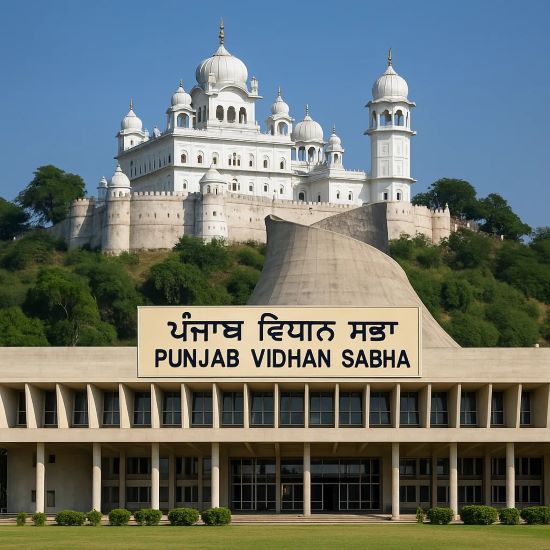
 The decision to convene a Punjab Assembly session at Sri Anandpur Sahib carries significant symbolic and practical merit. Sri Anandpur Sahib holds immense religious and historical importance for Sikhs, being the place where Guru Gobind Singh founded the Khalsa in 1699. Holding an assembly session at this sacred site would acknowledge and honor Punjab’s rich Sikh heritage, demonstrating the government’s respect for the cultural and spiritual foundations of the state. This gesture could strengthen the emotional bond between the government and citizens, particularly the Sikh community, fostering a sense of inclusivity and recognition.
Furthermore, such a session would promote decentralization honour Punjab’s rich Sikh heritage, demonstrating the government’s respect for the state’s cultural and spiritual foundations of governance by taking the legislative process beyond the traditional confines of Chandigarh. This could symbolize the government’s commitment to connecting with people across different regions of Punjab, making governance more accessible and representative. The move could also boost local tourism and economic activity in the Anandpur Sahib region, bringing attention and resources to areas beyond the capital. Additionally, it would set a precedent for holding sessions at historically significant sites, potentially inspiring similar initiatives that celebrate regional diversity and heritage.
Demerits
However, convening an assembly session at Sri Anandpur Sahib also presents several practical and political challenges. The primary concern involves the logistical complexities of organizing a full legislative session outside the established infrastructure of Chandigarh. The assembly requires specific facilities, security arrangements, technological support for recording proceedings, and accommodation for legislators and staff, which may not be readily available at Sri Anandpur Sahib. The additional costs involved in arranging temporary infrastructure could be substantial and may be seen as an inefficient use of public resources.
There are also concerns about mixing religious sites with political proceedings, which some may view as inappropriate or as politicizing sacred spaces. Critics might argue that holding government sessions at religious sites could blur the lines between state and religion, potentially alienating citizens of other faiths or secular-minded individuals. Additionally, such decisions could be perceived as symbolic gestures aimed at gaining political mileage rather than addressing substantive governance issues. The precedent might also lead to demands for sessions at various other religious or historically significant sites, making it difficult to establish clear criteria for such decisions and potentially creating inter-community tensions if some groups feel overlooked.
Skip to content
Miscellaneous Top New