
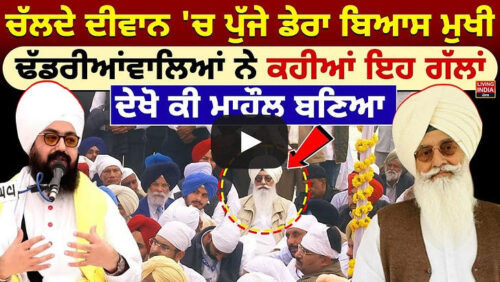
 The quiet visit of the head of the largest dera of Punjab to the public meeting (Diwan) of Baba Ranjit Singh Dhadrianwala is very important from the social and political side. This might have missed the headlines, but I felt that this moment carries far more significance than what appeared in the news.
To understand why, we must first look at Punjab’s vast and unique dera culture. Punjab has more than a thousand deras, big and small. Unlike traditional religious institutions, deras attract followers from all religions, castes, and regions. Hindus, Sikhs, Dalits, backward castes, migrants, labourers, and even upper-caste families all come to deras. They cut across the rigid boundaries that otherwise divide society. Deras provide dignity, identity, equality, social support, and emotional belonging—things that many people often do not find in mainstream institutions.
Some deras in Punjab have an influence so large that it touches millions of lives. Radha Soami Satsang Beas (RSSB), led by Baba Gurinder Singh Dhillon, is among the largest. Estimates of its global following range from 4 million to as high as 20 million, and the Beas campus alone can host more than 2.5 lakh people in a single congregation. Dera Sacha Sauda of Sirsa claims followers in the tens of millions. Dera Sachkhand Ballan, central to the Ravidassia community, influences nearly 20 lakh followers across Doaba and abroad. The Nirankari Mission, Dera Noormahal, and several others also command followings in the millions.
Because of this scale, Punjab’s spiritual map strongly shapes Punjab’s political map. For decades, mainstream Sikh politics was dominated by the Shiromani Akali Dal (SAD) which controls the SGPC. Interestingly, the total voters of SGPC are about 50 lakh only. The party controlled important Sikh Gurudwaras, institutions, enjoyed the support of rural Jat Sikhs, and set the direction of panthic politics for decades through their control on the Sikh institutions. However, that space is now being challenged. A more aggressive panthic mobilisation, led by figures like Amritpal Singh, is competing for religious authority and street influence. This has created deep tension within Sikh society and stress within law enforcement agencies.
Meanwhile, law and order in Punjab has been weakening. Rising gang activity, targeted killings, the drug crisis, and pressures of unemployment and emigration have created an unstable social atmosphere. Sacrilege tensions and political fragmentation add further strain. The state is heading toward the 2027 elections under these challenging conditions.
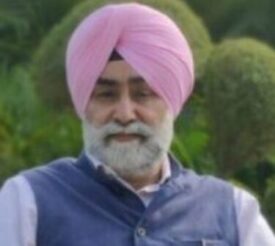
Is former Member of Punjab Public Service Commission
A farmer and keen observer of current affairs
In this uncertain environment, the quiet appearance of Baba Gurinder Singh Dhillon at the dewan of Baba Ranjit Singh Dhadrianwala becomes a significant spiritual gesture. There was no announcement, no VIP stage, and no grand entry. He simply walked in and sat on the ground among the sangat, blending into the gathering like any ordinary listener. Only a month earlier, he had similarly visited Nhahang Chief Baba 99-Crori.
We must also remember that his recent visit to Bikram Majithia in Nabha Jail received major media attention and set off political debates. When seen together, all three visits—the Nihang chief, the jailed political figure, and now Dhadrianwala—show a clear pattern of outreach across different centres of influence in Punjab.
For Dhadrianwala, this visit is a major acknowledgment. He is already a leading a logic based voice among Sikh youth, professionals, and NRIs. Having the head of Punjab’s largest dera quietly attend his diwan carries a powerful message of respect and recognition.
For RSSB, it signals openness and inclusion at a time when Punjab’s spiritual landscape is fragmented. It shows readiness to connect with various strands of Sikh society, including reformist and traditional groups for larger good of the state and the fragmented society.
For Punjab as a whole, such bridges are valuable. They reduce tensions, create space for dialogue, and calm anxieties—something Punjab badly needs today. Most important message is the respect, acceptance and tolerance of other voices. Hetherto, it is my way or the highway inmost cases. And for politics, this is an important signal. In Punjab, spiritual developments often come before political developments. When large deras acknowledge each other, followers start rethinking old loyalties. Political parties will understand the deep implications of this gesture even if they do not dare to speak about it openly.
This visit may not have dominated breaking news, but it carries much deeper meaning. Sometimes real change begins silently—when a major spiritual figure sits quietly among ordinary people, sending a message without speaking a word.
I leave this for your own interpretation of this quiet visit.