
 The political theatre in Punjab has reached a point where even comedians would struggle to keep up. The central question echoing across the state is simple yet astonishing: who is actually running the Punjab Government? Is it the elected leaders chosen by the people, or is the real power quietly exercised by a couple of individuals flown in from the AAP Delhi headquarters? The situation has become so absurd that citizens are beginning to wonder whether Punjab’s ministers are decision‑makers or merely decorative pieces placed around conference tables for visual balance.
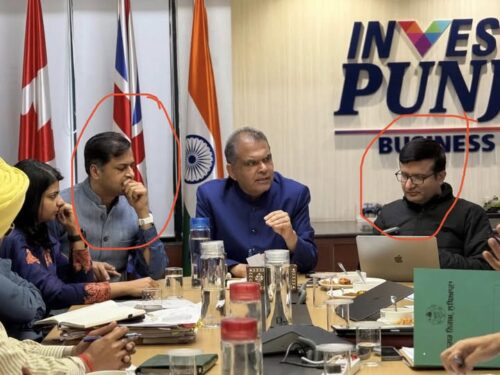
The presence of Jasmine Shah and Gopal Mohan in official government meetings has added a comic twist to an already confusing script. These two Delhi representatives walk into Punjab’s administrative discussions with the confidence of people who own the building, the table, and possibly even the microphones. They sit beside ministers, whisper instructions, and participate in policy discussions as if they were appointed by the voters of Punjab themselves. Meanwhile, the actual elected ministers appear to be watching the proceedings like polite guests who don’t want to interrupt the hosts.
The recent meeting involving Minister Sanjeev Arora has only intensified the satire. People are asking in what official capacity these two Delhi agents were present. Were they advisors? Supervisors? Inspectors? Or simply tourists who wandered into the wrong room and decided to stay because the snacks looked good? If major policy decisions are being shaped by individuals who were never elected in Punjab, then what exactly is the role of the ministers? According to the satirical interpretation, they seem to be functioning as ceremonial figures—present for photographs, absent from authority.
This naturally leads to another uncomfortable but necessary question: what happened to the oath Minister Sanjeev Arora took at the time of his nomination? Did he forget it? Did someone revise it? Or has it been quietly replaced with a new version that reads, “I solemnly swear to follow instructions from Delhi, regardless of who delivers them”? The people of Punjab deserve clarity, not a political puppet show where the strings are pulled from another state.
https://www.facebook.com/reel/862526732873435
In the end, the comic punchline writes itself. Punjab voted for a government, but what it appears to have received is a remote‑controlled administration, with the remote safely stored in Delhi. Meanwhile, Punjab’s ministers are still searching for the batteries.