
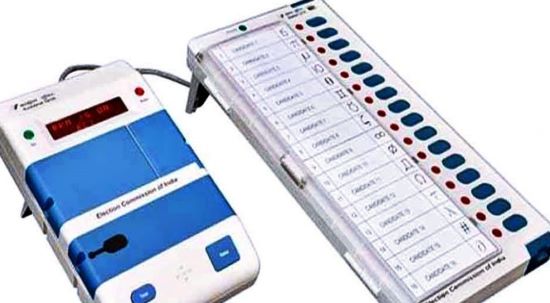
 Electronic voting machines (EVMs) that are manufactured in countries such as Japan and Germany and then used in those same countries’ elections. I cover the types of machines, why countries often use domestically produced systems, concrete examples from Japan and Germany (including trials, rollouts and legal limits), the core technical and democratic tradeoffs, and recommendations for safer deployment.
Japan and Germany offer useful contrasting case studies because both countries experimented with or deployed electronic voting technologies, but the political, legal and technical outcomes diverged. “Electronic voting” covers a range of devices and processes: direct-recording electronic (DRE) voting machines (touchscreens or button panels that record votes in internal memory), ballot-scanning machines that optically read paper ballots, and centralized electronic tallying systems that aggregate results. Operational details matter enormously — whether a machine produces an auditable paper trail, how ballots are backed up and transported, and how software and firmware are controlled all determine whether the system preserves transparency and voter confidence. For a concise primer on what “EVM” can mean and the different architectures, see the IFES primer on electronic voting.
Why nations often buy or build voting technology at home (or use domestic manufacturers) is partly practical and partly political. Practical reasons include existing electronics/manufacturing capacity, knowledge of local election rules and languages, easier logistics for maintenance and certification, and closer control over supply chains and updates. Politically, domestic procurement reduces dependence on foreign vendors (reducing perceived risk of foreign interference) and can be framed as supporting local industry. But “made in X” is not an automatic guarantee of security or transparency: the crucial questions are openness of the design (can experts audit it?), paper-backups, certification regimes, and legal safeguards that preserve public verifiability.
Japan—trials, localized use, and retreat. Japan experimented with e-voting in local elections and with a variety of systems over the 2000s–2010s. Early trials included touchscreen systems used in some municipalities (for example media coverage of a 2010 local rollout), and research teams — including external security researchers — examined the devices and found usability and security issues. Over time many localities scaled back or abandoned e-voting: by the late 2010s a number of municipalities had either discontinued electronic systems or confined use to limited, controlled contexts. One illustrative case: the Aomori municipality (Rokunohe) — once among the only places using an e-voting system — decided to scrap its electronic voting system, highlighting the practical and political difficulties of sustaining such deployments at scale. Academic and practitioner reviews in Japan emphasized that security failures and lack of transparent, auditable processes undermined confidence. That local pattern — early experimentation, scrutiny by engineers and academics, and later rollback in some places — shows how domestic manufacture plus trials do not remove the need for strong verifiability and oversight.
Germany—deployment, legal test and limits. Germany’s experience is often cited in international debates because the Federal Constitutional Court (Bundesverfassungsgericht) delivered a landmark judgment in 2009 that effectively constrained the use of certain kinds of electronic voting machines in federal elections. After the 2005 Bundestag election, complaints led to litigation: the court found that the voting process must be verifiable by the public in a manner that guarantees the electorate’s confidence in the correctness of the result, and that the machines used at the time did not sufficiently permit meaningful public verification of the vote-counting process. The ruling did not ban all computing in elections but set stringent transparency and auditability requirements; as a result, use of many types of DRE machines in federal elections became effectively impossible without major redesigns to ensure public verifiability and documented, inspectable procedures. The court’s decision forced German authorities to re-evaluate technology choices and to prioritize auditable paper records and transparent counting procedures. The official court judgment and the Federal Returning Officer’s information summarize the legal and administrative fallout from those rulings.
Federal Constitutional Court of Germany
Common technical and democratic tradeoffs observed from these and other national experiences. First, DRE machines with no voter-verified paper audit trail (VVPAT) are fast and accessible for voters (good for some disability accommodations), but they concentrate trust in the device and the vendor’s software; without an independent, observable paper trail, recounts and audits are weaker. Second, optical-scan systems (paper ballots counted by a scanner) preserve a physical paper ballot that citizens and observers can inspect, and scanners can speed tabulation, but scanners still require secure chain-of-custody, certified software, and robust post-election audits to detect and correct errors or tampering. Third, any electronic system must contend with software update risks, supply-chain vulnerabilities, insider threats at the manufacturer, and the opacity of proprietary code — problems not solved just by domestic manufacture. Finally, public confidence depends heavily on transparent certification procedures, open testing by independent academic and security experts, robust post-election audits (risk-limiting audits), and clear legal frameworks that enable challenges and recounts. Summaries and technical overviews by election-support groups (such as IFES) explain these tradeoffs in practical terms.
Why a country might still prefer home-manufactured machines despite the risks. Domestic manufacture simplifies logistics (repairs, spares, localization in language), can be faster to certify under national rules, and reduces political sensitivity about foreign control. Governments can require source-code escrow, on-site audits, and contractual obligations. However, these safeguards must be real: source code escrow is only useful if independent auditors can and will examine and publish findings; contractual penalties are only effective if auditors can detect violations. The contrast between the Japanese municipalities that trialed machines and later stopped using them, and the German legal decision that limited machine use at the federal level, shows that home production must be paired with transparent, verifiable processes to be accepted by courts and the electorate.
Practical recommendations for policymakers considering domestic EVM procurement or continued use. First, require a VVPAT or equivalent independent paper record for every vote so human-auditable ballots exist. Second, mandate open, third-party security and usability testing prior to certification and publish the reports (redactions only for specific security-sensitive details, but not whole-sale secrecy). Third, design and fund robust post-election audit regimes (for example risk-limiting audits) that can be executed by local election officials and overseen by observers; audits should be routine, not only triggered by complaints. Fourth, ensure procurement includes supply-chain transparency and provisions for code escrow and forensic access in case of dispute. Fifth, legislate clear legal standards about verifiability and public scrutiny — Germany’s Constitutional Court established precisely the sort of legal standard that forces realistic accountability, and other countries have emulated the principle that technology must not prevent public verification. Finally, involve civil society, political parties, and independent academics early — technical fixes alone won’t create legitimacy without inclusive political processes.
Federal Constitutional Court of Germany
Conclusion. Machines “made in Japan” or “made in Germany” are not inherently safe merely because of their origin. Both countries’ experiences show that national manufacture can ease logistics and political concerns about foreign influence, but it does not remove the fundamental requirements of verifiability, transparency, independent testing, and legal safeguards. Japan’s local trials and later rollbacks underscore fragility in public confidence when audits and transparency are insufficient; Germany’s Constitutional Court decision demonstrates how legal standards can constrain machine deployment when devices prevent meaningful public verification. For any country considering domestic EVM procurement, the lesson is clear: pair technology with paper records, open and independent audits, and legal/regulatory frameworks that make election results demonstrably verifiable to the public.