
 Chandigarh in the month of November is at its best. Crystal-clear skies, the waters of Sukhna Lake looking almost Mediterranean in the afternoon light, and a steady calendar of parties — from cosy farmhouse lawn get-togethers to big, fat Punjabi pre-wedding bashes. This is also the season when non-resident Indians descend on the city, joined by richly mobile “resident” Indians who shuttle between Gurgaon, Houston and the Bay Area. Over good food and better whisky, everyone suddenly becomes an expert on international relations — especially India–US relations.
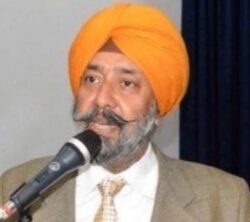
In these drawing-room seminars you will find illustrious people who actually do know what they are talking about: tech CEOs, fund managers, lawyers, and yes, the distinguished former Indian Ambassador to the United States, Taranjit Singh Sandhu, who unsuccessfully contested the Amritsar Lok Sabha seat on a BJP ticket in 2024. His perspectives in one such Chandigarh conversation did not merely add gravitas; they enriched the discussion and helped crystallise my own views on what had gone wrong between New Delhi and Washington in 2025.
Somewhere between the starters and the dessert, one line from that evening stayed with me: “We lost a golden opportunity in February 2025.” This article is an attempt — drawing on those conversations and my own reading — to unpack what really went wrong in early 2025, why it was a missed moment in India–US ties, and how we might now mend without bending.
The High Point: Mission 500 and the COMPACT Moment
On 13 February 2025, PM Modi and President Trump stood together at the White House and tried to script the next chapter of the India–US story. They announced “Mission 500” — an ambitious pledge to push bilateral trade to 500 billion dollars by 2030.
To give that target a framework, the two leaders unveiled the U.S.–India COMPACT — “Catalyzing Opportunities for Military Partnership, Accelerated Commerce & Technology for the 21st Century” — bringing defence, energy, critical minerals, AI, semiconductors and space under one broad umbrella.
Crucially, the two sides agreed to work towards the first tranche of a Bilateral Trade Agreement by the northern autumn of 2025. India would cut some tariffs (on items such as motorcycles and whiskey), open up more market access, and substantially increase energy and defence purchases from the US. In return, Washington would temper its long-standing complaints about India being the “tariff king” and move towards stable, predictable access to the Indian market.
For once, the economics were marching in step with the geopolitics. In theory, it was India’s best chance in years to lock in both strategic and commercial gains with the world’s largest economy.
From Momentum to Meltdown
What followed instead was a near textbook case of how to squander a favourable opening.
First, domestic political constraints in India made comprehensive concessions on agriculture and dairy extremely difficult. New Delhi wanted a high-tech, services-heavy trade deal; Washington wanted visible market access for its farmers and dairy cooperatives. That asymmetry never really got ironed out, even as negotiators “made progress” through spring and early summer.
Second, President Trump’s own political style turned trade into a television spectacle. Through a series of announcements and social-media flourishes, the US ratcheted up tariffs on Indian exports, culminating in a punishing 50 per cent tariff wall on a wide basket of goods by August. The message was blunt: stop buying cheap Russian oil and sign a deal on Washington’s terms — or pay the price.
Third, and most destabilising, the Pahalgam terror attack and India’s subsequent Operation Sindoor against Pakistan-based terror infrastructure injected the Pakistan factor back into an already fraught negotiation. Trade, terrorism and television sound-bites all got hopelessly entangled.
Mediation, Hyphenation and the Kananaskis–Jagannath Call
By June 2025, the script had gone badly off-course. At the G7 Summit in Kananaskis, Canada, where PM Modi was a special invitee, a scheduled bilateral with President Trump fell through when the US President left early citing the Iran–Israel crisis.
As Air Force One headed back to Washington, President Trump called PM Modi and suggested an impromptu “stopover” for dinner and talks. PM Modi declined — publicly citing prior commitments, including his visit to Croatia and a deeply symbolic visit to the land of Lord Jagannath in Odisha. Privately, South Block was wary that President Trump might try to stage-manage a photo-op with Pakistan’s Army Chief, who happened to be in Washington at the same time. India would not accept hyphenation with Pakistan, not even for a single picture frame.
The now-famous phone call that followed was, by all credible accounts, frosty. PM Modi reportedly made four points crystal clear: no US mediation in the India–Pakistan ceasefire; no third-party role on Kashmir now or ever; no linkage of the Operation Sindoor ceasefire to any trade quid pro quo; and no appetite in New Delhi for being part of anyone’s Nobel Peace Prize fantasy.
What had begun in February as Mission 500 had turned, by June, into Mission Friction. The personal equation between the two leaders — always an important lubricant in India–US ties — was visibly damaged.
Pakistan Walks Through the Door We Left Open
In diplomacy, vacuums rarely remain empty for long. As India–US trade talks were dragged down by tariffs, mistrust and mutual political theatre, Pakistan quietly moved to occupy the negotiating space we had vacated.
Through spring and early summer, Islamabad pushed hard for its own deal with Washington — offering lower tariffs, energy cooperation and access to critical minerals. By late July, it had secured a trade agreement that gave Pakistan a far more favourable average tariff rate than India was facing and, more importantly, renewed economic and strategic relevance in Washington’s South Asia calculus.
For Pakistan, this was a diplomatic coup and an economic lifeline. For the US, it was a way of signalling that South Asia’s trade door would not stay half-open just because Delhi and Washington were bickering. For India, it was a stark reminder that even a “natural partnership” can be tactically outflanked if you take momentum for granted.
So What, Exactly, Went Wrong?
Strip away the noise and a few core miscalculations stand out.
We over-estimated our leverage. India assumed that access to its vast market and its strategic weight in the Indo-Pacific would ultimately force Washington to blink first on tariffs. President Trump, however, was perfectly prepared to hurt both sides economically to secure a televised political win.
We under-invested in political management. Once the Pahalgam–Sindoor crisis erupted, Delhi’s priority became (understandably) to shut down any talk of US mediation. But in doing so, we allowed the entire strategic conversation to shrink to that one question, while the painstaking work on trade architecture drifted into the background.
We mixed signalling with sulking. Denying mediation and hyphenation was essential; refusing to even take calls or to keep a parallel, low-key economic track alive may prove more costly than we yet realise. There is a difference between standing firm and walking away.
And we let the timeline slip. “By autumn 2025” sounded comfortably far away in February. By the time autumn arrived, punitive tariffs were biting, the domestic political calendar was heating up on both sides, and any deal that could be sold as a win–win had turned into a zero-sum contest of egos.
Mending Without Bending
The good news is that while February 2025 was a golden opportunity, it need not be the last one. The structural logic of India–US cooperation — in technology, supply chains, defence co-development, critical minerals and higher education — remains compelling. But to repair the damage without compromising core interests, Delhi will need a carefully calibrated approach.
First, we should separate sovereignty from sectoral cooperation. On Pakistan, Kashmir and third-party mediation, the red lines have been spelled out with unusual clarity. Those should remain non-negotiable. But there is no reason why that firmness must automatically extend to tariff schedules on ICT products or to calibrated opening in selected agricultural items where Indian consumers and downstream industries also stand to gain.
Second, India needs to rediscover the art of multi-channel diplomacy with Washington. PM–President chemistry will always matter, but it cannot be the only engine. Parliament-to-Congress dialogues, state-level partnerships, business-to-business coalitions and diaspora-led advocacy — including those very NRIs holding forth in Chandigarh’s drawing rooms — can help rebuild trust and keep the relationship from becoming hostaged to one bad phone call.
Third, New Delhi should offer a credible, time-bound tariff reform roadmap that is anchored in our own economic self-interest, not in capitulation to US pressure. That means using the trade-deal moment to catalyse long-overdue domestic reforms, while insisting on reciprocity and predictability from the American side.
Finally, we must communicate our strategic autonomy without performative belligerence. India will continue to buy energy from multiple sources, including Russia, and will continue to guard its options in a contested world. But that does not preclude deep cooperation with the US on everything from AI governance to naval interoperability in the Indo-Pacific.
From Drawing-Room Debates to Strategic Reset
Next November, as the skies over Chandigarh once again turn that familiar crisp blue and the Sukhna waters glisten in the winter sun, the city’s parties will again be full of instant experts as well as serious commentators on America, tariffs and trade wars. My hope is that by then, the conversation will have shifted — from lamenting a lost opportunity to dissecting a hard-won course correction.
Mending without bending will not be easy. It will require Delhi to be strategically supple, politically mature and diplomatically imaginative. But if there is one lesson from the February 2025 episode, it is this: history does not give us endless golden moments. When the next one comes, India will have to be ready — not just to talk like a great power, but to negotiate like one.