
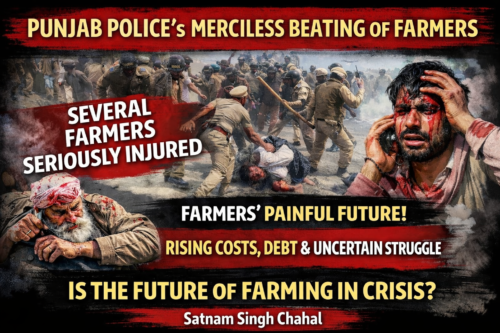
 The recent incidents of Punjab Police using excessive and unjustified force against peacefully demonstrating farmers have once again exposed the widening gap between the state machinery and the very people who feed the nation. Videos and eyewitness accounts from multiple protest sites show officers beating farmers mercilessly with lathis, targeting even elderly citizens. Several farmers have been seriously injured some suffering fractures, head wounds, and internal injuries. These scenes have shaken the conscience of Punjab, reviving painful memories of past confrontations where farmers paid the price for simply demanding what is rightfully theirs.
What makes these incidents particularly disturbing is that the farmer protests were largely peaceful. The farmers were raising concerns about long-pending issues crop prices, delayed payments, unfulfilled promises of loan waivers, the fight for MSP guarantees, and increasing economic pressures. Instead of engaging in constructive dialogue, the response from authorities was forceful suppression. For a state known for its proud agricultural heritage, the sight of farmers being beaten on their own soil has triggered outrage across political, social, and community lines.
Beyond the immediate physical injuries, the psychological impact on Punjab’s farming community is deep. Many elderly farmers say they never imagined they would be treated like criminals in the land they nourished for decades. For the younger generation, these incidents reinforce a growing fear—farming is no longer secure, respected, or sustainable. These events worsen the already declining trust between farmers and the government, making future negotiations more difficult.
The hardships ahead for Punjab’s farmers are immense. Rising input costs diesel, fertilizer, seeds, pesticides combined with unpredictable weather and shrinking water resources, have already pushed many farmers into debt. The lack of assured minimum support prices and unstable market conditions further threaten their survival. With increasing incidents of police crackdowns on farmer gatherings, even the right to protest and raise their voice faces new challenges.
The future of Punjab’s agriculture is at a crossroads. If the state continues to respond to farmer issues with police action rather than policy reforms, the anger in rural Punjab will only deepen. On the other hand, a genuine attempt to understand the farmer’s crisis—through transparent dialogue, long-term agricultural planning, fair MSP guarantees, investment in irrigation systems, and debt-relief frameworks could help restore faith. Farmers need security, not suspicion. They need support, not batons.
Punjab’s fields have always fed the nation, but today the hands that sow and harvest are trembling under pressure, fear, and injustice. Unless the government takes sincere steps to protect the dignity and livelihood of farmers, the wounds inflicted—both physical and emotional—will continue to shape Punjab’s political and social landscape for years to come.