
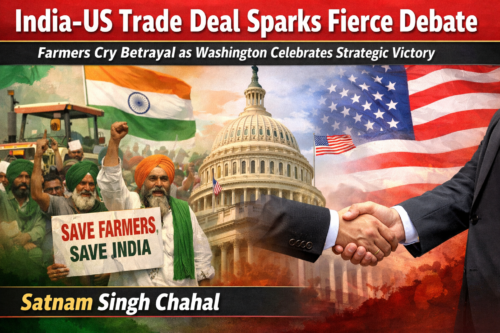
 The India-US trade deal announced in early February 2026 has sparked intense debate across India, with farmer organizations and opposition parties staging protests while the American administration celebrates it as a major diplomatic achievement. The framework agreement, reached between Prime Minister Narendra Modi and President Donald Trump, reduces US tariffs on Indian goods from 50 percent to 18 percent while committing India to purchase $500 billion worth of American products over five years.Why Indians Are Opposing the DealIndian farmer organizations, including the influential Samyukt Kisan Morcha (SKM), have called for nationwide protests, describing the agreement as a “total surrender” of Indian agriculture to American multinational corporations.
The farmers’ primary concerns center on market access for US agricultural products, particularly genetically modified crops, which could devastate India’s 600 million people who depend on agriculture for their livelihood. Farmer leader Jagjit Singh Dallewal points to contradictions between Commerce Minister Piyush Goyal’s assurances that agriculture is protected and the joint statement indicating India will address barriers to US food products.Political opposition parties have intensified their criticism, with Congress leader calling it “not a deal, but surrender” and accusing the government of turning India into a dumping ground for American products. Opposition MPs staged walkouts in Parliament, demanding transparency about commitments made regarding Russian oil purchases and agricultural market opening.
The controversy has revived memories of the massive 2020-2021 farmers’ protests that forced Modi to withdraw controversial farm laws.Small manufacturers also fear that zero-tariff commitments on American machinery could destroy local businesses. The requirement to shift from discounted Russian crude oil to more expensive American or Venezuelan oil threatens to widen India’s trade deficit and increase energy costs for ordinary citizens.Why America Supports the DealThe Trump administration views the agreement as a strategic victory on multiple fronts.
US Trade Representative Jamieson Greer emphasizes that it unlocks access to India’s market of 1.4 billion consumers for American workers, farmers, and manufacturers. Agriculture Secretary Brooke Rollins specifically highlighted opportunities to export American farm products to India’s massive market, addressing concerns of US farmers who have suffered during recent trade wars.From Washington’s perspective, the deal advances key geopolitical objectives. India’s commitment to stop purchasing Russian oil aligns with US efforts to isolate Moscow economically. The agreement strengthens the US-India partnership as a counterweight to Chinese influence in the Indo-Pacific region, particularly important as relations with traditional allies like Canada and the European Union have deteriorated under Trump’s trade policies.American officials also celebrate India’s commitment to purchase billions in US energy, technology products, aircraft, and agricultural goods, which they argue will create jobs and reduce America’s trade deficit. The deal provides American companies greater access to India’s nuclear energy and data center markets under India’s SHANTI Act, opening new investment opportunities worth billions of dollars.