
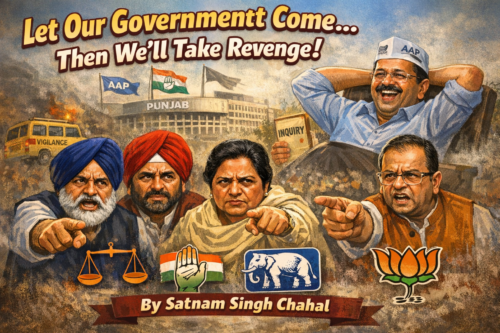
 In Punjab’s ever-entertaining political theatre, the leaders of the ruling Aam Aadmi Party have discovered a new hobby: poking, teasing, and occasionally over-enthusiastically harassing the leaders of opposition parties. Whether it’s the Akali Dal, Congress, BSP, or BJP, every party seems to take turns standing in the complaint line, each filing the same emotional grievance: “Oh ji, just let our government come once… then we’ll show them what real revenge looks like.”
It has become the most repeated dialogue in Punjab politics, almost like a movie script that refuses to change. Whenever an AAP leader coughs near an opposition MLA, the Akali Dal cries vendetta. If an AAP minister raises his eyebrow, the Congress holds a press conference. If someone from AAP posts a sarcastic tweet, the BJP threatens to approach the Governor. And if a notice arrives from any department, even by mistake, the BSP issues a full-length emotional statement demanding justice for democracy.
But the real comedy is not what they say today. The real comedy lies in the promises they make for tomorrow. Every opposition party has the same favourite promise:
“Let our government come… bas phir dekhna!”
This has now become Punjab’s unofficial national anthem.
In fact, if someone made a dictionary of Punjabi politics, the definition of “revenge” would simply read: The first thing every party plans before even deciding the price of dal or electricity bills.
Whenever AAP leaders trouble them, the opposition does not respond with policy, logic, or maturity. No, no — that is too old-fashioned. Instead, they respond like characters from a dramatic TV serial:
“Tu ruk, main aundi haan… agle election ’ch!”
And the background music plays. Thunder sounds. Camera zooms in. The voters sigh.
Meanwhile, AAP leaders are not innocent saints either. They seem to enjoy this circus. Every week, they launch a new inquiry, summon, remark, or surprise action. Sometimes it genuinely targets corruption. Other times, it feels like the political version of a “you didn’t wish me happy birthday, so here’s a notice” moment. But either way, the ruling party seems to be running Punjab like a mixture of governance, stand-up comedy, and a bit of WWE entertainment.
The funniest part? All parties keep promising revenge, but when they actually come into power, half their time goes into remembering where the files are, why the budget is empty, and who took the office furniture. By the time they get settled, elections are only two years away, and they suddenly remember that revenge requires effort, something they forgot to plan for.
Punjab’s public, watching all of this, has reached a spiritual level of patience. They are no longer shocked or angry. They just watch politicians fight like schoolchildren and say, “Chalo ji, new season aa reha hai.” Because in Punjab, governments change, faces change, promises change — but one thing remains immortal:
every party wants revenge, but nobody wants responsibility.
And so the comedy continues.
Every five years, the cast rotates.
Every five years, the dialogue remains the same.
Every five years, someone new says:
“Wait till we come to power — we’ll settle the scores!”
Until then, the people of Punjab sit back, sip their tea, and enjoy the never-ending political sitcom that writes itself.