
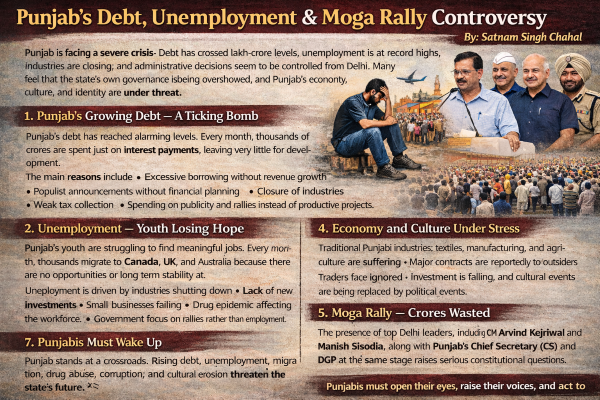
 Punjab is facing a severe crisis. Debt has crossed lakh-crore levels, unemployment is at record highs, industries are closing, and administrative decisions seem to be controlled from Delhi. Many feel that the state’s own governance is being overshadowed, and Punjab’s economy, culture, and identity are under threat.
Punjab’s debt has reached alarming levels. Every month, thousands of crores are spent just on interest payments, leaving very little for development.The main reasons include excessive borrowing without revenue growth, populist announcements without financial planning, closure of industries, weak tax collection, and spending on publicity and rallies instead of productive projects.Without industrial revival, job creation, and strict fiscal discipline, repaying this debt seems almost impossible.
Punjab’s youth are struggling to find meaningful jobs. Every month, thousands migrate to countries like Canada, UK, and Australia because there are no opportunities or long-term stability at home.Unemployment is driven by industries shutting down, lack of new investments, small businesses failing, the drug epidemic affecting the workforce, and government focus on rallies rather than employment.This is not just an economic issue it is a social and psychological crisis affecting families across Punjab.
Many believe Punjab is being micromanaged by Delhi leaders, especially Arvind Kejriwal and Manish Sisodia, weakening Punjab’s own elected leadership.Decisions about policies and administration appear to be influenced externally, Punjab bureaucracy seems pressured, public funds are often diverted to political agendas, and Punjabi culture and identity are being undermined.
Traditional Punjabi industries such as textiles, manufacturing, and agriculture are suffering.Major contracts are reportedly being awarded to outsiders rather than local businesses, traders face neglect, investment is falling, and cultural events are being replaced by political events.Punjab’s economic and cultural roots are under severe pressure, threatening the state’s long-term identity.
The recent Moga rally has sparked public outrage. Crores of rupees were reportedly spent, and contracts for tents, arrangements, sound systems, and publicity were given to political leaders’ near and dear ones rather than Punjab’s struggling business community.At a time when debt is rising, unemployment is high, industries are failing, and the youth face a crisis, spending crores on a political show is deeply troubling and disrespectful to the people of Punjab.
The presence of top Delhi leaders, including CM Arvind Kejriwal and Manish Sisodia, along with Punjab’s Chief Secretary (CS) and DGP at the same stage raises serious constitutional questions. If the rally was political, how were the CS and DGP allowed to address it? Bureaucrats are not permitted to participate in political events. If the rally was official, in what capacity were Delhi leaders addressing it? They hold no constitutional position in Punjab, making their role highly questionable.This controversy strikes at the core of Punjab’s democracy and governance norms.
Punjab stands at a crossroads. Rising debt, unemployment, migration, drug abuse, corruption, and cultural erosion threaten the state’s future. Punjabis must open their eyes, raise their voices, and act to protect Punjab’s economy, identity, and democracy before it is too late.