
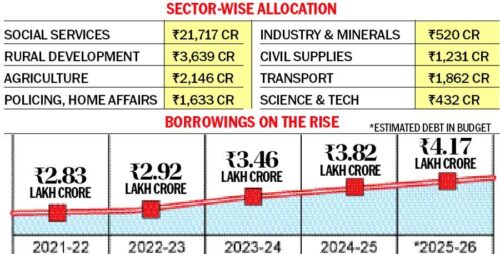
 Chandigarh / California-Expressing deep concern over the rapidly rising debt of Punjab, Satnam Singh Chahal, Executive Director of the North American Punjabi Association (NAPA), said that the state is moving toward a serious financial crisis that could affect generations of Punjabis.
Chahal said that Punjab’s total debt is projected to reach nearly ₹4.47 lakh crore by the financial year 2026–27, which is an alarming situation for a state already struggling with unemployment, migration of youth, and declining industrial growth.
He stated that instead of strengthening the economy through industrial development, employment generation, and better fiscal management, successive governments have continued to rely heavily on borrowing. As a result, the debt burden has increased dramatically over the past decade.
“Today, a large portion of Punjab’s revenue is being spent on interest payments and repayment of previous loans, leaving very little financial space for development in crucial sectors like education, healthcare, infrastructure, and agriculture,” Chahal said.
He further pointed out that Punjab’s debt-to-GSDP ratio is among the highest in India, which clearly reflects the serious fiscal stress faced by the state. If the present trend continues, Punjab’s financial condition could deteriorate further, making it difficult for future governments to manage the state’s finances.
Chahal emphasized that Punjab urgently needs a clear economic roadmap focused on industrial growth, encouraging investment, supporting farmers through sustainable policies, and controlling unnecessary government expenditure.
“Punjab was once known as the most prosperous state in India, but today the increasing debt, lack of industrial expansion, and migration of youth have become major concerns. The government must take responsible and transparent financial decisions to safeguard the future of Punjab,” he added.
The North American Punjabi Association (NAPA) urged the Punjab government to adopt strict fiscal discipline and implement long-term economic reforms so that the state does not fall deeper into a debt trap.