
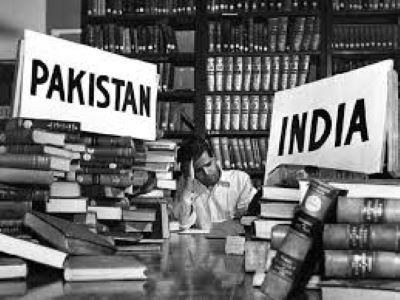
 The Partition of India in 1947 was not just the drawing of borders on a map; it was the tearing apart of countless hearts, homes, and identities. For those who lived through it, Partition was not a moment in history—it was a lifelong scar. Even for those like me, born after those dark days, its pain lives on through the stories whispered in our homes—stories filled with grief, fear, and, sometimes, rare and shining acts of humanity that refused to die even in the face of hatred.
Among those memories, one story has always lived within me like a quiet ache. It is the story of my aunt a young Muslim girl who lost everything in the chaos of Partition, yet found a new life in the most unexpected way. In those terrifying days, when Punjab burned with violence and mistrust, she found herself completely alone. Her family had vanished into the storm of bloodshed and displacement. With fear closing in from all sides and no place to run, she made a desperate and heartbreaking choice—she hid herself inside a village well, a dark, silent khoh, choosing the unknown depths over the violence above.
For seven long days and nights, she remained there hungry, thirsty, and surrounded by darkness so deep it must have felt endless. No voice called out to her, no hand reached down, and no certainty of survival remained. Above her, life moved on, unaware of the young girl clinging to hope beneath the earth. One can only imagine the fear she must have felt, the prayers she must have whispered, and the tears that must have fallen in that suffocating silence.
Then, slowly, whispers began to spread through the village there is a Muslim girl hiding in the well. In those times, such a revelation could have led to tragedy. But in that moment, humanity chose a different path. When my father heard this, he did not stop to think of religion, identity, or consequence. He only saw a human life in danger. Without hesitation, he climbed down into that dark well and brought her back into the light back into the world, back into hope.
What followed was not charity; it was compassion in its purest form. My family opened their doors and their hearts to her. They gave her food when she had none, shelter when she had nowhere to go, and safety when the world outside had turned cruel. Over time, that frightened girl became one of us. With her consent, she married my uncle a union that stood quietly yet powerfully against the hatred that had divided the land. She embraced a new life, a new faith, and went on to raise four daughters, becoming a respected and dignified figure in our family. Yet, behind her gentle strength, there must always have been a silent pain—the memory of a family lost forever.
Years later, when the violence had long ended but its wounds had not healed, a family from Pakistan came searching for her. They had carried hope across borders, believing they might find their lost daughter, sister, or relative. But fate was unkind they arrived too late. She had already passed away. Their grief was not just for her death, but for the lost years, the missed embraces, and the words that would never be spoken. What made that moment even more painful was the hesitation of her own children to meet them, perhaps out of fear of society’s judgment. It was a heartbreaking reminder that Partition had not only divided land—it had built invisible walls in human hearts.
Before leaving, they shared that she had distant ties to General Pervez Musharraf. They left behind contact details, a fragile thread connecting two worlds—but like many things lost to time, that thread slipped away. Despite efforts to find them again, the connection was never restored.
There was yet another life touched by this humanity. Her young cousin, a Muslim boy, also found refuge in our home during those dark days. With love and support, he too rebuilt his life, marrying into a Sikh family, raising children, and becoming part of our village. Yet even as he built a new life, a part of his heart remained incomplete, forever longing to reunite with the family he had lost across the border.
For the world, Partition may be history. For families like mine, it is a story that never truly ended. It lives on in silences, in unspoken grief,
in the longing of those who never returned home, and in the memories passed down so that the pain is never forgotten. My aunt’s life was a journey between two worlds—one she lost and one she built.
When I think of her, I see both the terrified girl hiding in darkness and the graceful woman who brought light into our lives. Her story reminds us that even in the darkest chapters of humanity, compassion can survive and when
it does, it becomes a legacy far stronger than hatred.